GBP/JPY slides back to pre-surprise BoE hike levels in mid-150.00s as risk appetite fades
- GBP/JPY slipped back to pre-BoE levels in the mid-150.00s on Friday as risk appetite deteriorates, boosting the yen.
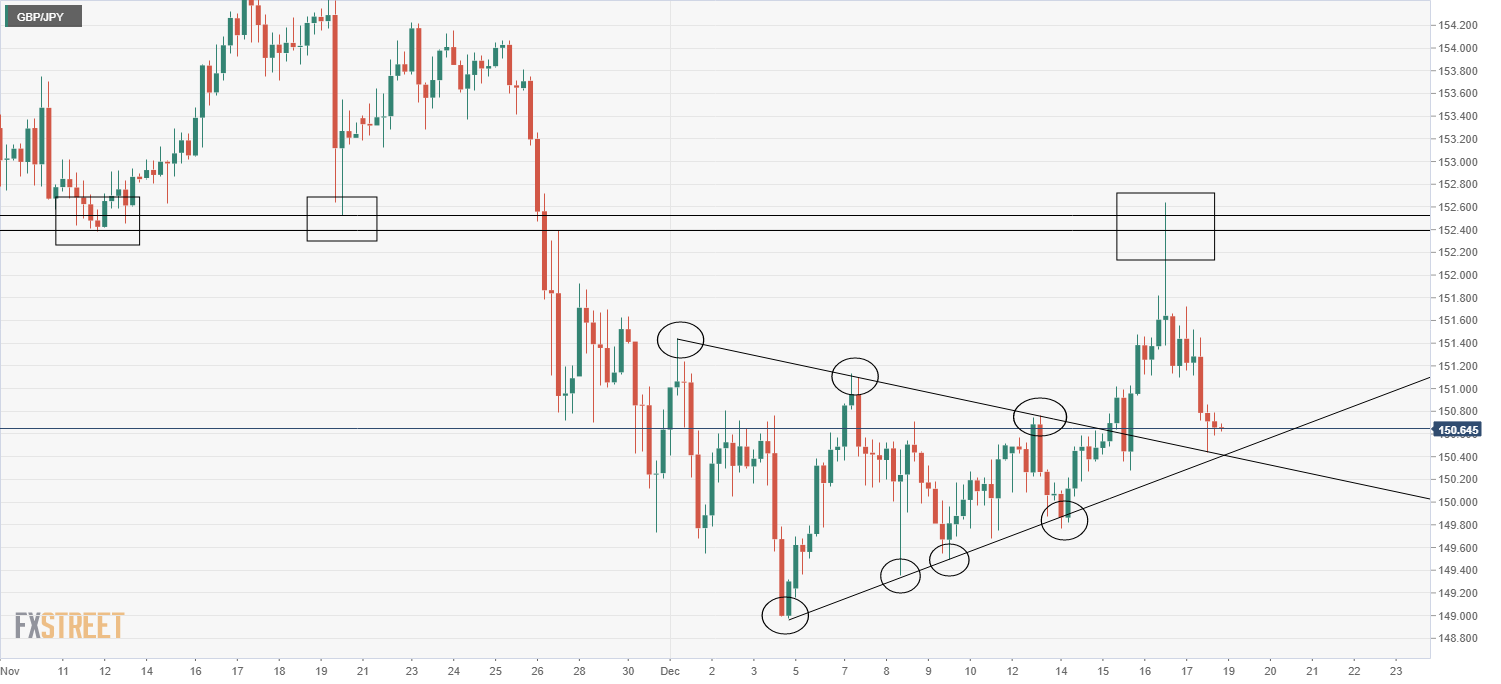
- That marks a 1.3% pullback from post-surprise rate hike highs above 152.50, but GBP/JPY is still positive on the week.

Though the pair has stabilises in more recent trade as FX markets volumes drop off ahead of the weekend, GBP/JPY still trades with losses of about 0.45% on the session ad has pretty much unwound all of its post-surprise BoE rate hike gains. At present, the pair is trading in the 150.60s, having bounced at 150.50 at the retest of a previous downtrend that was broken around the mid-point of the week. Despite the sharp more than 1.0% pullback from Thursday highs above 152.50, a key area of resistance going all the way back to September, GBP/JPY is still set to close the week out with gains of about 0.2%.
If it can hold to the north of the downtrend it broke above around the middle of the week, then it may be able to edge higher next week. But trading conditions next week are likely to be subdued given the proximity to Christmas Day (next Saturday), so any meaningful recovery back to the 152.50 area may have to wait until the new year. Such a recovery would rely on an improvement in risk appetite and greater confidence that the BoE hiking cycle is going to continue at a reasonable pace in 2022.
Indeed, poor risk appetite on Friday seems to be the primary factor as to why GBP/JPY pulled back from the 151.50 area, a move driven by yen outperformance on safe-haven demand. There isn't exactly one theme driving the caution, but traders/market participants continue to fret about themes such as the rapidly accelerating global spread of Omicron as well as the increasingly hawkish shift of tone/policy at major central banks. Recall that, as well as the surprise BoE hike, the Fed doubled its QE taper speed and indicated as many as three rate hikes in 2022 and the ECB laid out its plans to taper its pandemic era bond-buying programme.
Author

Joel Frank
Independent Analyst
Joel Frank is an economics graduate from the University of Birmingham and has worked as a full-time financial market analyst since 2018, specialising in the coverage of how developments in the global economy impact financial asset