GameStop Stock Price and Forecast: GME double top could see $150 targeted
- GameStop stock finished lower on Wednesday by 1%.
- GME stock has now formed a bearish double top.
- GME, if it sticks to the target, would see $150 soon.

GameStop (GME) fans and traders may not like the sound of this, but it appears the stock has confirmed the double top we alluded to earlier in the week with yesterday's fall. While markets are closed today Thursday and are likely to see light volume in a reduced session on Friday, this remains a bearish picture.
-637734321884692754.png)
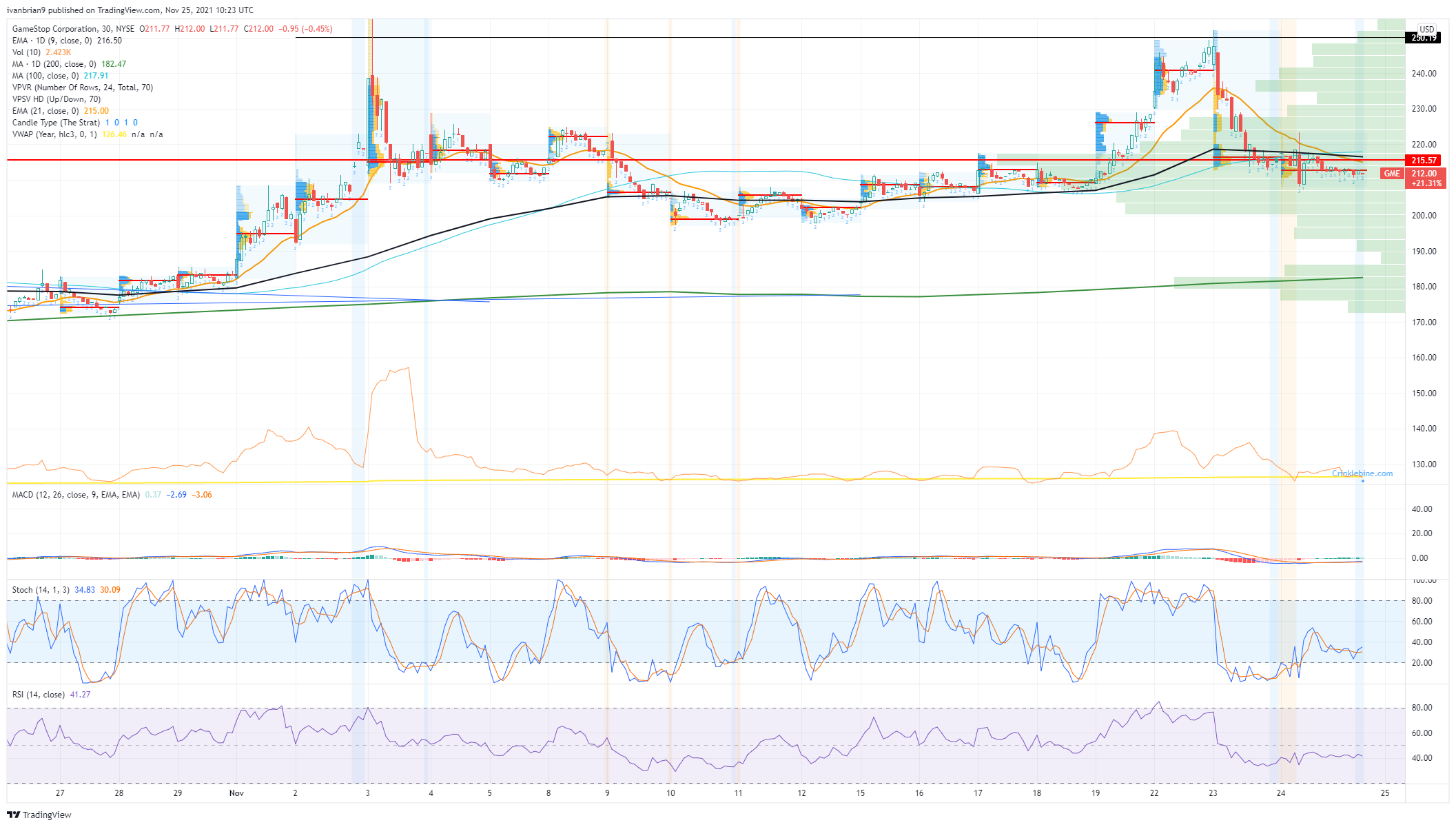
GameStop (GME) chart, 15-minute
GameStop (GME) stock news
A bizarre twist has developed in the David vs Goliath saga of the GameStop short squeeze seen earlier this year. According to a Benzinga report, a group of individuals called ConstitutionDAO pooled together via crowdfunding to attempt to buy a copy of the US Constitution. However, the Benzinga report states that the group lost out to Ken Griffin. It is not major news for the underlying stock but remains an interesting sidebar.
The stock itself has little in the way of fundamental news flow. That is part of the problem. Momentum stocks need momentum, and when it stops so does the share price. That is what is happening across multiple names such as AMC, Rivian LCID, and others. The next event of note will likely be earnings from GameStop on Wednesday, December 8.
GameStop (GME) stock forecast
,Gamestop (GME) shares have been fairly rangebound between $220 and $240 and have moved through this range over the last week. There is a lot of volume at $210, indicating a support of sorts.
The daily chart though is where the bearish double top is on show. The target of a double top or bottom is the retracement amount between both peaks or the valley. In the case of GME that is $50, so a break of the valley floor at $200 gives a target of $150. Only by breaking $250 in the next few sessions can this double top be discounted.
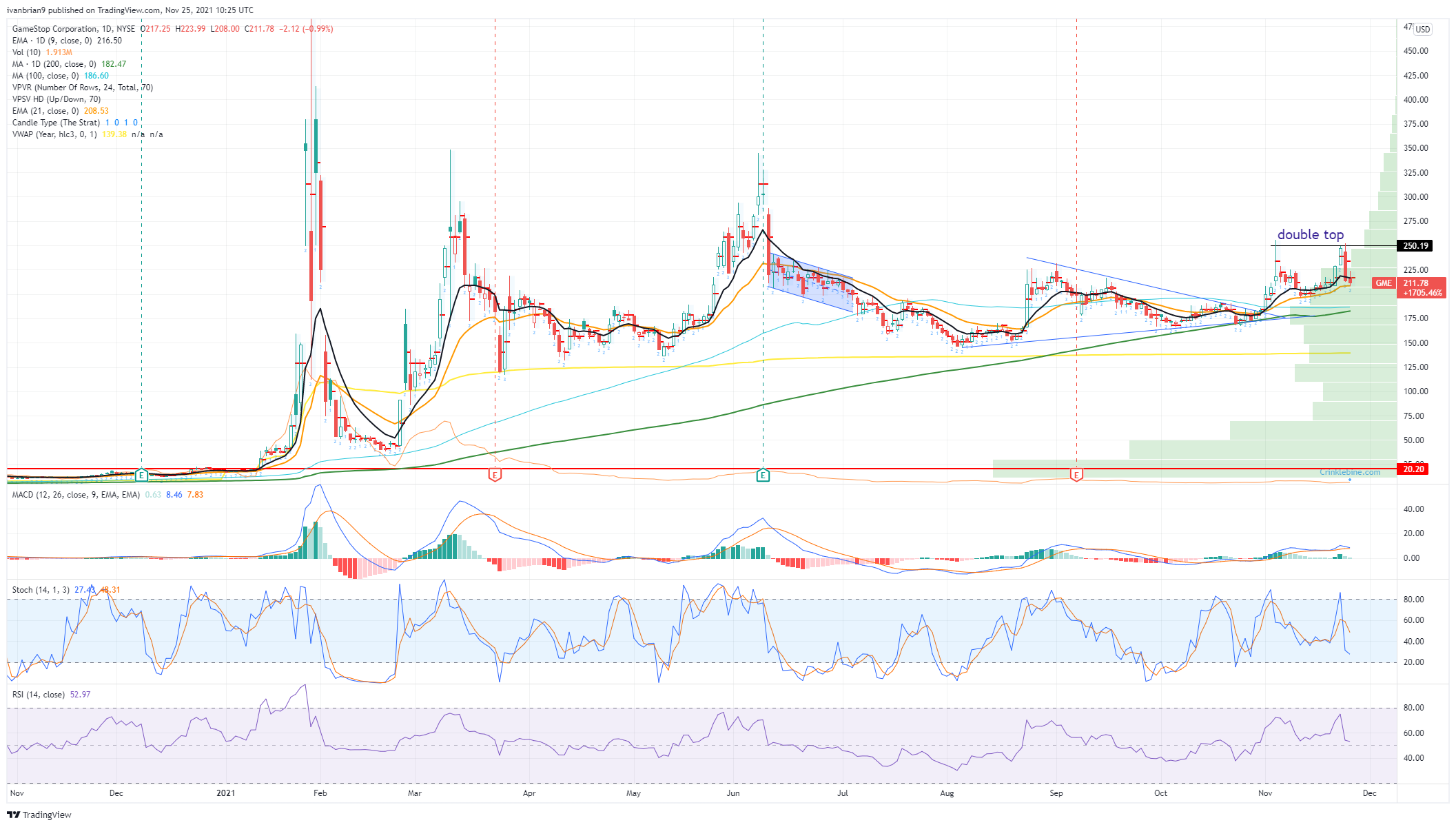
GME 1-day chart
Author

Ivan Brian
FXStreet
Ivan Brian started his career with AIB Bank in corporate finance and then worked for seven years at Baxter. He started as a macro analyst before becoming Head of Research and then CFO.
















