Forex Today: US Dollar slips on deepening Trump-Powell feud

Here is what you need to know on Monday, January 12:
The US Dollar (USD) kicks off a correction from monthly highs against its major counterparts on Monday, pressured by fresh threats to the US Federal Reserve’s (Fed) independence, despite receding bets for interest rate cuts this year.
US Dollar Price Today
The table below shows the percentage change of US Dollar (USD) against listed major currencies today. US Dollar was the weakest against the Swiss Franc.
| USD | EUR | GBP | JPY | CAD | AUD | NZD | CHF | |
|---|---|---|---|---|---|---|---|---|
| USD | -0.29% | -0.19% | 0.08% | -0.15% | -0.12% | -0.28% | -0.35% | |
| EUR | 0.29% | 0.10% | 0.35% | 0.14% | 0.17% | 0.01% | -0.06% | |
| GBP | 0.19% | -0.10% | 0.25% | 0.04% | 0.07% | -0.09% | -0.17% | |
| JPY | -0.08% | -0.35% | -0.25% | -0.23% | -0.20% | -0.35% | -0.42% | |
| CAD | 0.15% | -0.14% | -0.04% | 0.23% | 0.03% | -0.12% | -0.20% | |
| AUD | 0.12% | -0.17% | -0.07% | 0.20% | -0.03% | -0.16% | -0.24% | |
| NZD | 0.28% | -0.01% | 0.09% | 0.35% | 0.12% | 0.16% | -0.08% | |
| CHF | 0.35% | 0.06% | 0.17% | 0.42% | 0.20% | 0.24% | 0.08% |
The heat map shows percentage changes of major currencies against each other. The base currency is picked from the left column, while the quote currency is picked from the top row. For example, if you pick the US Dollar from the left column and move along the horizontal line to the Japanese Yen, the percentage change displayed in the box will represent USD (base)/JPY (quote).
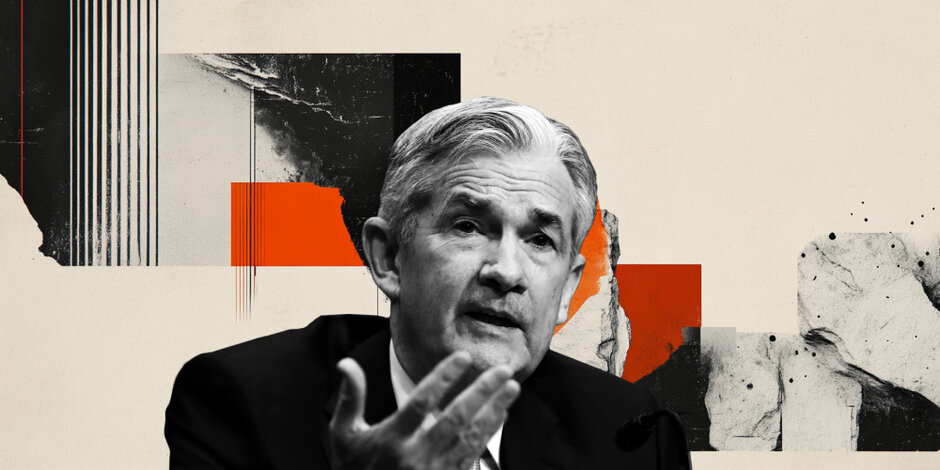
US federal prosecutors opened a criminal investigation into Chairman Jerome Powell regarding the central bank's renovation of its Washington headquarters and his testimony before Congress about the project's scope, back in June.
Powell called out the US administration’s attacks, noting the” new threat is not about his testimony or the renovation project but a pretext.”
The Fed concerns overshadowed reduced bets for a Fed rate cut this quarter that followed Friday’s US employment report. Data on Friday showed that Nonfarm Payrolls increased by 50,000 jobs last month after a downwardly revised rise of 56,000 in November and against the expected gain of 60,000 jobs. The Unemployment Rate dipped from a four-year high of 4.6% to 4.4% in December, compared to the estimated 4.5% print.
However, the Greenback’s downside could be checked by a rush for safety amid escalating geopolitical tensions between the US and Iran, as well as between Russia and Ukraine.
Reports over the weekend cited that US President Donald Trump is weighing a series of potential military options in Iran, following days of civil unrest, and should the Iranian regime use lethal force against civilians.
Meanwhile, the United Nations Security Council called for an emergency meeting on Monday after Russia used its new Oreshnik hypersonic ballistic missile on Friday in a major strike on Ukraine.
AUD/USD holds its rebound near 0.6700, with the further upside capped by risk aversion. A broadly weaker USD and hawkish expectations surrounding the Reserve Bank of Australia’s (RBA) rate outlook keep buyers interested.
USD/JPY regains 158.00 in early Europe, after having witnessed mild volatility in the Asian session. The Japanese Yen loses ground on renewed political tensions, with the risk-off market environment doing little to alleviate the pressure.
FXStreet’s Analyst, Haresh Menghani, notes, “a deepening Japan-China trade rift and reports that Japan's Prime Minister Sanae Takaichi may call an early general election add a layer of uncertainty amid the lack of clarity about the likely timing of the next Bank of Japan (BoJ) rate hike,” keeping the local currency undermined.
EUR/USD advances toward 1.1700, drawing support from renewed USD declines, while GBP/USD also capitalizes on the same and jumps back above 1.3400. Traders await the Eurozone Sentix Investor Confidence data for January in the European session for fresh trading impetus.
Gold builds on the previous week’s bullish momentum, hitting fresh record highs at $4,601 in Asian trading before quickly retreating to near $4,475, where it now wavers. Silver tested the $84 mark amid resurgent haven demand.
WTI challenged monthly highs at $59.60 once again but failed to sustain at higher levels going into the early European trading hours. Efforts to resume oil exports from Venezuela, combined with oversupply concerns, outweighed escalating civil protests in Iran.
Risk sentiment FAQs
In the world of financial jargon the two widely used terms “risk-on” and “risk off'' refer to the level of risk that investors are willing to stomach during the period referenced. In a “risk-on” market, investors are optimistic about the future and more willing to buy risky assets. In a “risk-off” market investors start to ‘play it safe’ because they are worried about the future, and therefore buy less risky assets that are more certain of bringing a return, even if it is relatively modest.
Typically, during periods of “risk-on”, stock markets will rise, most commodities – except Gold – will also gain in value, since they benefit from a positive growth outlook. The currencies of nations that are heavy commodity exporters strengthen because of increased demand, and Cryptocurrencies rise. In a “risk-off” market, Bonds go up – especially major government Bonds – Gold shines, and safe-haven currencies such as the Japanese Yen, Swiss Franc and US Dollar all benefit.
The Australian Dollar (AUD), the Canadian Dollar (CAD), the New Zealand Dollar (NZD) and minor FX like the Ruble (RUB) and the South African Rand (ZAR), all tend to rise in markets that are “risk-on”. This is because the economies of these currencies are heavily reliant on commodity exports for growth, and commodities tend to rise in price during risk-on periods. This is because investors foresee greater demand for raw materials in the future due to heightened economic activity.
The major currencies that tend to rise during periods of “risk-off” are the US Dollar (USD), the Japanese Yen (JPY) and the Swiss Franc (CHF). The US Dollar, because it is the world’s reserve currency, and because in times of crisis investors buy US government debt, which is seen as safe because the largest economy in the world is unlikely to default. The Yen, from increased demand for Japanese government bonds, because a high proportion are held by domestic investors who are unlikely to dump them – even in a crisis. The Swiss Franc, because strict Swiss banking laws offer investors enhanced capital protection.
Author
Dhwani Mehta
FXStreet
Residing in Mumbai (India), Dhwani is a Senior Analyst and Manager of the Asian session at FXStreet. She has over 10 years of experience in analyzing and covering the global financial markets, with specialization in Forex and commodities markets.