|
Fed’s Powell: The Fed's two goals are not yet in tension
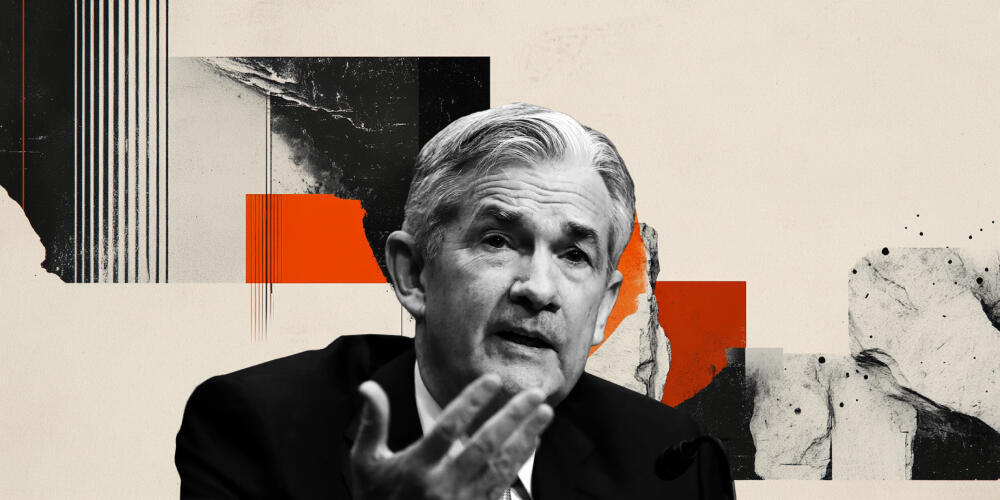
Federal Reserve’s Chair Jerome Powell discussed the US economic outlook at the Economic Club of Chicago.
Key Quotes
- Well positioned to wait for greater clarity before considering any changes to policy stance.
- US economy 'solid' despite heightened uncertainty, downside risks.
- At or near maximum employment, inflation a bit above 2% goal, has come down a great deal.
- Growth likely slowed in first quarter of 2025 from last year's solid pace.
- Strong first quarter imports to weigh on GDP growth.
- Sharp decline in business, household sentiment and elevated uncertainty, reflecting trade policy concerns.
- Labour market solid, broadly in balance, not contributing to inflation.
- PCE prices likely rose 2.3% in 12 months through march, core PCE estimated at 2.6%.
- Administration's policies still evolving, effects remain highly uncertain.
- So far larger-than-expected tariffs likely mean higher inflation, slower growth.
- Inflationary effects of tariffs could be more persistent, depends ultimately on inflation expectations.
- Our obligation is to keep longer-term inflation expectations well-anchored.
- May find ourselves in the challenging scenario in which dual-mandate goals are in tension.
- If that occurs, we would consider how far economy is from each goal and potential time horizons for those gaps to close.
Key highlights from the Q&A session
- Effects of policy will likely move the Fed away from its goals.
- Will be moving away from goals for the balance of this year, perhaps can resume next year.
- Our role is to make sure this is a one-time effect.
- The Fed's two goals are not yet in tension, but the impulse is for higher unemployment and higher inflation.
- It will be a difficult judgement if the Fed's mandate do come into conflict.
- Could well be in a situation where need to make a difficult decision.
- High uncertainty leads to households and businesses stepping back from decisions.
- If risks were structurally higher, that would make us less attractive.
- Markets are processing the policy changes.
- Markets are orderly, functioning as would expect.
- Probably will see continued volatility.
- Not close to the point where the Fed would stop balance sheet runoff altogether.
- The slower the Fed goes, the smaller the balance sheet can get without disruptions.
- The Fed stands ready to supply Dollars to global central banks if needed.
Author

Pablo Piovano
FXStreet
Born and bred in Argentina, Pablo has been carrying on with his passion for FX markets and trading since his first college years.
More from Pablo Piovano