|

FedEx (FDX Stock) aims for +20% target despite strong decline

  • FedEx Corporation (FDX) has recently retraced to and bounced at the 38.2% Fibonacci retracement level.

  • This analysis reviews the potential wave and chart patterns connected to a 38.2% Fib bounce. We also pinpoint the best target for the upcoming few trading week.

Chart

Price Charts and Technical Analysis

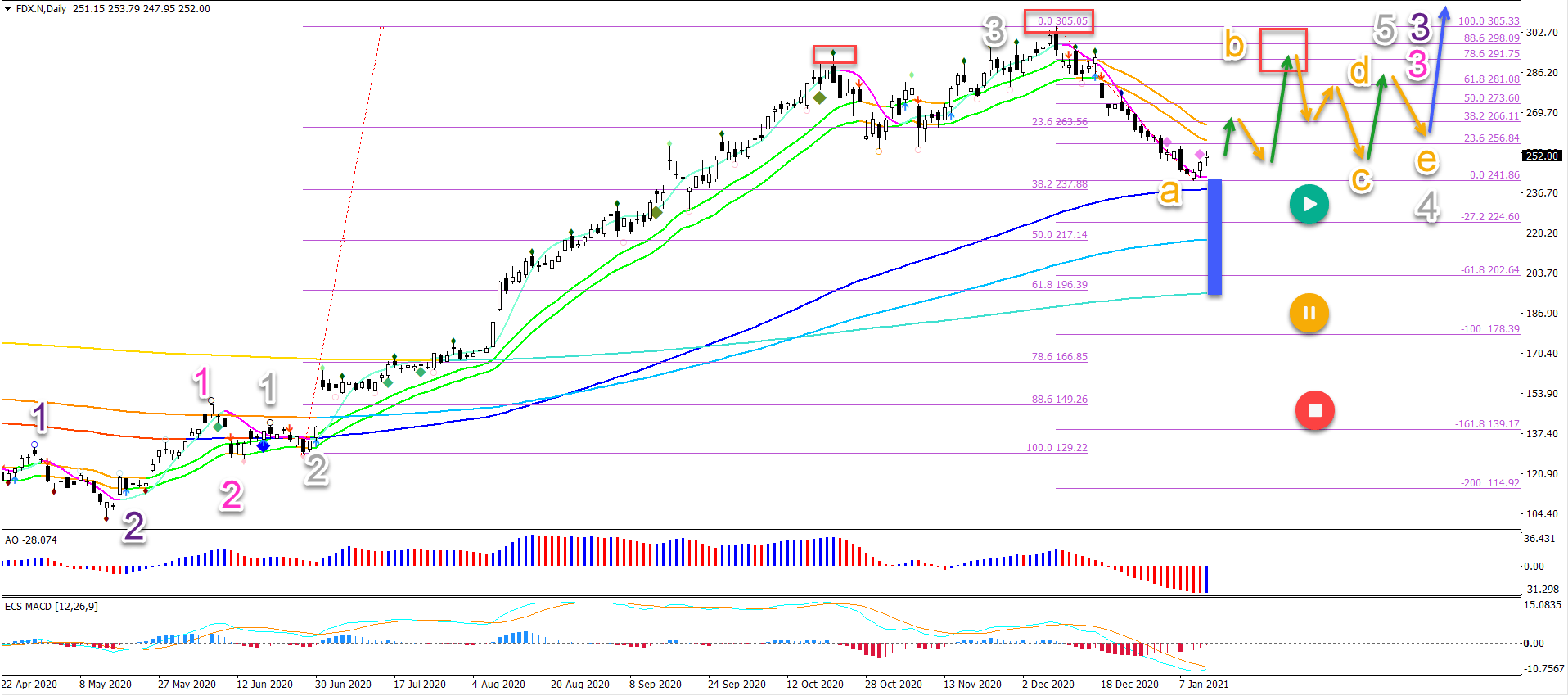
The FDX daily chart has retraced down to the 38.2% Fibonacci and 144 ema zone. But the overall trend is strongly up. We can see this simply by adding long-term moving averages (blue box).

The quick pace of the decline, however, does indicate that the retracement is likely to be lengthy or deeper than usual for a wave 4 (grey). Here is what to expect, starting with the most likely:

  • An ABCDE triangle chart pattern (as shown in the image).

  • An ABC bull flag pattern.

  • An ABC zigzag pattern.

Although price action made a strong decline, a bullish bounce back towards the deep Fibonacci levels and previous top is likely to occur within a wave B (orange). The main target zone is therefore around $292-$305 for the short-term.

At the moment, a bearish bounce is expected at the target zone to create a wave C (orange). Eventually a new high is expected at around $350 once the triangle is completed (blue arrow).

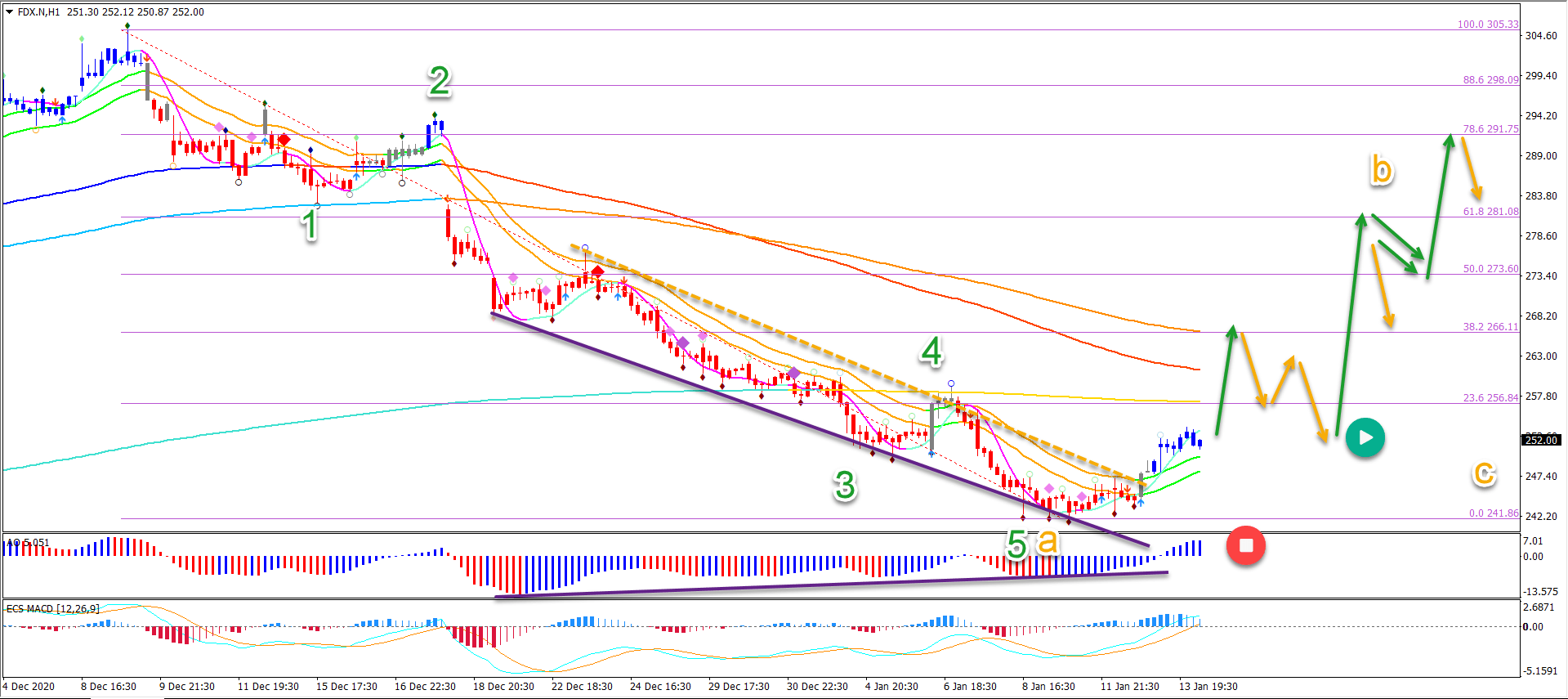
On the 1 hour chart, we already see blue Elliott Wave candles emerge. This is indicating the potential start of the bullish run in wave B (orange). 

The first target is the 38.2% Fib zone and long-term moving averages. Here we expect a bounce down and a higher low before a new bullish swing up again.
Chart

The analysis has been done with the ecs.SWAT method and ebook.

Author

Chris Svorcik

Chris Svorcik

FS method

Chris Svorcik is a trader, analyst, and educator with over 15 years of experience in financial markets, specializing in moving averages, market structure, and price patterns.


More from Chris Svorcik
Share:

Editor's Picks

AUD/USD hangs near three-week low, below 0.6950 as traders await US NFP report

AUD/USD hits a three-week low during the Asian session on Friday as the RBA’s dovish shift and a rout in equity markets weigh on the risk-sensitive Aussie. However, the recent slump in US bond yields to a two-month low keeps US Dollar bulls on the back foot and limits losses for the currency pair as traders look to the US NFP report for a fresh impetus.

USD/JPY bounces off three-week low; keeps the red near 157.65 as focus remains on US NFP

USD/JPY bounces off the weekly low set during the Asian session, as bears turn cautious ahead of the US NFP report due later this Friday. The upside seems limited as the recent slump in US bond yields and hopes of Iran war de-escalation undermine the US Dollar. Moreover, a hawkish BoJ and intervention risks support the Japanese Yen, capping the pair.

Gold loses the grip; $4,000 comes next on the downside

Gold sets aside two daily advances in a row on Friday, opening the door to a potential test of the key $4,000 mark per troy ounce. The precious metal’s retracement follows a decent improvement in the sentiment surrounding the US Dollar, solid NFP data and higher US Treasury yields across the board.

Democrats win House and Senate in US midterms: Why isn’t all bad news for crypto

The biggest story this week was Tuesday’s US midterm elections, which saw Democrats win control of both the House and the Senate in a clear blue wave. This political shift in the US has triggered sharp price swings across the cryptocurrency market.

Week ahead – Inflation and geopolitics in focus as US political landscape shifts

Post-midterm election euphoria fizzles out as risk aversion prevails. US CPI, PPI and Fedspeak on the radar as Fed hike bets remain supported. Oil retreat pauses on mixed hopes about the ongoing conflicts.

US Dollar breaks below 101.50 as Democrats sweep Congress
The US Dollar (USD) comes under heavy selling pressure on Wednesday, with the US Dollar Index (DXY) falling around 0.5% to trade near 101.35 after sliding below the 101.50 level. The Greenback retreats to its lowest level in four weeks as investors reassess the political and economic outlook following the Democratic Party's sweeping victory in the United States (US) midterm elections.