Fed: Monetary policy will continue to diverge - BBH

Monetary policy among the major industrialized countries will continue to diverge in the year ahead, which is to say that short-term interest rates will likely continue to widen in the US favour, according to Marc Chandler, Global Head of Currency Strategy at BBH.
Key Quotes
“The Federal Reserve is both raising interest rates and allowing its balance sheet to shrink. It continues to anticipate that three rate hikes will likely be appropriate in 2018, as they were in 2017, followed by an additional two in 2019 and one in 2020. In H1 2018, the Fed’s balance sheet will shrink by $150 bln, and in H2 the pace picks up to $270 bln.”
“Unwinding the balance sheet is accomplished by not fully reinvesting the maturing proceeds. It is an unprecedented action. Some observers had expressed concern that just as the purchases were understood to be the easing of monetary policy when the zero-bound had been reached, the reduction of the balance sheet is tantamount to tightening.”
“Our understanding emphasizes the signaling impact of the operations over the material impact. The Fed has clearly indicated that the unwinding of the balance sheet will be on autopilot and not be impacted by high frequency data or interest rate policy. It did warn that if rates need to be cut, it will consider stopping the balance sheet operations if the zero-bound is being approached. The expansion of the balance sheet was about monetary policy, but the unwinding sends no signal about the Fed’s stance.”
“We see parallels with the ease in which the Fed has been able to raise the Fed funds target. Recall that the system is awash with reserves and liquidity, and many observers had been concerned that it would require large open market operations to maintain the target. The surprise is that even as the cycle matures, the Fed’s open market operations remain modest.”
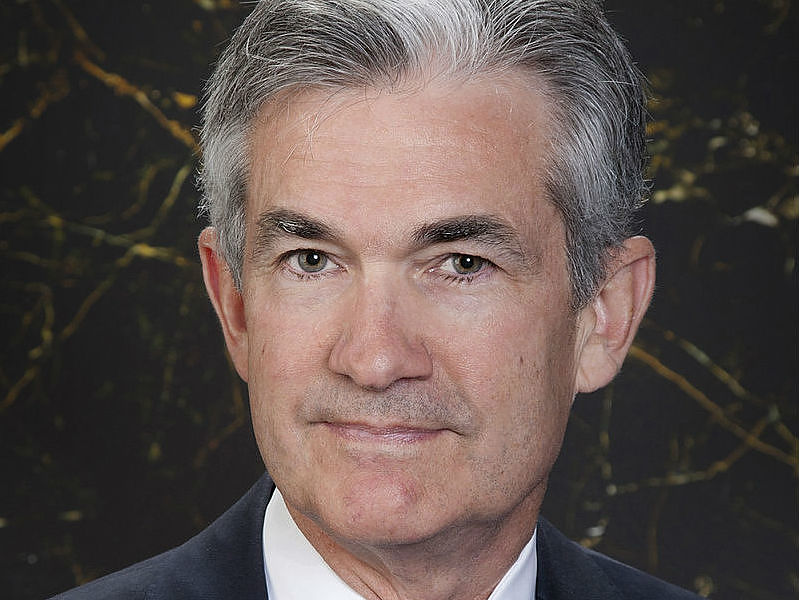
“By the end of 2018, the Federal Reserve will look quite a bit different. There will be a new president of the New York Federal Reserve, the only regional president who is also a permanent voter on the FOMC. We expect the Federal Reserve under Powell to remain on the current path. Powell’s leadership will be tested at the end of the monetary tightening cycle, but that is likely to be some time off. We have been anticipating the real Fed funds rate to peak near zero, which we surmise is close to 2.00%-2.25%.”
“Still, we expect greater continuity at the Federal Reserve than the number of personnel changes might suggest. The new chair seems committed to the course that the Fed is presently on: gradual rate hikes and a pre-set reduction of the Fed’s balance sheet. Mr. Powell revealed in his confirmation hearings that he thought the financial reforms had strengthened the banking system and resolved the too-big-to-fail challenge. He is likely to allow for deregulation, focusing on the small and medium-size financial firms. Several large US banks ramped up their trading capacity in 2017, partly on expectations of some relaxation of the Volcker rule.”
“Many cite the fact that the market has discounted less than half of the 75 bp the Fed expects to hike as a sign of low confidence in the central bank. We argue that the ease in which it has been able to maintain the Fed funds target speaks to its credibility. Also, the early unwinding of the balance sheet has been without incident, and the market has not rushed to discount the entire operation and tighten financial conditions, as some investors feared.”
“We expect US inflation to increase in 2018, with the core PCE deflator edging closer to the Fed’s target. The yield curve (2-year to the 10-year) is likely to continue to flatten into the New Year, but we think there’s a risk that it may steepen later in the year. Our base case, barring new shocks, is for the economy to grow around 2.5%.”
Author
Sandeep Kanihama
FXStreet Contributor
Sandeep Kanihama is an FX Editor and Analyst with FXstreet having principally focus area on Asia and European markets with commodity, currency and equities coverage. He is stationed in the Indian capital city of Delhi.