|

EUR/NOK challenges multi-day lows near 9.87 on Brent gains

  • NOK advances to multi-day highs vs. the single currency.
  • Rally in crude oil gives extra legs to the Krone.
  • EIA weekly report next of relevance in the docket.
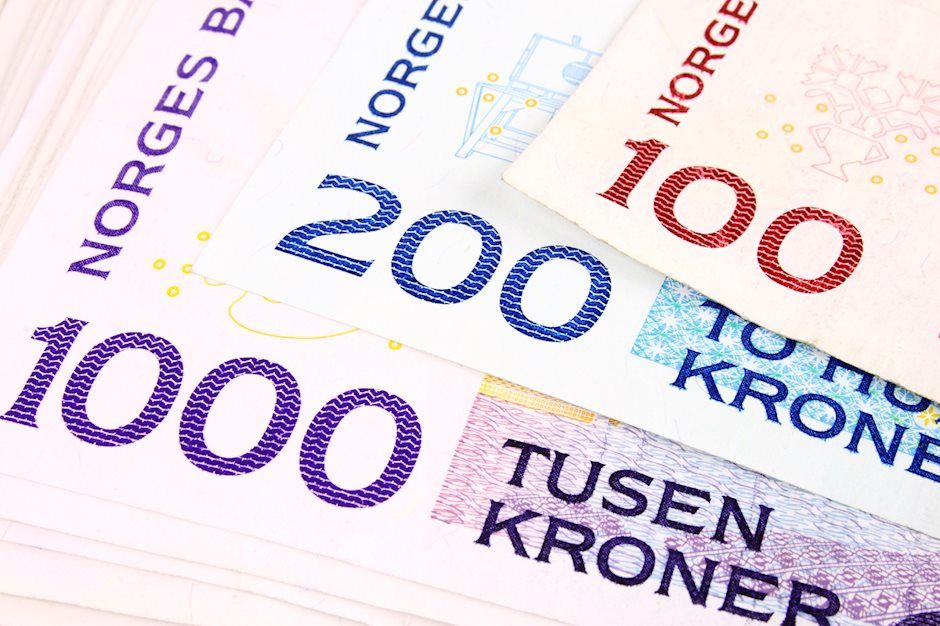
The Norwegian Krone is appreciating for the second consecutive session at the end of the week and is dragging EUR/NOK to test flirt with multi-day lows in the 9.8700 neighbourhood.

EUR/NOK looks to Brent, risk trends

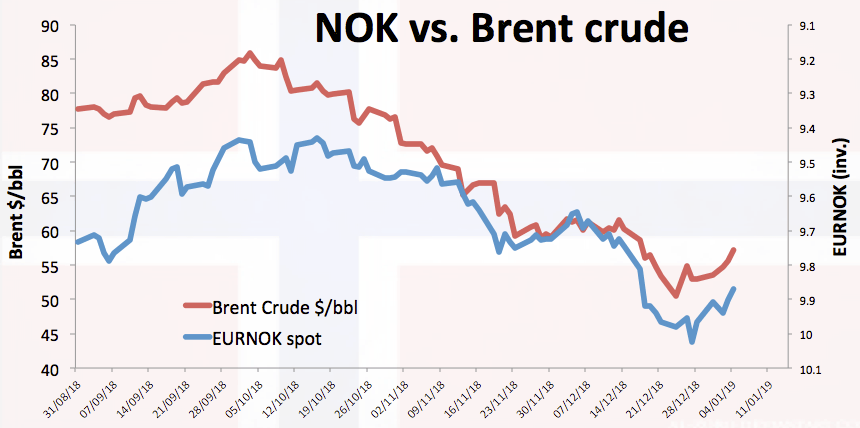
The cross remains under further downside pressure in the second half of the week, with the demand for the Scandinavian currency picking up further pace on the back of the continuation of the up move in crude oil prices.

In fact, NOK remains bid and supported by the fifth consecutive day with gains in the barrel of the European reference Brent crude, which has so far managed to regain the $57.00 mark and above after plummeting to psychological $50.00 milestone late in December.

What to look for around NOK

Brent dynamics should stay as the significant driver for the Krone. On a broader picture, the Nordic economy stays strong despite December’s manufacturing PMI eased a tad from November, although later unemployment figures showed the jobless rate remains anchored around 4.0%. Supporting the expected appreciation of NOK in the next months, the Norges Bank is seen hiking twice this year (likely in March and September) along with two hikes per year in 2020-21.

EUR/NOK significant levels

As of writing the cross is losing 0.29% at 9.8697 facing the next down barrier at 9.8597 (low Jan.4) seconded by 9.7124 (55-day SMA) and then 9.6298 (low Dec.5 2018). On the other hand, a break above 9.9407 (10-day SMA) would aim for 10.0619 (2018 high Dec.27) and finally 10.1750 (monthly high Dec.2008).
Author

Pablo Piovano

Born and bred in Argentina, Pablo has been carrying on with his passion for FX markets and trading since his first college years.


More from Pablo Piovano
Share:

Editor's Picks

EUR/USD rises to 1.1800 neighborhood amid renewed USD selling and trade uncertainties

The EUR/USD pair regains positive traction during the Asian session on Wednesday and jumps to the 1.1800 neighborhood in the last hour, reversing the previous day's modest losses. The intraday move up is sponsored by the emergence of fresh US Dollar, which continues to be weighed down by persistent trade-related uncertainties.

GBP/USD remains stronger above 1.3500 following Trump’s State of the Union

GBP/USD remains in the positive territory for the fourth successive session, trading around 1.3510 during the Asian hours on Wednesday. The pair appreciates as the US Dollar remains subdued following US President Donald Trump’s first State of the Union address of his second administration before a joint session of Congress.

Gold stays firm above $5,150 as Trump's delivers State of the Union speech

Gold finds fresh demand and regains the $5,150 level following the previous day's pullback from the monthly peak as traders assess Trump's State of the Union address. Trade-related uncertainties and geopolitical risks seem to act as a tailwind for the safe-haven bullion. 

Bitcoin, Ethereum and Ripple post cautious recovery amid downside risks

Bitcoin, Ethereum, and Ripple are posting a cautious recovery on Wednesday following a market correction earlier this week.  BTC is approaching a key breakdown level, while ETH and XRP are rebounding from crucial support levels.

The Citrini report: How a debatable AI narrative can shake Wall Street

That AI-related headline alone was enough to rattle investors.US stocks slid sharply on Monday after a widely circulated Citrini Research memo outlined a hypothetical “2028 Global Intelligence Crisis”, warning that rapid AI adoption could push US unemployment into double digits as early as by mid-2028.

XRP pressured by weak ETF flows and declining retail interest

Ripple (XRP) is edging lower, trading above its intraday low of $1.32 at the time of writing on Tuesday. The decline from its weekly opening of $1.39 reflects heightened volatility in the broader cryptocurrency market, accentuated by tariff-triggered uncertainty.