Equity outlook: What will drive markets for the rest of Q2?


2025 has been notable because of the outperformance of European equities vs. US equities. For example, the Dax is higher by 20% YTD, compared to just over 1% for the S&P 500.
The performance gap has narrowed in the past month, the Dax is higher by 13%, vs a 12% gain for the S&P 500, and a 17% gain for the Nasdaq, and other European indices have lagged their US counterparts. As we move towards the middle of the year, the question is whether the US resurgence can continue, and will European stocks continue to outperform their US counterparts.
Bond markets risks
Markets have been mixed so far this week. Stocks are off on Wednesday, as rising global bond yields weigh on risk sentiment, however, the losses are small so far. The risk is that we get a temporary ‘yield tantrum’ from the markets. This week we have seen US, Japanese and now UK and European long end bond yields jump, which has caused weaker demand for a UK 10-year bond auction on Wednesday, and the EU had to extend the bidding window for its debt auctions today, as European bonds also joined the sell off.
The global bond sell off has not had a major impact on equity markets, even though yields have risen sharply in the last 3 months. For example, the 10-year Treasury yield is higher by 11bps, the UK yield is higher by nearly 20bps. Gains are even larger for 30-year yields. As yields have been rising, the main US blue chip indices have risen by 20% plus in the past month, the Dax made a fresh record high, and the UK’s FTSE 100 is a mere 120 points away from its record high.
Thus, rising bond yields could be a risk factor for markets as we move in 2H 2025. The key drivers for US equity markets in the past month have been growth stocks and momentum, with falling volatility helping to sustain this rally. While these factors have helped US markets recover after a staggering sell off in the first half of April, they could also weigh on markets if there is a sudden crisis. A bond market crisis is exactly the sort of event that could send stocks tumbling and volatility surging. It’s also harder to recover from compared to the man -made tariff crisis.
The earnings view: Too pessimistic?
However, while it is easy to speculate about existential crises that never seem to materialize in the way you imagine them to, it is more useful to concentrate on the fundamentals. Earnings data will be critical to determine whether stocks can continue to recover in the coming weeks and months.
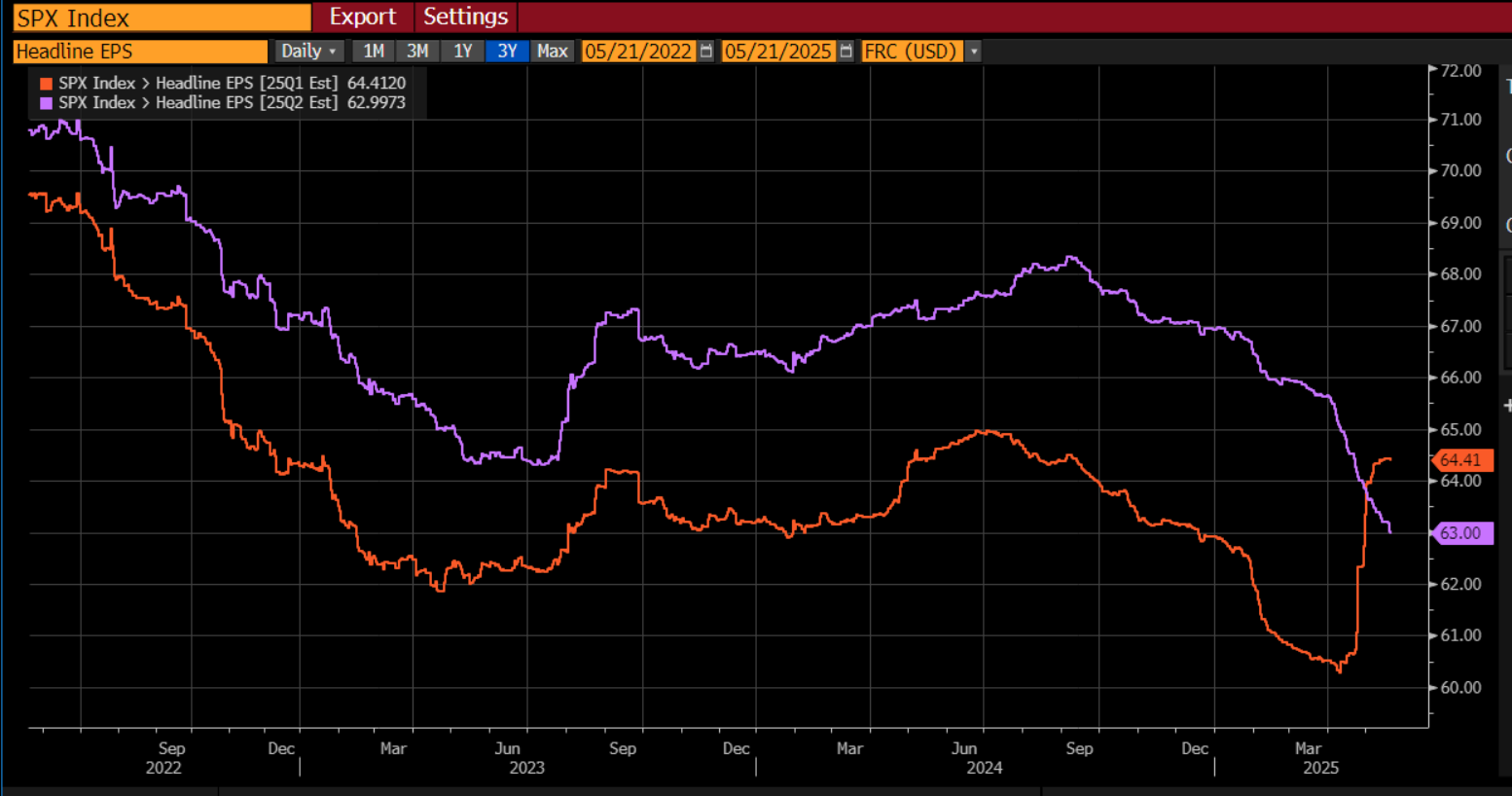
Earnings expectations for S&P 500 companies have been revised sharply lower for Q2, as you can see below.
S&P 500 Q2 earnings expectations
Source: XTB and Bloomberg
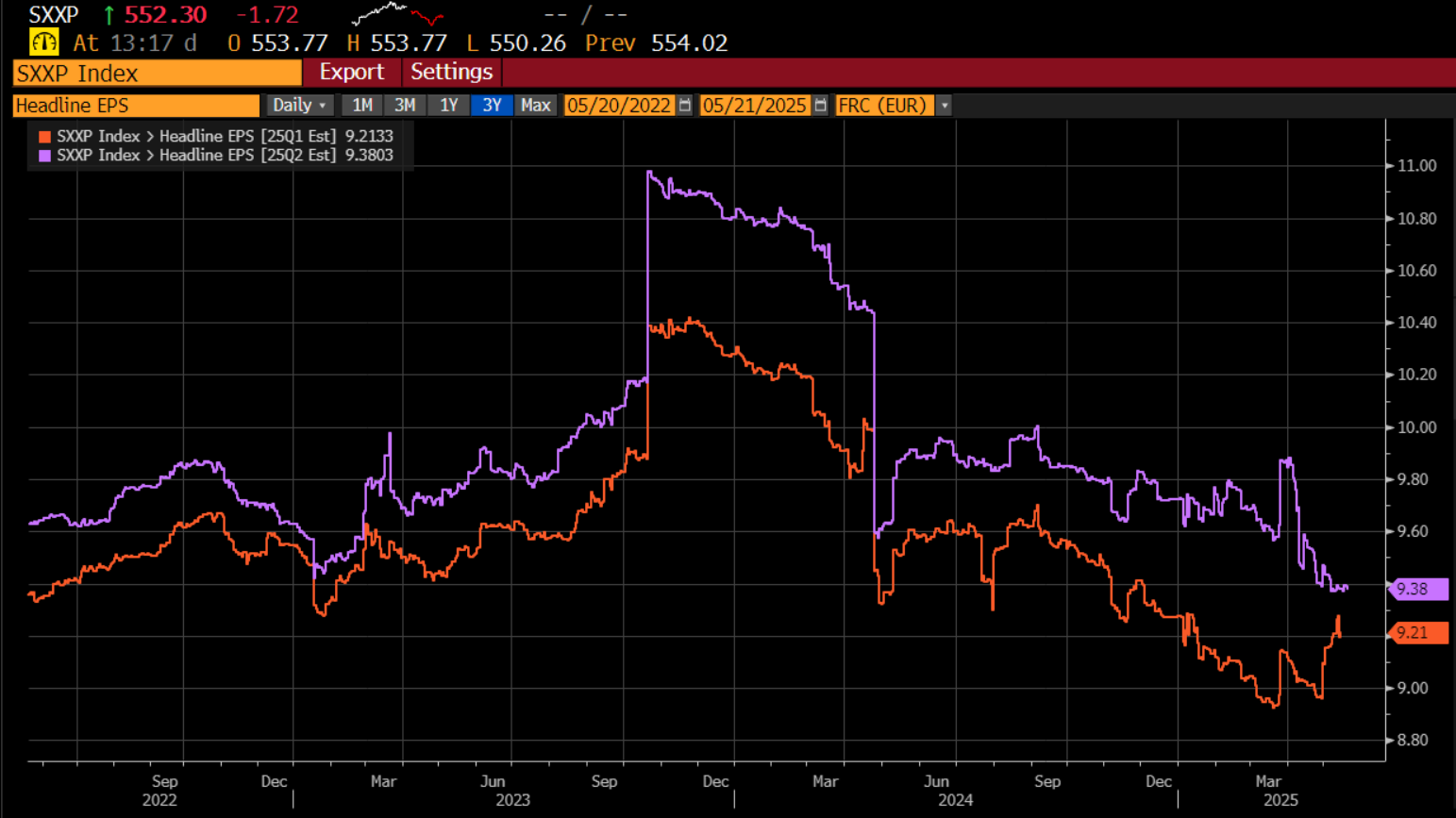
Earnings estimates for the Eurostoxx 600 have also been revised lower, but not to the same extent as US stocks.
Eurostoxx 600 earnings expectations
Source: XTB and Bloomberg
Earnings reports have a habit of exceeding analyst estimates, and weaker macro-economic data may be keeping analysts cautious for now, which could limit enthusiasm for stocks to push into fresh record territory.
It is worth noting, that even though analysts were bearish about US blue chip earnings growth in Q1, sales and earnings have both beaten analyst estimates. Sales and earnings growth are lower than Q4, but analysts remain optimistic for the outlook for the rest of this year and expect growth levels to pick up.
Retail traders to the stock market rescue
The rally in US stocks is remarkable because it has defied lower earnings and sales growth compared to recent quarters, there is a risk of analyst earnings downgrades and companies themselves are citing recession and uncertainty as key risks to their future outlooks on their earnings calls.
This suggests that buying power is strong in the market, most likely driven by retail traders who were an important stabilizing mechanism during the sell off in stocks in April. If retail traders stick with stocks, especially US stocks, then equities could continue to recover.
Author
Kathleen Brooks
XTB UK
Kathleen has nearly 15 years’ experience working with some of the leading retail trading and investment companies in the City of London.