ECB Forum 2025: Central bankers share views on interest rate outlook
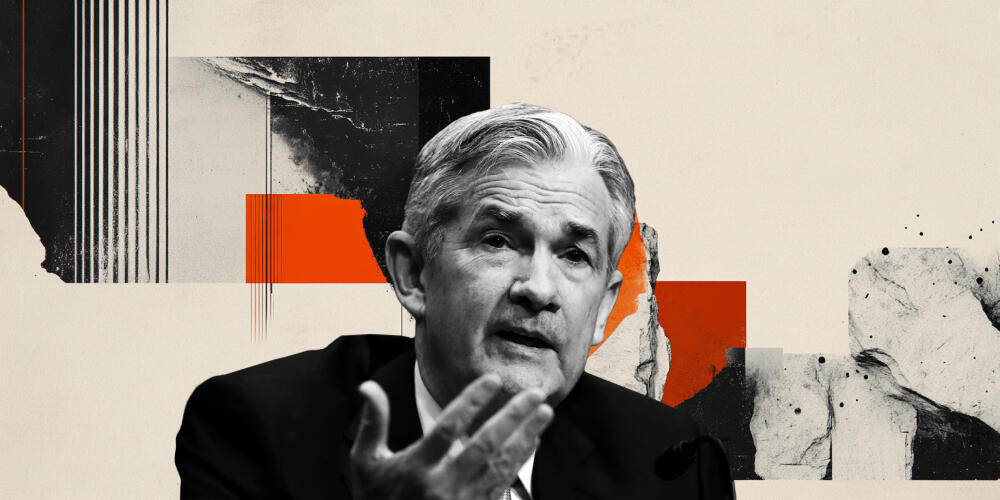
Jerome Powell, Chairman of the Federal Reserve System (Fed), Christine Lagarde, European Central Bank (ECB) President, participate in a policy panel at the 2025 ECB Forum on Central Banking, alongside Bank of England (BoE) Governor Andrew Bailey and Bank of Japan (BoJ) Governor Kazuo Ueda.

Fed Chairman Powell speech key takeaways
"The US economy is in a pretty good position."
"If we ignore tariffs, inflation behaving as expected and hoped."
"We expect higher readings over summer."
"We went on hold when we saw the size of the tariffs."
"We're taking time, for as long as the US economy is solid, the prudent thing is to wait."
"Solid majority of FOMC participants deem appropriate to cut rates again later this year."
"I wouldn't take any meeting off the table."
"Can't say if July is too soon to cut rates, will depend on data."
"We're modestly restrictive at this level."
"We will discuss communication and scenarios in the fall."
ECB President Lagarde speech key takeaways
"I am not saying mission accomplished, but the target is reached."
"We are well-equipped to navigate tormented waters."
"We need to remain extremely vigilant on inflation."
"Foreign exchange rate is a reflection of the strength of our economy."
BoE Governor Bailey speech key takeaways
"We do see signs of softening in economy, labour market."
"Direction of rates continues to be downwards."
"Too soon to see price effects from tariffs."
"Policy remains restrictive, will remain so."
"Expecting restrictiveness to come down closer to neutral."
This section below was published as a preview of the ECB Forum on Central Banking 2025 at 08:00 GMT.
- Central bank bosses to discuss monetary policy collectively in the ECB forum.
- Divergence in recent monetary policy between the Fed, ECB, BoE and BoJ makes the event particularly interesting.
- Jerome Powell’s comment will be particularly scrutinized ahead of the July policy meeting.
Jerome Powell, Chairman of the Federal Reserve System (Fed), and Christine Lagarde, European Central Bank (ECB) President, will speak at the 2025 ECB Forum on Central Banking at 13:30 GMT on Tuesday, July 1.
Alongside Fed Chairman Powell and ECB President Lagarde, Bank of England (BoE) Governor Andrew Bailey and Bank of Japan (BoJ) Governor Kazuo Ueda will also be taking part in the same panel.
The Fed left its policy rate unchanged in the range of 4.25%-4.5% following the June policy meeting, and the revised Summary of Economic Projections (the so-called dot-plot) showed that policymakers were still projecting the Fed to cut the policy rate twice this year. While testifying about the Semiannual Monetary Policy Report before the US Congress, Powell explained that the reason they adopt a cautious approach to policy-easing is that forecasts in and out of the Fed expect a meaningful increase in inflation this year due to tariffs.
The ECB lowered its key rates by 25 basis points (bps) in June, and ECB President Lagarde hinted that they might be at the end of the easing cycle. Meanwhile, the BoE maintained its policy rate at 4.25% after the June meeting, but three members of the Monetary Policy Committee (MPC) voted in favor of a 25 bps rate cut, citing material further loosening in the labour market, subdued consumer demand and pay deals near sustainable rates. Finally, BoJ Governor Kazuo Ueda reiterated that they will continue to raise rates if the economy and prices move in line with their forecasts after leaving the short-term interest rate target unchanged in the range of 0.4%- 0.5% in June.
About Jerome Powell (via Federalreserve.gov)
"Jerome H. Powell first took office as Chair of the Board of Governors of the Federal Reserve System on February 5, 2018, for a four-year term. He was reappointed to the office and sworn in for a second four-year term on May 23, 2022. Mr. Powell also serves as Chairman of the Federal Open Market Committee, the System's principal monetary policymaking body. Mr. Powell has served as a member of the Board of Governors since taking office on May 25, 2012, to fill an unexpired term. He was reappointed to the Board and sworn in on June 16, 2014, for a term ending January 31, 2028."
Interest rates FAQs
Interest rates are charged by financial institutions on loans to borrowers and are paid as interest to savers and depositors. They are influenced by base lending rates, which are set by central banks in response to changes in the economy. Central banks normally have a mandate to ensure price stability, which in most cases means targeting a core inflation rate of around 2%. If inflation falls below target the central bank may cut base lending rates, with a view to stimulating lending and boosting the economy. If inflation rises substantially above 2% it normally results in the central bank raising base lending rates in an attempt to lower inflation.
Higher interest rates generally help strengthen a country’s currency as they make it a more attractive place for global investors to park their money.
Higher interest rates overall weigh on the price of Gold because they increase the opportunity cost of holding Gold instead of investing in an interest-bearing asset or placing cash in the bank. If interest rates are high that usually pushes up the price of the US Dollar (USD), and since Gold is priced in Dollars, this has the effect of lowering the price of Gold.
The Fed funds rate is the overnight rate at which US banks lend to each other. It is the oft-quoted headline rate set by the Federal Reserve at its FOMC meetings. It is set as a range, for example 4.75%-5.00%, though the upper limit (in that case 5.00%) is the quoted figure. Market expectations for future Fed funds rate are tracked by the CME FedWatch tool, which shapes how many financial markets behave in anticipation of future Federal Reserve monetary policy decisions.
Author

FXStreet Team
FXStreet
Composed of a group of economic journalists and FX experts, the FXStreet content team produces and oversees all content published on FXStreet. It provides a purely journalistic approach to the Forex market.