Dow Jones Industrial Average hits one-week low amid government shutdown concerns
- The Dow Jones fell on Thursday, hitting a one-week low.
- Equities are retreating as investors grow more wary about government gridlock.
- The government shutdown has suspended the flow of official data, adding increased focus to private data.

The Dow Jones Industrial Average (DJIA) knocked sharply lower on Thursday following a week-long meandering period. The Dow tumbled into the 46,300 region after opening the American market session near 46,600, knocking the major equity index down around 250 points at the closing bell.
The US government’s ongoing shutdown has officially extended past the one-week mark, reaching its ninth day on Thursday. Investors initially showed little to no reaction to the shuttering of federal services, but market apprehension is slowly on the rise as the US Senate shows no signs of progress. Senate Republicans have rejected multiple budget bridging proposals from Democrats, as the two sides of the US government vote down party lines.
US government tearing itself apart over healthcare
The key hangup between the two sides is national healthcare provisions that are set to expire, which will remove millions of Americans from already-existing care programs. Democrats want a patchwork extension while the Trump administration works on its proposal to replace 'Obamacare', the moniker given to the Affordable Care Act (ACA), crafted and established under President Barack Obama. The Trump team has been promising a total revamping of the ACA since Donald Trump first hit the campaign trail during his first term. Fast forward to today, any semblance of an ACA replacement has yet to see daylight, but Republicans refuse to include any kind of extension to ACA coverage in the current federal budget, stating that they will only discuss it after the budget has been passed.
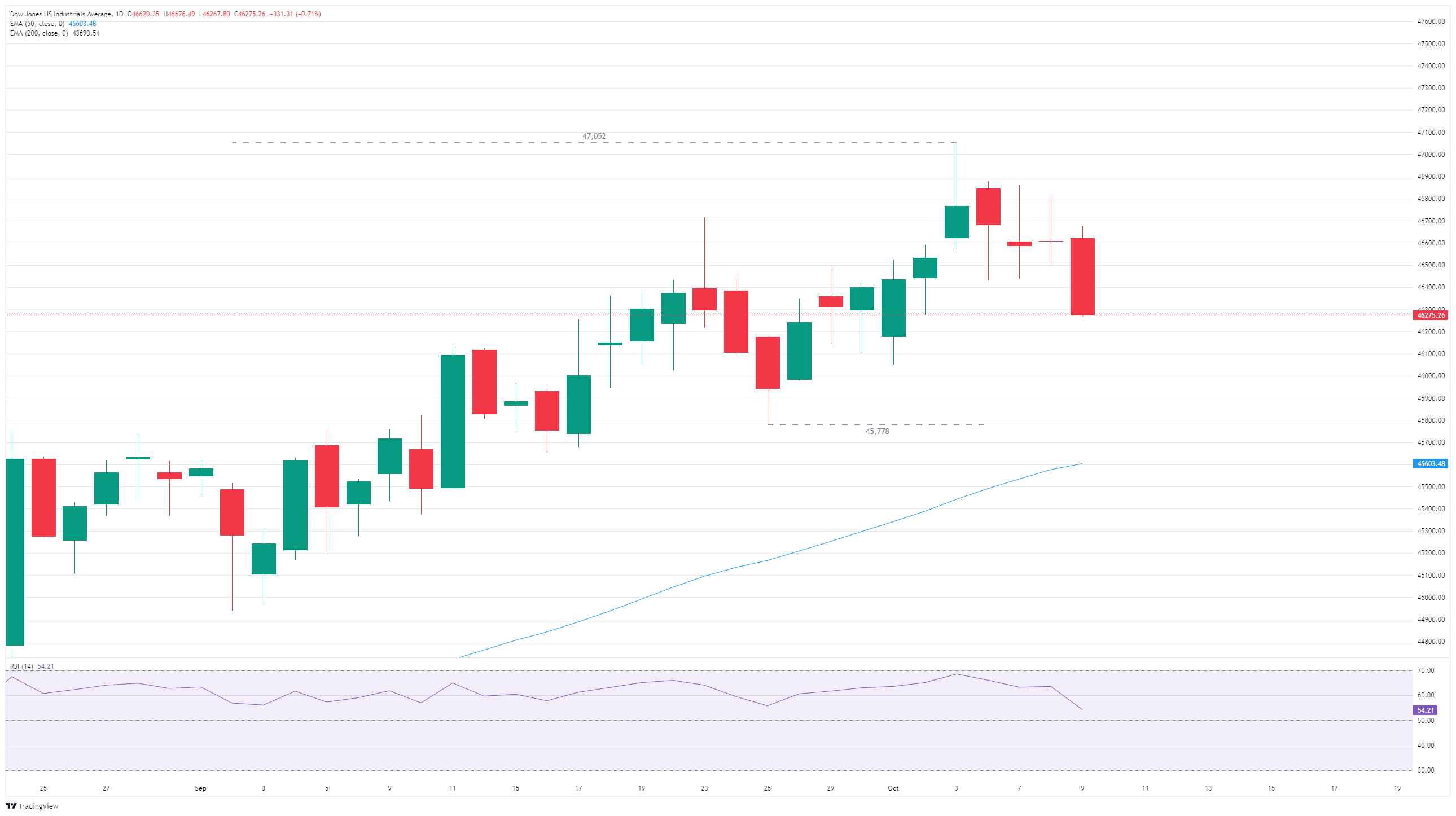
The government shutdown has also clamped down on the release of official datasets, leaving markets to grapple with newly added emphasis on private datasets. This week’s key release will be the University of Michigan’s (UoM) Consumer Sentiment Index for October, slated for Friday. Aggregated consumer survey results are expected to ease slightly as ongoing trade war headlines and rising inflation pressures eat away at consumer confidence.
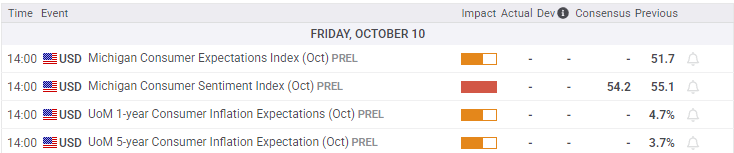
Dow Jones daily chart
Economic Indicator
Michigan Consumer Sentiment Index
The Michigan Consumer Sentiment Index, released on a monthly basis by the University of Michigan, is a survey gauging sentiment among consumers in the United States. The questions cover three broad areas: personal finances, business conditions and buying conditions. The data shows a picture of whether or not consumers are willing to spend money, a key factor as consumer spending is a major driver of the US economy. The University of Michigan survey has proven to be an accurate indicator of the future course of the US economy. The survey publishes a preliminary, mid-month reading and a final print at the end of the month. Generally, a high reading is bullish for the US Dollar (USD), while a low reading is bearish.
Read more.Next release: Fri Oct 10, 2025 14:00 (Prel)
Frequency: Monthly
Consensus: 54.2
Previous: 55.1
Source: University of Michigan
Consumer exuberance can translate into greater spending and faster economic growth, implying a stronger labor market and a potential pick-up in inflation, helping turn the Fed hawkish. This survey’s popularity among analysts (mentioned more frequently than CB Consumer Confidence) is justified because the data here includes interviews conducted up to a day or two before the official release, making it a timely measure of consumer mood, but foremost because it gauges consumer attitudes on financial and income situations. Actual figures beating consensus tend to be USD bullish.
Author

Joshua Gibson
FXStreet
Joshua joins the FXStreet team as an Economics and Finance double major from Vancouver Island University with twelve years' experience as an independent trader focusing on technical analysis.