Desensitised to politics, fixated on chips

The real lodestar remains Nvidia
The tape managed to maintain its balance on Tuesday, even as Trump attempted to draw the Fed into the political circus ring. Stocks traded as though they’re getting desensitized to the constant political theatre bleeding in from Washington — the S&P and Nasdaq tacked on 0.4%, the Dow a touch less. At the same time, traders funnelled most of their real attention toward Nvidia’s looming print after the bell on Wednesday. The Cook saga — Trump declaring her fired, Cook declaring “not so fast” — felt like noise bleeding in from outside the trading desk. Traders didn’t sprint for the exits; they just adjusted the plumbing. The dollar sagged a touch, the short end of the curve eased, and the long end stiffened up, as if to say: a politicized Fed might lean dovish in the short run, but inflation risk never stays buried for long.
Markets know the institutional guardrails: the courts will have a say, and the Fed’s immediate path toward a September cut looks intact. Odds of that first trim are brushing 90% and traders are already sketching out five cuts through the end of next year. Still, even if Cook clings to her chair, Trump’s broader push to bend the Fed to his will plants a higher term premium in the long end — a hedge against both inflation risk and the remote but real chance of a buyers’ strike in Treasuries.
Across the pond, France offered its own brand of political indigestion. A no-confidence standoff sent the CAC lower and OAT yields to their highest since March, muting any temptation to bid the euro aggressively on Cook-related dollar slippage. It was a reminder that every currency pair has two sides — and European politics can throw just as many curveballs as Washington.
Macro releases gave the bulls just enough fodder to keep the tape steady. Confidence readings perked up, Richmond Fed manufacturing improved, and durable goods orders popped higher than expected. Goldman even nudged GDP tracking up to 1.8%. That allowed stocks to drift higher, though with the Mag 7 lagging, it was the forgotten S&P 493 and a short-squeezed crop of small caps doing the heavy lifting. By the close, it felt less like a breakout and more like lipstick slapped on a quiet tape.
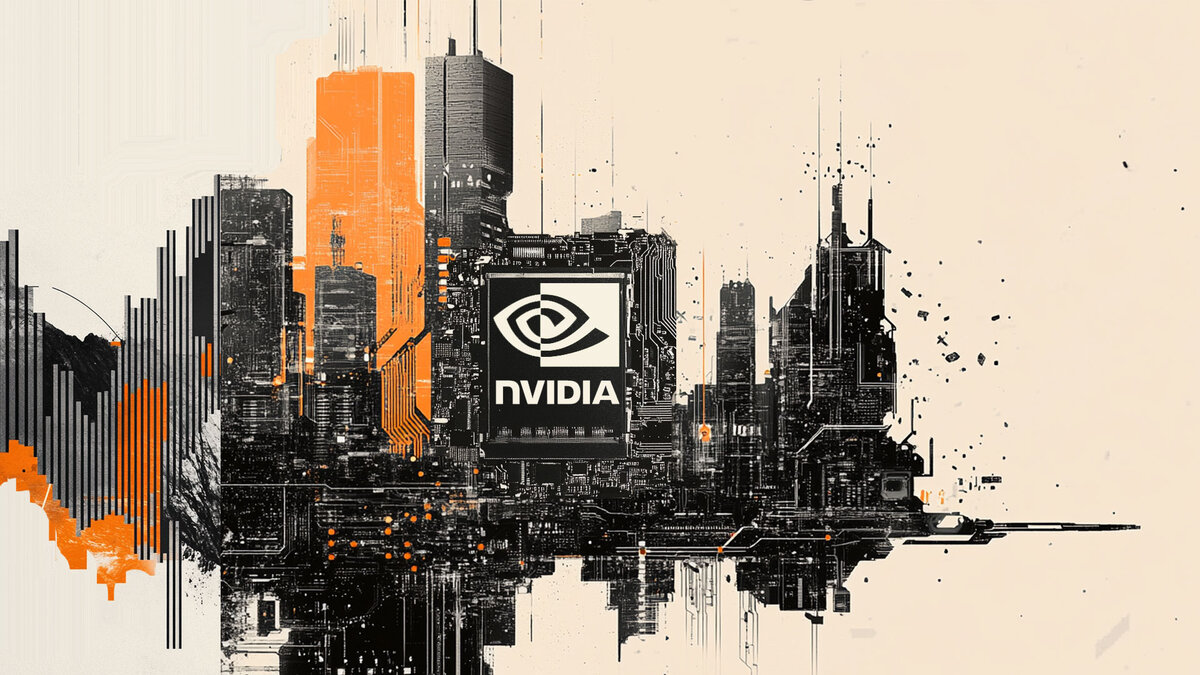
The real lodestar remains Nvidia. Traders can quote every twist in Fed politics, every percentage point on the FedWatch tool, but none of it eclipses the gravitational pull of a trillion-dollar chipmaker reporting into a market already priced for perfection. Until that card is turned over, everything else — Cook’s courtroom battles, Trump’s pressure campaign, France’s parliamentary knife fight — is background noise in a market that wants to believe September cuts are coming and that Silicon Valley can still carry the torch.
Trader view: Noise on the midway
The market is still playing along with the idea of a September rate cut, steepening the yield curve and giving equities a bit of a sugar rush. But the tape knows the difference between a sugar high and a full meal. If the Fed’s credibility keeps eroding, those empty calories will come back to haunt risk — because you can’t build a bull market on a foundation of doubt.
Long yields are the place where the whispers become shouts. It isn’t just America’s 30-year Treasuries taking the hit; the long end is bleeding across continents. Britain’s 30-year gilt is pressing levels not seen in 27 years, Japan’s 10-year has climbed to a 17-year peak, and the eurozone’s 30-year yield is clinging to record highs. This isn’t random noise — it’s the global bond market circling the same truth: debt sustainability is back under the floodlights. The curtain’s been pulled, and investors are asking whether the industrialized world can keep funding its habit without the stage collapsing.
France has added its own plot twist. Bayrou’s confidence vote isn’t just a political maneuver, it’s a shot across Europe’s bow. The CAC rolled over, OAT yields spiked, and suddenly Paris — not Rome — is the weak link pulling the eurozone into the spotlight. Italy has always worn the “problem child” badge, but right now the audience is watching France stumble on center stage, and the rest of Europe can feel the floorboards creak.
Then we have Nvidia — the headliner, the marquee act. The company has outgrown the tech sector and become the market’s lodestar, its earnings releases carrying the gravitas of GDP or CPI prints. With a $4.4 trillion valuation — twice the DAX, 8% of the S&P — Nvidia isn’t just a stock anymore, it’s a pillar holding up the tent. Analysts expect revenue to soar 53% to $46 billion, but this is about more than revenue beats. The crowd wants reassurance that the AI revolution isn’t just smoke and mirrors.
Yet doubt is seeping in, even from inside the tent. Sam Altman himself has admitted investors may be “overexcited” about AI. MIT research shows that 95% of companies are getting nothing on the bottom line for the billions invested in generative AI. Productivity tweaks at the margin, yes. Profit engines, not yet. And investors are starting to shift their chips — peeling out of expensive tech, leaning into small caps and value. In just two weeks, the Russell 2000 has gained 5% while the Nasdaq 100 has drifted lower. Maybe it’s August thinness, maybe mean reversion — but either way, it’s a market that’s nervous, fingers drumming on the table, waiting for the next card.
That’s why Wednesday’s number carries so much weight. Nvidia isn’t reporting earnings — it’s performing an act of faith. If it dazzles, the show goes on, the AI dream still glitters, and equities can breathe easy. If it stumbles, the spell breaks, and the market will have to reckon with the possibility that the emperor’s cloak of exponential growth is thinner than advertised.
Until then, Washington’s circus tricks and Paris’s knife fights are just noise on the midway. The crowd’s eyes are fixed on the main stage, waiting to see if Nvidia can still deliver magic.
Author
Stephen Innes
SPI Asset Management
With more than 25 years of experience, Stephen has a deep-seated knowledge of G10 and Asian currency markets as well as precious metal and oil markets.