Canadian Dollar sheds weight, flubbing technical recovery after jobs data misses the mark
- The Canadian Dollar shed 0.4% against the Greenback on Friday.
- Canada saw a worse-than-expected print in net new jobs additions in October.
- Average Canadian wages also rose, maintaining upward pressure on inflation expectations.

The Canadian Dollar flubbed a near-term technical recovery on Friday, slumping back into familiar lows against the Greenback. The Loonie remains under pressure as the Bank of Canada (BoC) continues to keep downward pressure on interest rates in the face of lagging employment figures, though the Canadian central bank is quickly running out of runway as rising wages keep inflation expectations simmering in the background.
Canada reported a much lower than expected print in Net Change in Employment in October, entirely missing the mark as job gains continue to wither. Canadian Average Hourly Wages also rebounded, reminding investors of Canada’s ongoing battle with still-high inflation expectations despite overall price growth well outpacing wages across the gamut of timeframes.
Daily digest market movers: Canadian Dollar backslides on missed jobs growth
- Canadian Net Change in Employment rose by a scant 14.5K in October, missing the forecast 25K and well below September’s 46.7K print.
- Average Hourly Wages also grew 4.9% YoY in October, rebounding from September’s slowdown to 4.5%.
- With wages back on the rise, inflation expectations are likely to remain elevated, crimping the BoC’s hopes to single-handedly restart Canada’s growth engine using steep interest rate cuts.
- The US Consumer Sentiment Index also rose on Friday, with November chalking in an upswing to 73.0 in aggregated consumer survey results. Markets anticipated a much more moderate upswing to 71.0 from the previous 70.5.
- Despite a wider miss in Canada’s jobs figures for October, the Canadian Unemployment Rate held steady at 5.5% versus the forecast uptick to 6.6%. However, the on-balance Unemployment Rate print is likely due to long-term unemployed workers dropping out of the unemployment reference period as the Canadian Labor Force Participation Rate continues to sink below 65%.
- Canada’s LFPR last printed at 64.8%, and hasn’t been this low since the global recovery from the COVID pandemic in mid-2020.
Canadian Dollar price forecast: Loonie remains sticky near familiar lows
The Canadian Dollar (CAD) continues to churn chart paper close to medium-term lows against the US Dollar. USD/CAD marched to 14-month highs near 1.3960 earlier in November, and a sputtering technical recovery in the Canadian Dollar coupled with a broad-market strengthening of the Greenback has kept the pair bolstered north of the 1.3900 handle.
USD/CAD daily chart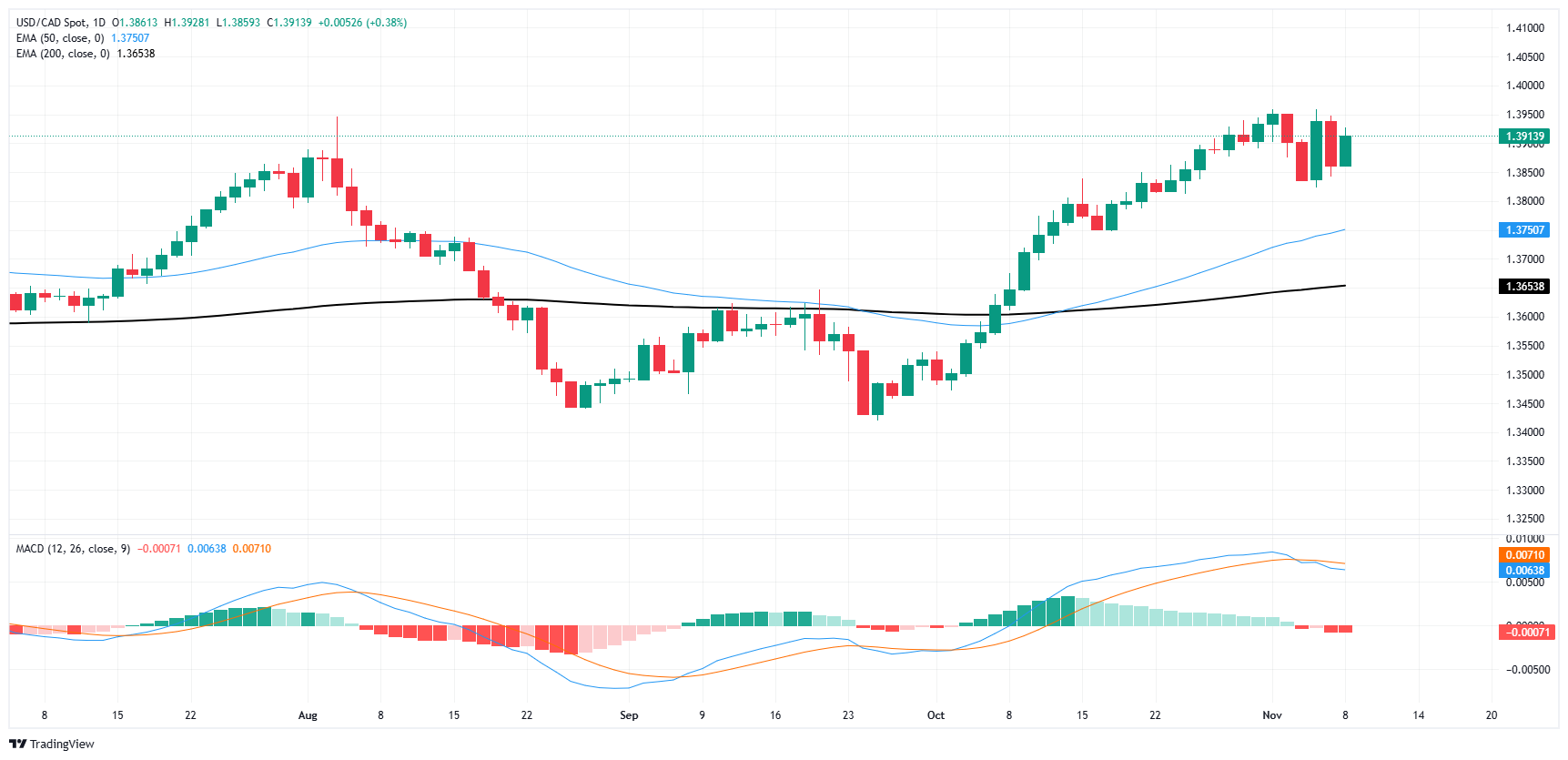
Economic Indicator
Net Change in Employment
The Net Change in Employment released by Statistics Canada is a measure of the change in the number of people in employment in Canada. Generally speaking, a rise in this indicator has positive implications for consumer spending and indicates economic growth. Therefore, a high reading is seen as bullish for the Canadian Dollar (CAD), while a low reading is seen as bearish.
Read more.Last release: Fri Nov 08, 2024 13:30
Frequency: Monthly
Actual: 14.5K
Consensus: 25K
Previous: 46.7K
Source: Statistics Canada
Canada’s labor market statistics tend to have a significant impact on the Canadian dollar, with the Employment Change figure carrying most of the weight. There is a significant correlation between the amount of people working and consumption, which impacts inflation and the Bank of Canada’s rate decisions, in turn moving the C$. Actual figures beating consensus tend to be CAD bullish, with currency markets usually reacting steadily and consistently in response to the publication.
Author

Joshua Gibson
FXStreet
Joshua joins the FXStreet team as an Economics and Finance double major from Vancouver Island University with twelve years' experience as an independent trader focusing on technical analysis.