Breaking: UK annualized CPI inflation softens to 10.1% in January vs.10.3% expected
- UK CPI eases to 10.1% YoY in January vs. 10.3% expected.
- Monthly UK CPI arrives at -0.6% in January vs. -0.4% expected.
- GBP/USD extends losses toward 1.2100 on disappointing UK CPIs.


The UK annualized Consumer Prices Index (CPI) came in at 10.1% in January against the 10.5% increase recorded in December while missing estimates of a 10.3% print, the UK Office for National Statistics (ONS) reported on Wednesday. The index keeps moving away from its highest level since January 1981, reached at 11.1% last year.
Meanwhile, the Core CPI gauge (excluding volatile food and energy items) eased to 5.8% YoY last month versus 6.3% seen in December. The market consensus was for a 6.2% print.
The monthly figures showed that the UK consumer prices declined by 0.6% in January vs. -0.4% expectations and 0.4% prior.
The UK Retail Price Index for January stood at 0% MoM and 13.4% YoY, beating expectations across the time horizon.
Additional takeaways (via ONS)
“The largest downward contribution to the change in both the CPIH and CPI annual inflation rates between December 2022 and January 2023 came from transport (particularly passenger transport and motor fuels), and restaurants and hotels, with rising prices in alcoholic beverages and tobacco making the largest partially offsetting upward contribution to the change.”
“Core CPIH (excluding energy, food, alcohol and tobacco) fell to 5.3% in the 12 months to January 2023 from 5.8% in December 2022, the annual CPIH goods index eased slightly from 13.4% to 13.3% over the same period, while the annual CPIH services index fell from 5.8% to 5.2%.”
FX implications
In an initial reaction to the UK CPI numbers, the GBP/USD pair extended losses to test 1.2100, down 0.49% on the day.
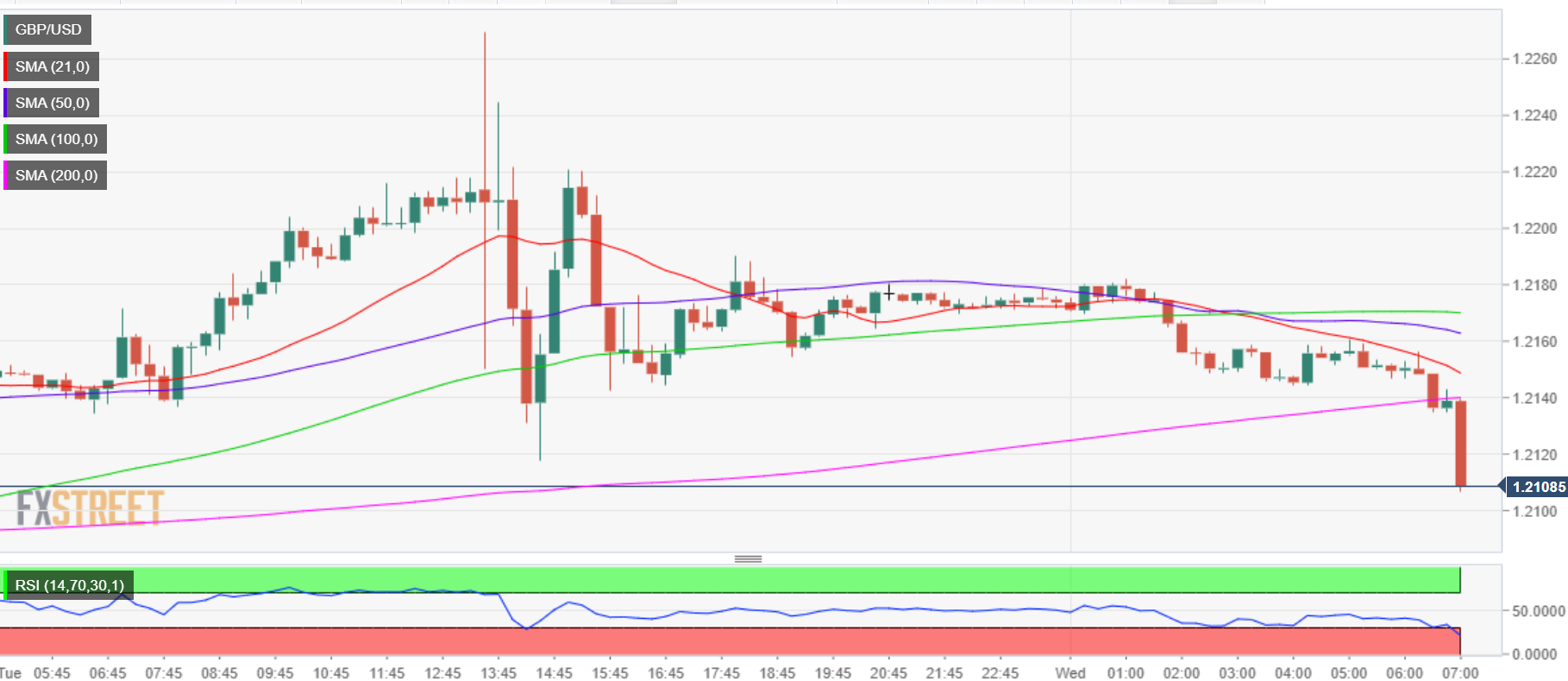
GBP/USD: 15-minutes chart
Why does UK inflation matter to traders?
The Bank of England (BOE) is tasked with keeping inflation, as measured by the headline Consumer Price Index (CPI) at around 2%, giving the monthly release its importance. An increase in inflation implies a quicker and sooner increase in interest rates or the reduction of bond-buying by the BOE, which means squeezing the supply of pounds. Conversely, a drop in the pace of price rises indicates looser monetary policy. A higher-than-expected result tends to be GBP bullish.
Author
FXStreet Team
FXStreet