Aussie Covid spread tainting bullish appetite in AUD

Australia's most populous state reported a rise in new COVID-19 cases on Monday despite a weeks-long stay-at-home order, while police vowed to crack down on any repeat of an anti-lockdown protest which turned violent at the weekend.
Reuters reports that ''New South Wales, which has had more than 5 million people in Sydney city under lockdown for a month, reported 145 new cases of the virus, from 141 a day earlier, as it struggles to contain an outbreak of the highly contagious Delta variant.''
''The state also reported two new deaths, a man and a woman both in their 80s, taking its total fatalities to 10 since the flare-up began a month ago and the national total to 920 since the start of the pandemic. Of particular concern, 51 of the newly diagnosed were active in the community before testing positive, raising the risk of transmission.''
Today, the Sunday Morning Herald wrote that ''a three-month lockdown could completely erase Australia’s economic recovery from the coronavirus recession with the nation’s largest businesses pleading for all governments to develop a smarter approach to lockdowns.''
The article goes on to warn that ''economists are expecting the Greater Sydney lockdown, along with shorter closures in Victoria and South Australia, will result in the national economy contracting through the September quarter.''
In relation to the Aussie, besides the safe-haven flows that flooded into the greenback, it was the best performer when the global pandemic began whereby the nation experienced far less of the spread than neighbouring China and other nations o the world.
However, at this rate, traders might be more inclined to steer away from the currency, especially with respect to the central bank divergences between not only the Federal Reserve but among closer counterparts such as the Reserve Bank of New Zealand.
Markets are only pricing 40bp worth of tightening in Australia in the next two years (by comparison, the pricing in New Zealand is for 100bp),
''Australian bonds have taken trend from price action in the US, while the main domestic focus remains on the lockdowns and the Consumer Price Index released on Wednesday,'' analysts at ANZ bank explained.
The Reserve Bank of Australia has been sticking to its dovish stance despite many developed central banks have moved to the hawkish side, potentially rightly so considering the spike in risk associated with the wave in new covid cases and subsequent lockdowns.
With regards to the CPI data, therefore, it is still unlikely that one high inflation reading is going to spur the central bank into action and make a U-turn in the RBA’s tone.
On the other hand, should there be a material surprise in the data this week, then one cannot rule out the prospects of the RBA needing to start discussing, albeit reluctantly, an earlier start to the tightening cycle.
Elsewhere, iron ore prices have also likely playing a role, correcting from weekly resistance and down some 5.4% for the month so far.
''The exodus had been sparked by the continued efforts of officials in China to rein in the steel market,'' analysts at ANZ Bank explained.
Overall, there is not much to be cheerful about and the recent correction in the Aussie could be bulls coming up for their last breath:
AUD/USD Price Analysis: Bulls coming up for their last breath?
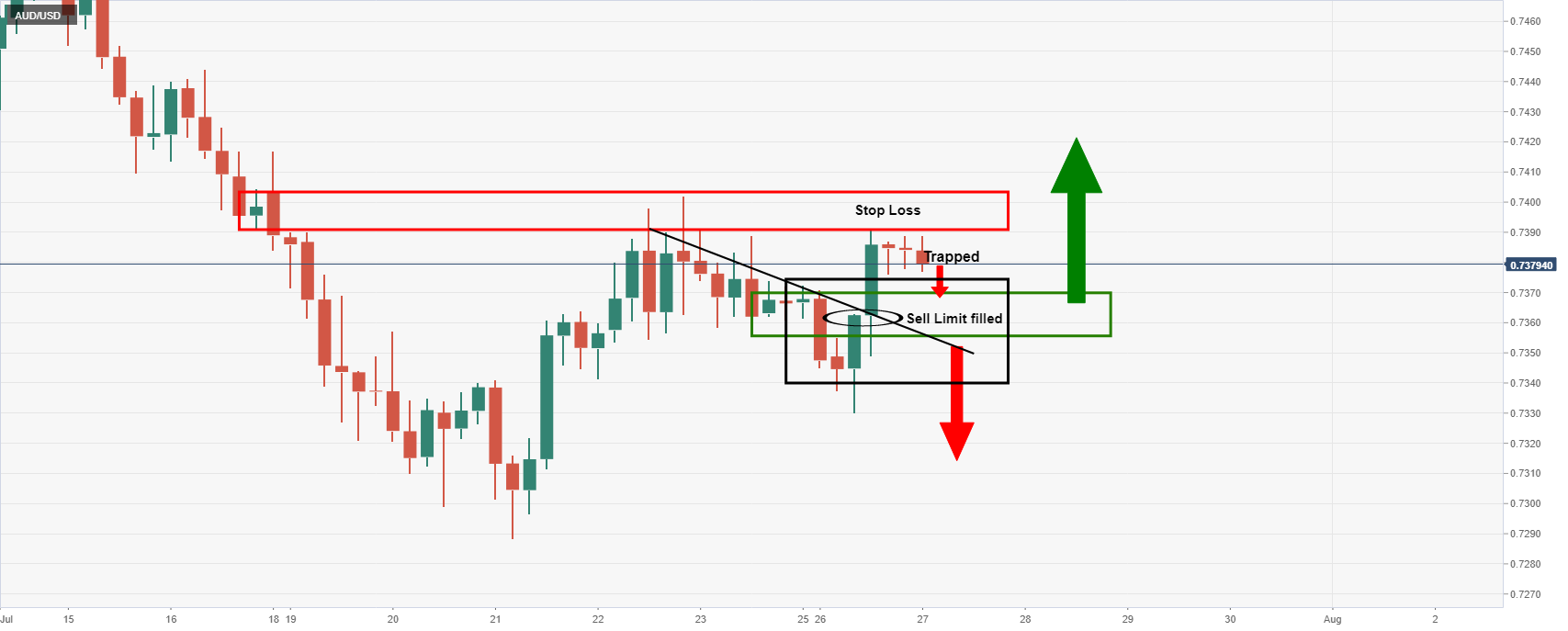
If you are a trapped trader the following 4-hour chart conditions may be familiar:
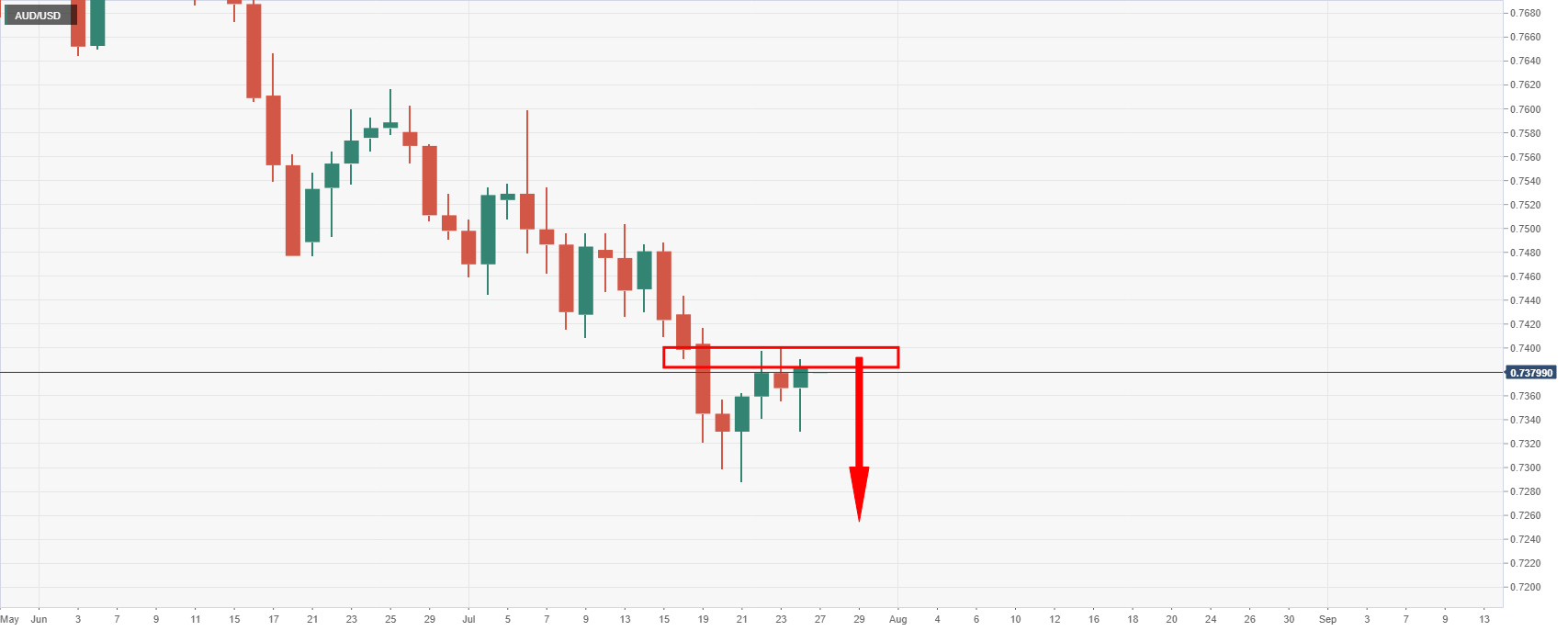
The daily resistance is, so far, holding up and the bullish momentum on the lower time frames is starting to die down a little:
However, there is hidden divergence on the hourly chart that usually indicates that there is still strength in the prevailing trend and that the trend will resume:
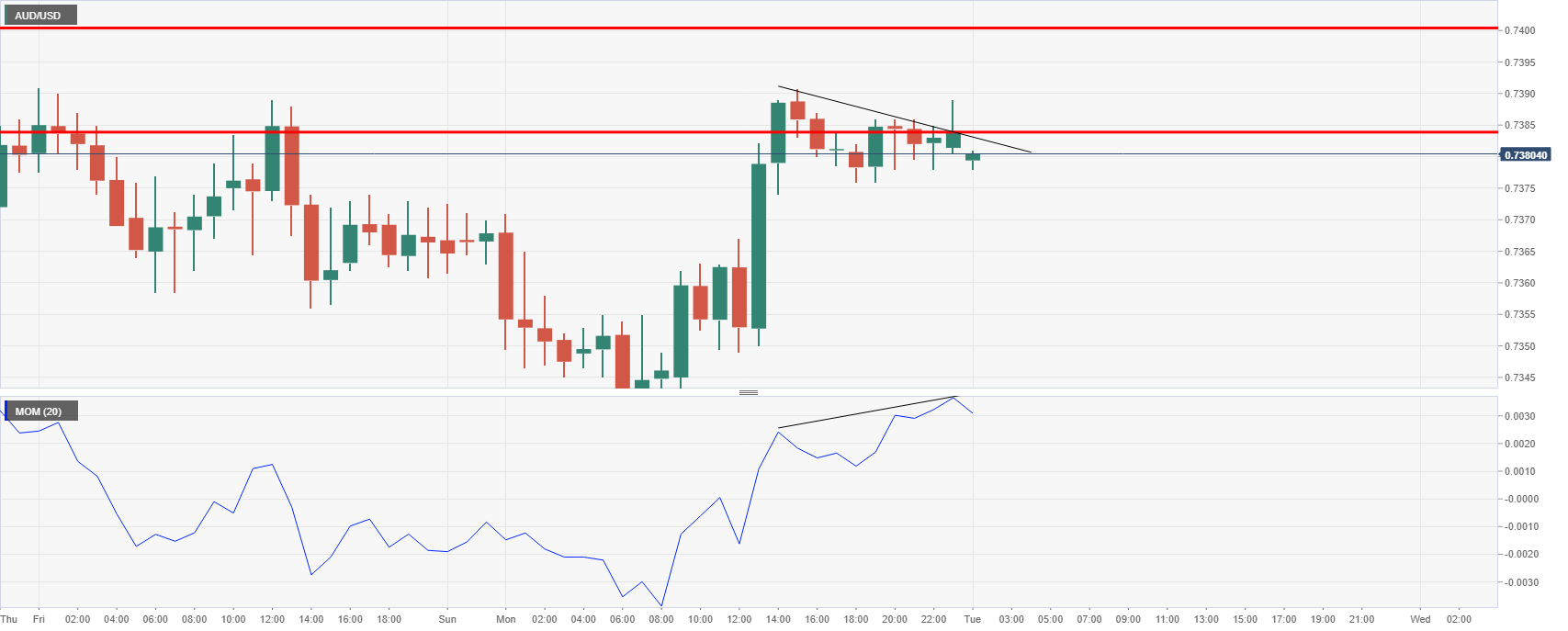
However, the price may only manage to eke out a marginally higher high as it tests deeper into the bear's lair.
Author

Ross J Burland
FXStreet
Ross J Burland, born in England, UK, is a sportsman at heart. He played Rugby and Judo for his county, Kent and the South East of England Rugby team.