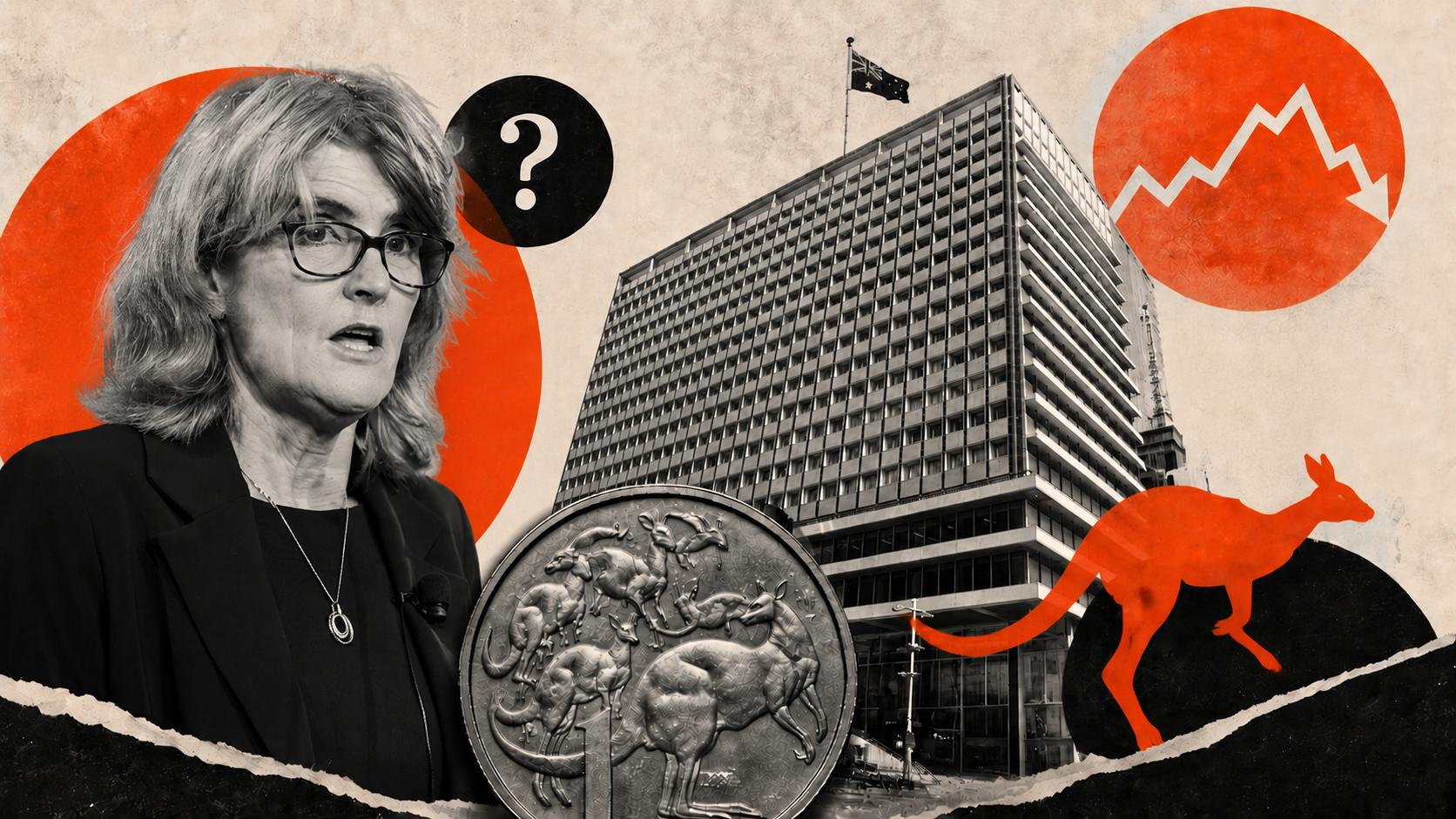
AUD/USD remains depressed below mid-0.6600s; downside seems limited ahead of US NFP report
- AUD/USD remains depressed for the fourth consecutive day amid a combination of negative factors.
- Last week’s mixed Aussie jobs data, China economic woes, and a softer risk tone weigh on the AUD.
- The divergent RBA-Fed policy expectations limit losses as traders await the delayed US NFP report.

The AUD/USD pair attracts some sellers for the fourth straight day on Tuesday and trades around the 0.6630 region, down just over 0.10%, during the Asian session.
Against the backdrop of last Thursday's mixed Australian employment details, disappointing Chinese macro data released on Monday revied concerns about the health of the world's second largest economy. This, along with a weaker tone around the global equity markets, is seen weighing on the perceived riskier Australian Dollar (AUD) and the AUD/USD pair.
However, the Reserve Bank of Australia's (RBA) hawkish stance limits deeper AUD losses. In fact, RBA Governor Michele Bullock said last week that it looks like more rate cuts are not needed and added that the Board discussed what they might have to do if rates need to go up. This, along with sustained US Dollar (USD) selling, offers support to the AUD/USD pair.
The USD Index (DXY), which tracks the Greenback against a basket of currencies, languishes near its lowest level since October 7 amid rising bets for more interest rate cuts by the Federal Reserve (Fed). Furthermore, expectations for a dovish replacement of Fed Chair Jerome Powell keep the USD bulls on the defensive and could act as a tailwind for the AUD/USD pair.
Traders also seem reluctant and might opt to wait for this week's important macro data, starting with the delayed US Nonfarm Payrolls (NFP) report for October, before placing aggressive directional bets. Hence, it will be prudent to wait for strong follow-through selling before confirming that the AUD/USD pair's three-week-old uptrend has run out of steam.
Australian Dollar FAQs
One of the most significant factors for the Australian Dollar (AUD) is the level of interest rates set by the Reserve Bank of Australia (RBA). Because Australia is a resource-rich country another key driver is the price of its biggest export, Iron Ore. The health of the Chinese economy, its largest trading partner, is a factor, as well as inflation in Australia, its growth rate and Trade Balance. Market sentiment – whether investors are taking on more risky assets (risk-on) or seeking safe-havens (risk-off) – is also a factor, with risk-on positive for AUD.
The Reserve Bank of Australia (RBA) influences the Australian Dollar (AUD) by setting the level of interest rates that Australian banks can lend to each other. This influences the level of interest rates in the economy as a whole. The main goal of the RBA is to maintain a stable inflation rate of 2-3% by adjusting interest rates up or down. Relatively high interest rates compared to other major central banks support the AUD, and the opposite for relatively low. The RBA can also use quantitative easing and tightening to influence credit conditions, with the former AUD-negative and the latter AUD-positive.
China is Australia’s largest trading partner so the health of the Chinese economy is a major influence on the value of the Australian Dollar (AUD). When the Chinese economy is doing well it purchases more raw materials, goods and services from Australia, lifting demand for the AUD, and pushing up its value. The opposite is the case when the Chinese economy is not growing as fast as expected. Positive or negative surprises in Chinese growth data, therefore, often have a direct impact on the Australian Dollar and its pairs.
Iron Ore is Australia’s largest export, accounting for $118 billion a year according to data from 2021, with China as its primary destination. The price of Iron Ore, therefore, can be a driver of the Australian Dollar. Generally, if the price of Iron Ore rises, AUD also goes up, as aggregate demand for the currency increases. The opposite is the case if the price of Iron Ore falls. Higher Iron Ore prices also tend to result in a greater likelihood of a positive Trade Balance for Australia, which is also positive of the AUD.
The Trade Balance, which is the difference between what a country earns from its exports versus what it pays for its imports, is another factor that can influence the value of the Australian Dollar. If Australia produces highly sought after exports, then its currency will gain in value purely from the surplus demand created from foreign buyers seeking to purchase its exports versus what it spends to purchase imports. Therefore, a positive net Trade Balance strengthens the AUD, with the opposite effect if the Trade Balance is negative.
Author

Haresh Menghani
FXStreet
Haresh Menghani is a detail-oriented professional with 10+ years of extensive experience in analysing the global financial markets.