Alibaba (BABA) Stock Price and News: Explodes 10% heading into New Year Eve
- Alibaba (BABA) shares up almost 10% on Thursday.
- Alibaba (BABA) stock has lost over 50% for 2021.
- Alibaba (BABA) suffering from regulatory and delisting concerns.

Update: Alibaba (BABA) shares staged an impressive comeback on Thursday, reversing the weekly losses and heading strong into the year-end. BABA stock price snapped a three-day decline and jumped nearly 10%, recording fresh two-week highs at $124.30. Alibaba price, however, eased off highs to settle at $122.98. The shares of the company skyrocketed following the biggest rally in Chinese American depository receipts overnight since 2008, with analysts citing it as short-covering.
Alibaba (BABA) shares were down again on Wednesday as the stock shed another 2.3%. BABA stock closed at $112.09 bringing the psychological $100 level closer and closer. The stock has had a terrible 2021 and has likely seen many investors give up on the name.
Alibaba (BABA) stock news
Regulatory concerns and delisting fears have been the main problem here. Alibaba is often called the Chinese Amazon (AMZN) and business and revenue generation is not the main cause behind this slide. Chinese stocks have suffered and now with China pushing for listings in Hong Kong, many overseas investors have decided to cut their losses. The latest news is that Alibaba is considering selling its near 30% stake in Weibo.
Alibaba (BABA) stock forecast
Breaking the $130 level has now brought support at $110 and $100 into view. $110 brings Alibaba back to where it was trading in 2016. Back then BABA had revenues of $23.5 billion, now Alibaba has revenue of over $100 billion.
A very powerful downtrend is in place and will be hard to break. Declining RSI and MACD. A perfect series of lower highs and lows.
Support at $110 and $100. Then $80 from the large volume profile there. Resistance at $130 and $139.
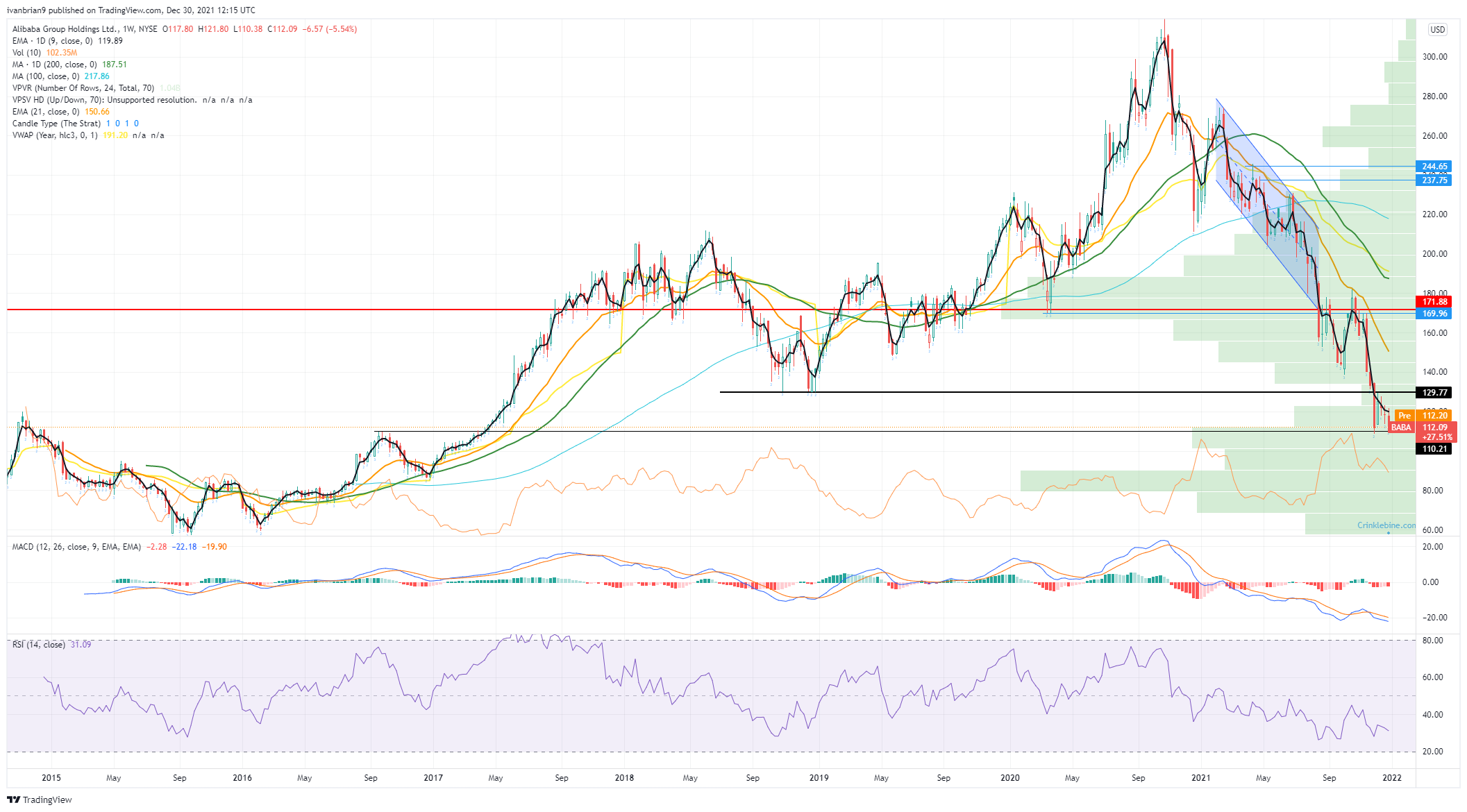
Alibaba chart, weekly
Previous updates
Update: Alibaba (BABA) shares are up over 9% heading into Thursday's close, changing hands at $ 122.92 per share. US indexes posted modest advances, although enough for the S&P to reach a fresh record high. The NYSE Composite is up 82 points at the time being, while the DJIA is up measly 16 points. Wall Street will work normally on Friday, despite being New Year's Eve, while bonds' markets are due to an early close.
Like this article? Help us with some feedback by answering this survey:
Author

Ivan Brian
FXStreet
Ivan Brian started his career with AIB Bank in corporate finance and then worked for seven years at Baxter. He started as a macro analyst before becoming Head of Research and then CFO.
















