Why Blockchain is the Best Identity Theft Insurance Out There

My friend was in tears.
She was about to close on the purchase of a new home when her mortgage broker called. "I'm sorry, but you've been turned down because of your low credit score."
Buying a home can be filled with lots of surprises, yes. But for my financially savvy friend, this one really came out of left field. Turns out that some scumbag stole her identity, ran up thousands of dollars of illegal charges on her credit cards, and completely ruined her credit score.
My friend is far from alone. According to the Harris Poll, an almost unbelievable 60 million Americans have had their identities stolen or otherwise compromised.
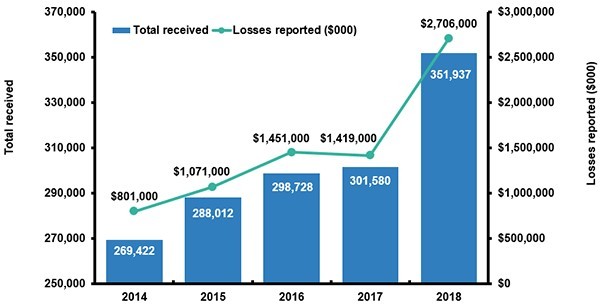
The Internet Crime Complaint Center — a joint venture of the Federal Bureau of Investigation, the National White Collar Crime Center and the Bureau of Justice Assistance — received 351,937 identity theft complaints last year, which was a 17% increase from 2017.
A total of $2.7 billion was stolen in 2018, from companies and individuals — almost double the $1.4 billion lost in 2017. Unfortunately, cyber crimes like these are on the rise … and they are happening more frequently and on a bigger scale.
And it isn't only happening to older, tech-challenged senior citizens, either. More than half of all victims, like my friend, were under the age of 50.
For some, it happens more than once. In fact, it happened three times to, get this, the CEO of Equifax, Mark Begor. You'll remember that the Equifax hack put some 143 million customer records at risk.
The problem with our personal data is that we store it all in the same place. That's like hiding all your cash and jewelry in a single shoebox. This makes it easy for a burglar to walk away with everything you own.
My friend, by the way, eventually got those bogus charges reversed and restored her previously pristine credit rating. But it took a hundred frustrating hours of her time and a couple thousand dollars in legal fees.
You could buy identity theft insurance from one of the major insurers, just like you buy car or homeowners' insurance. These policies can cover things like lost wages, notary fees, certified mailing fees and ongoing credit monitoring.
But just like your other insurance policies, they can also come with a big deductible that doesn't kick in till after you've paid a big chunk of change out of pocket. Worse, they don't reimburse you for cash losses, which can be substantial.
Consider that there were 3 million identity theft/fraud reports received in 2018, according to the Federal Trade Commission's Consumer Sentinel Network. Half (1.4 million) were fraud related. And 25% of those cases reported money was lost — a massive $1.5 billion.
Blockchain offers a very different kind of insurance against identity theft. And the cost and onus is on the companies that provide it, rather than on you.
Blockchain is a record-keeping digital technology based on a distributed ledger, which means that it is decentralized. Data saved to a blockchain is stored over millions of servers all around the world.
A cyber scumbag would need to go from one data point to another, one at a time, through tens or even hundreds of thousands of places to get to your personal data. This makes the process of hacking and stealing data incredibly difficult as opposed to accessing a centralized database.
The result is that cyber thieves ...
A. No longer have a single point of entry, and ...
B. Can only access a small part of your information even if they do manage to break in.
Your personal data, once confirmed on the blockchain, is part of the ledger forever and fraudulently altering them is impossible.
The proof that this works?
NO ONE has ever hacked Bitcoin. That's because Bitcoin is stored over a blockchain, the most secure computing network in the world.
No wonder that businesses all over the world are scrambling to incorporate blockchain technology into their security solutions.
Cybersecurity expert Cybersecurity Ventures forecasts that total global spending on cybersecurity will exceed $1 trillion cumulatively over the next five years.
$1 TRILLION!
I'm sure a big chunk of that $1 trillion jackpot is going to find its way into the coffers of the blockchain service providers ...
And a piece of THAT action is going to find its way into the pockets of investors who are savvy enough to include those kinds of stocks in their portfolios.
I'm not only recommending you protect your identity with blockchain. I'm suggesting you protect your portfolio with it, too! This is the perfect time to get on the blockchain bandwagon.
Author

Tony Sagami
Weiss Crypto Ratings
Tony Sagami is one of the early pioneers in the application of technical and quantitative analysis to mutual funds and stocks. A veteran investment adviser and a leading expert on technology investing, he is the editor for Dr.



