Top three crypto coins poised for revenue sharing in 2026

Crypto investors should be eyeing several high-growth crypto projects with strong protocol revenues that could be shared with token holders in 2026.
Many DeFi (Decentralized Finance) projects have achieved strong adoption as reflected in their revenues:
Protocol revenues (seven days)
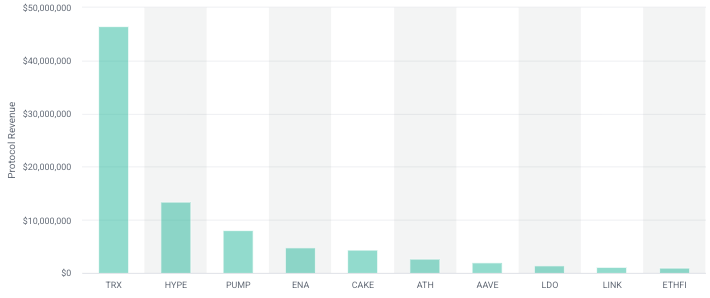
However, the following three tokens posting the fastest YTD revenue growth in 2025 stand out. Each, though, has clear potential catalysts, ranging from forthcoming governance proposals to increasing pressure from token holders, that could unlock buybacks or revenue distribution next year.
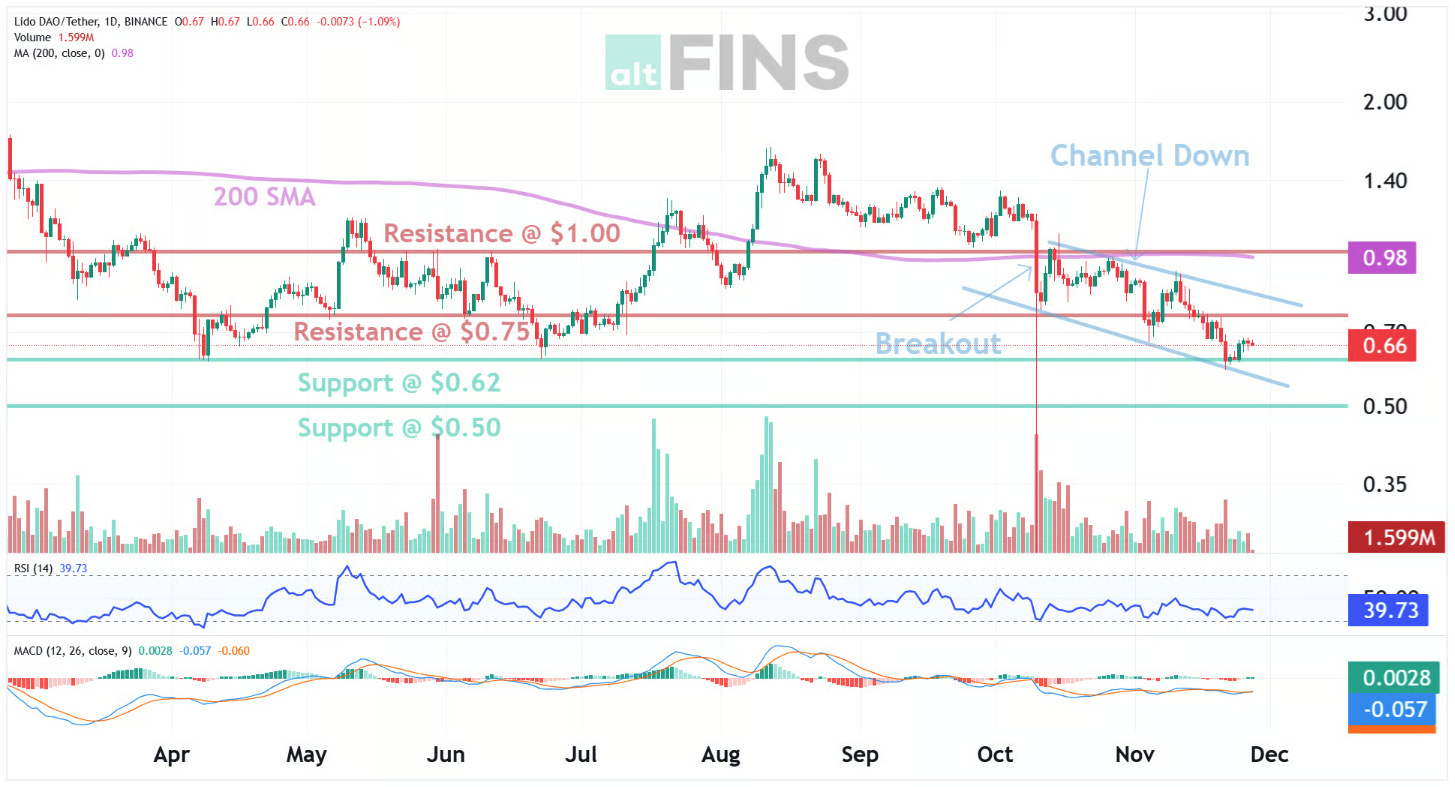
Lets begin with a well-know liquid staking provider on Ethereum: Lido Finance (LDO). Lido’s liquid staking dominance has translated into massive fee growth. The protocol generated over $288M in cumulative revenues since 2021, but LDO token holders don’t earn any of these revenues, yet.
Lido’s governance is actively discussing ways to share revenues via LDO staking or buybacks.
LDO is valued currently at a P/S ratio of 7.3x, which could see a significant repricing upside if even a fraction of the protocol revenue starts accruing to tokens holders.
Lido Finance (LDO) – Technical analysis chart
The next high-growth crypto project on my radar is Arbitrum (ARB), the most-used Ethereum Layer-2. It has pulled in roughly $25M in protocol revenues since January 2025 – yet ARB is purely a governance token with no revenue rewards for token holders. That may change soon.
A decentralization upgrade in mid-2026 will allow ARB staking, letting holders secure the sequencer and earn a cut of transaction fees. Community proposals are already on the table to share 50% of sequencer profits with staked ARB, targeting around 7% annual yields.
If enacted, ARB’s valuation could get a boost – its current 40x P/S ratio is high but it still attractive if revenue sharing is expected to start soon. Turning on revenue sharing would convert that idle cash flow into direct value for holders, likely attracting new investors chasing yields.
The last on my list is a stablecoin issuer Ethena (ENA). Ethena’s USDe stablecoin exploded onto the scene in 2025, reaching $15B in circulation and driving robust revenues. In one month, Ethena’s protocol revenue jumped 243% (from $9.5M to $32.5M) – the fastest growth in the sector.
Ethena has accumulated $100M in revenues since early 2024, yet ENA stakers currently earn none of this income. However, that could change in 2026 as major DeFi players are pushing for a proposal to change this to start rewarding ENA token holders. Ethena’s foundation confirmed that key adoption thresholds (like revenue and usage targets) have been met to activate revenue sharing, pending final approvals.
The expectation is that 2026 will bring ENA staking rewards (with projections of 5%+ APY under moderate fee-share scenarios). Ethena’s combination of revenue growth and mounting governance pressure makes it primed for a tokenomics overhaul.
A fee share rollout would transform ENA into a yield-bearing asset, likely attracting new investor capital allocations.
Ethena (ENA) – Technical analysis chart
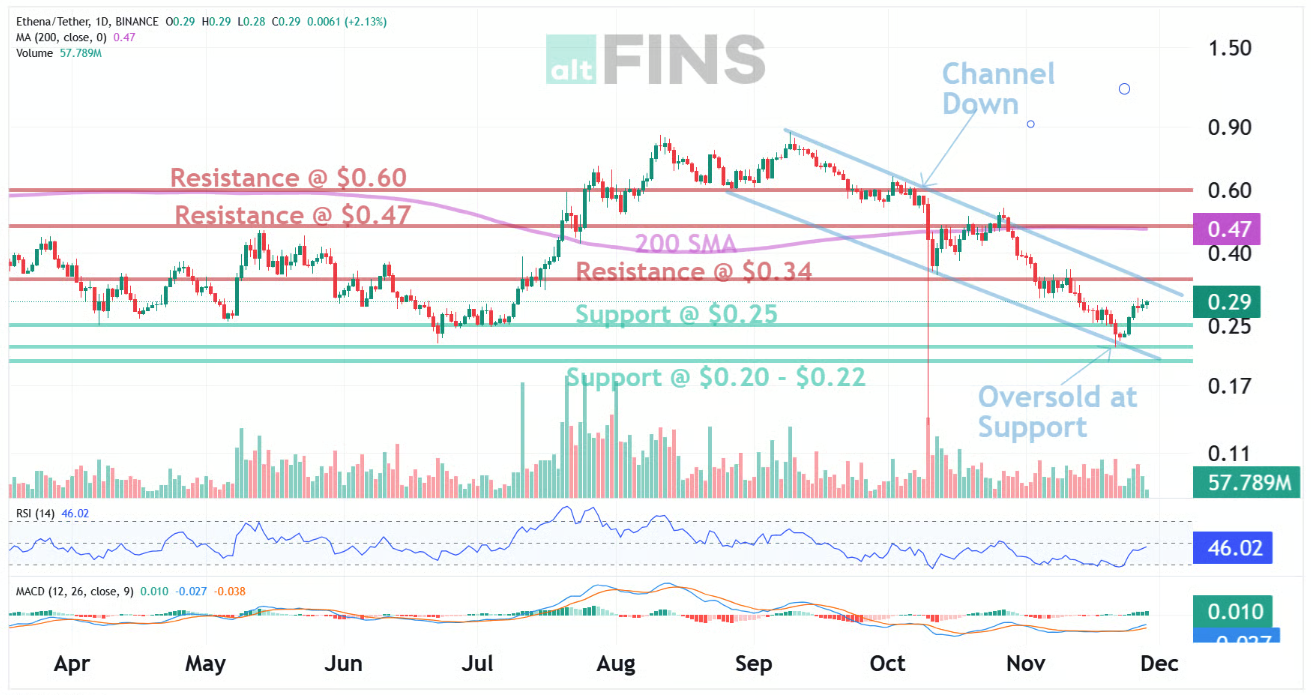
Despite the recent correction in crypto market, crypto market is entering a fundamentals-driven repricing cycle. Lido, Arbitrum, and Ethena are another good example for this trend – each shows strong real revenue and unlocked token value.
In fact, the decline in token prices increases the potential yields even higher.
Crypto investors should have these tokens on their watchlists going into 2026 because any move from pure utility to cash-flow sharing (whether through dividends, buybacks, or fee burns) could be a game-changer.
These tokens stand at the cusp of major value unlocking catalysts, where aligning protocol success with tokenholder rewards may trigger a sharp revaluation.
Author

Marek Hric
altFINS
Marek is a finance and capital markets professional with more than 9 years of experience from two top European banking groups. He is skilled in portfolio and risk management with focus on traditional fixed income and derivative financial instruments.