Three reasons why Ethereum can hit $3K in the short term despite overvaluation risks

Ether risks bearish exposure as ETH’s price rises against falling volumes, but three crucial on-chain indicators suggest a dissenting scenario.
Ethereum’s native asset, Ether (ETH), dropped after reclaiming its two-month high in the previous session, suggesting that its recent bullish rally was nearing exhaustion.
In detail, the ETH/USD pair topped out at $2,699 on Sunday for the first time since June 7. The pair’s peak level also pushed its relative strength index (RSI), a momentum-gauging indicator, above 70 — a mark that analysts consider overbought.
Seemingly, traders with short-term risk setups sold the Ether top to secure interim profits, leading up to a modest downside correction.
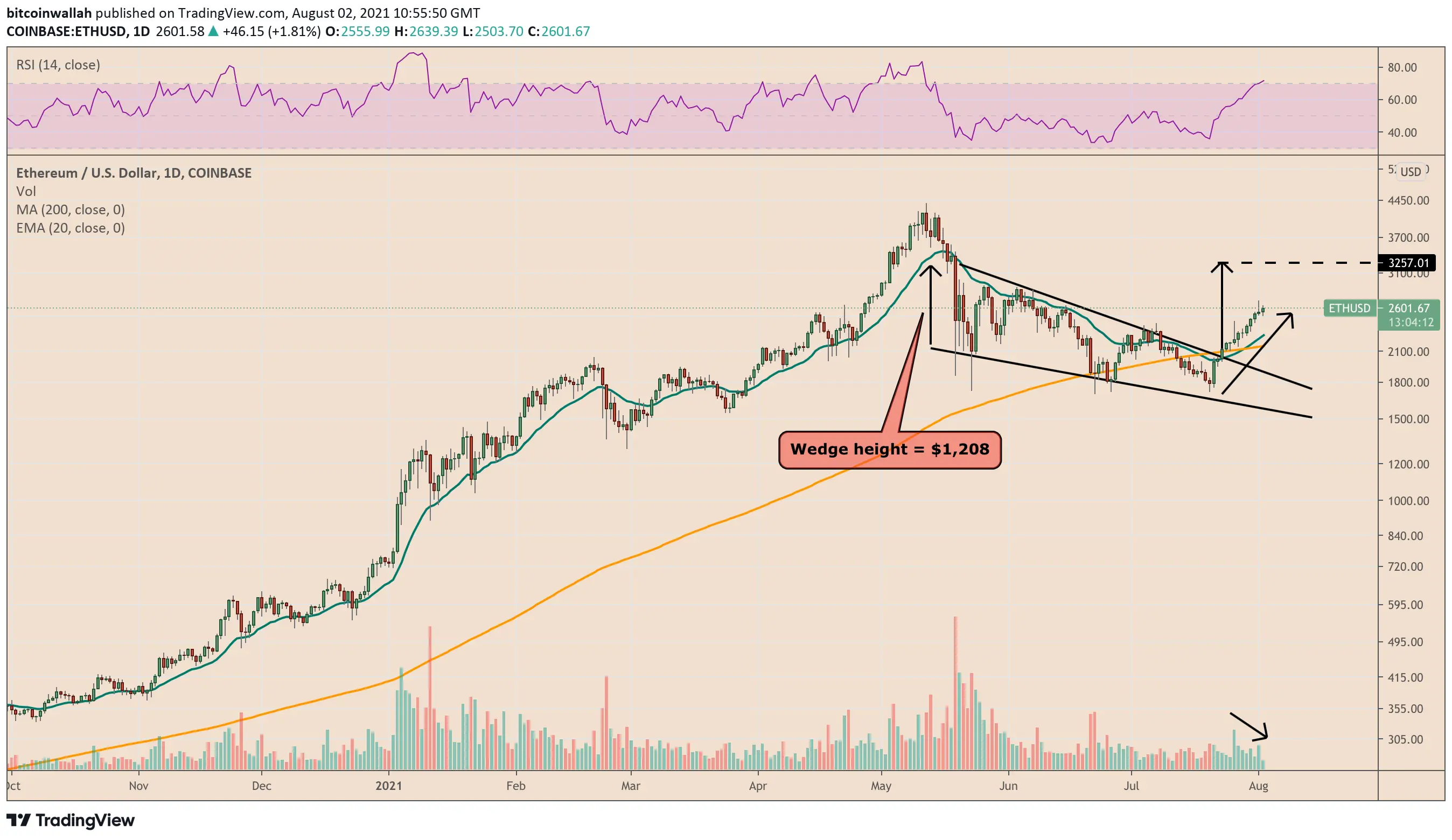
On Monday, Ether prices rose 1.81% to $2,600 to offset the Sunday sell-off risks.
The upswing indicated that traders could still place higher bids for the cryptocurrency, especially in the days leading up to the Ethereum’s London hard fork upgrade that would — for the first time — bring deflationary features to the project’s economy via a new base-fee burning mechanism.
Greg Waisman, co-founder and chief operation officer of payment network Mercuryo, noted that Ether’s prices could easily cross above $3,000 after the hard fork, given it would bring a “more flexible and cheaper fee structure” to the Ethereum network, boosting adoption. The analyst told Cointelegraph:
“The hype buildup with respect to the forthcoming London hard fork is not reflective of the current price trend. [...] Ethereum is currently seeing a retracement; it confirms that the sellers are deliberately lowering the price for a post-upgrade price pump.”
That bullish trio
At least three on-chain indicators tracking Ether flows in and out of dedicated addresses foresee an extending upside setup.
Spotted on CryptoQuant, the three metrics involved tracking Ether reserves across all exchanges and their outflow from trading platforms, as well as the volume of ETH tokens being deposited to Ethereum 2.0 smart contract.
The CryptoQuant data showed that the total Ether reserves on exchanges declined, indicating that fewer traders are interested in exchanging ETH for other assets. Meanwhile, the ETH outflow from those exchanges spiked, illustrating traders’ intention to hold their Ether around the London hard fork event.
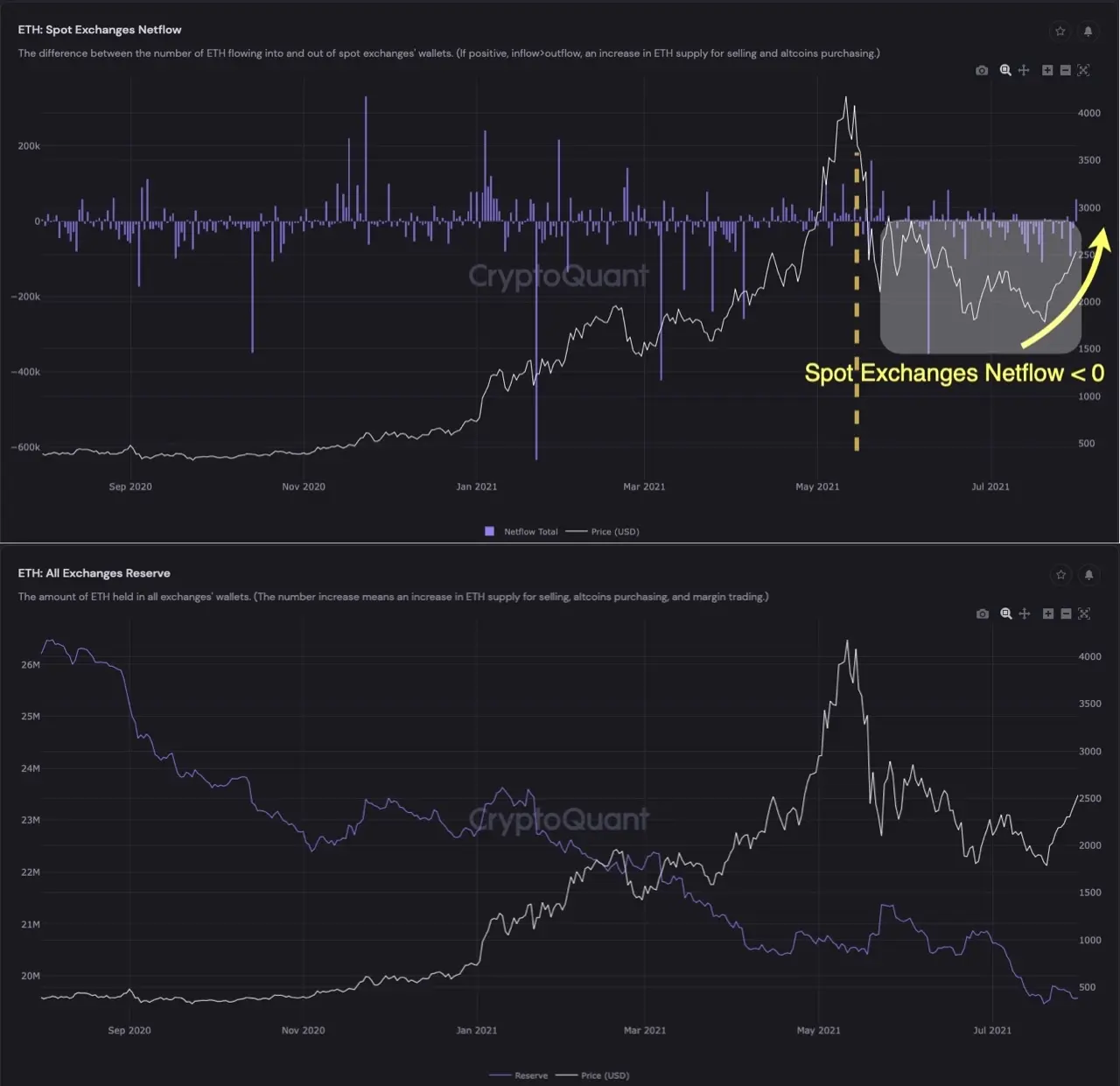
Ether reserves and netflow from crypto exchanges. Source: CryptoQuant
Working together with the exchange data, the third on-chain indicator showed a surge in ETH deposits to its smart contract.
In detail, users can stake 32 ETH into Ethereum 2.0 smart contracts to become validators on its proof-of-stake blockchain. In doing so, they can expect to received rewards for batching transactions into a new Ethereum block or checking the work of other validators to keep the chain running securely.
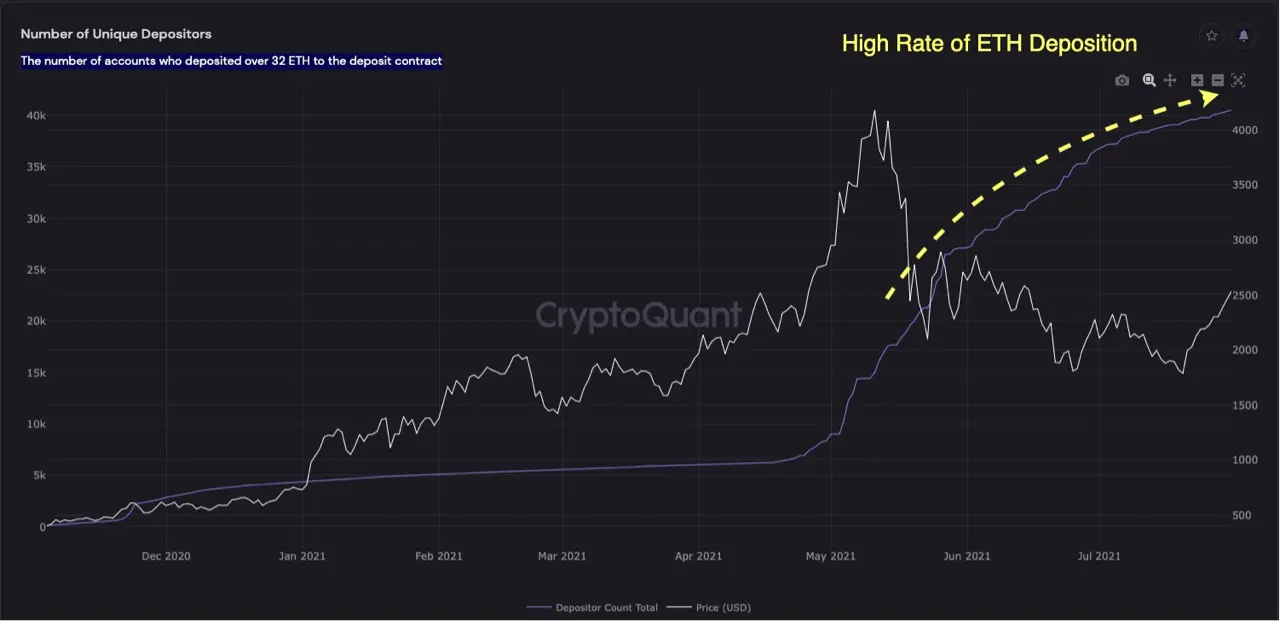
The number of unique 32 ETH depositors crosses 4,000. Source: CryptoQuant
Analysts see the event as bullish because it removes the active Ether supply from circulation against a potentially rising demand.
“The increasing Ethereum 2.0 deposits show a big trust in the future potentials of the Ethereum blockchain, which stirs the scarcity of its native token Ether,” Waisman explained. “The situation may impact positively on the coin’s price.”
“With these positive fundamentals, a return back to the previous all-time high of $4,360 in the long term will be a mild ambition price target for Ether.”
Author

Cointelegraph Team
Cointelegraph
We are privileged enough to work with the best and brightest in Bitcoin.