Solana initiates recovery as selling pressure declines following the migration of the Helium network
- Solana clocked in a 12% recovery in the last three days, attempting to reclaim the losses from the dip of August.
- A sudden rise in buying pressure can be attributed as a reason for Solana’s sudden green candles.
- The overall crypto market crossed the $1 trillion mark despite most of the investors exhibiting extreme fear due to low returns.

Solana ranked amongst the best-performing cryptocurrencies last year after it reached the highs of $259. But the ensuing bearishness brought it back down to May 2021 crash lows. Today trading at $34.5, SOL is still unable to trigger a recovery unless external factors drive it, which seems to be the case at the moment.
Helium comes to Solana
At the beginning of this month, Helium’s core team proposed a migration to Solana to improve the operational efficiency of the Helium blockchain significantly. While the vote on the proposal is set to take place over the next 48 hours, SOL is already witnessing the impact of this prospect.
In the days following the August crash, the Relative Strength Index (RSI) highlighted the consistent selling pressure on SOL, which resulted in the price fall. However, the situation over the week has vastly improved with buying pressure waltzing back into the market. The uptick noted on the RSI is an indication of the same, followed by the 12.22% rise in price over the last 72 hours.
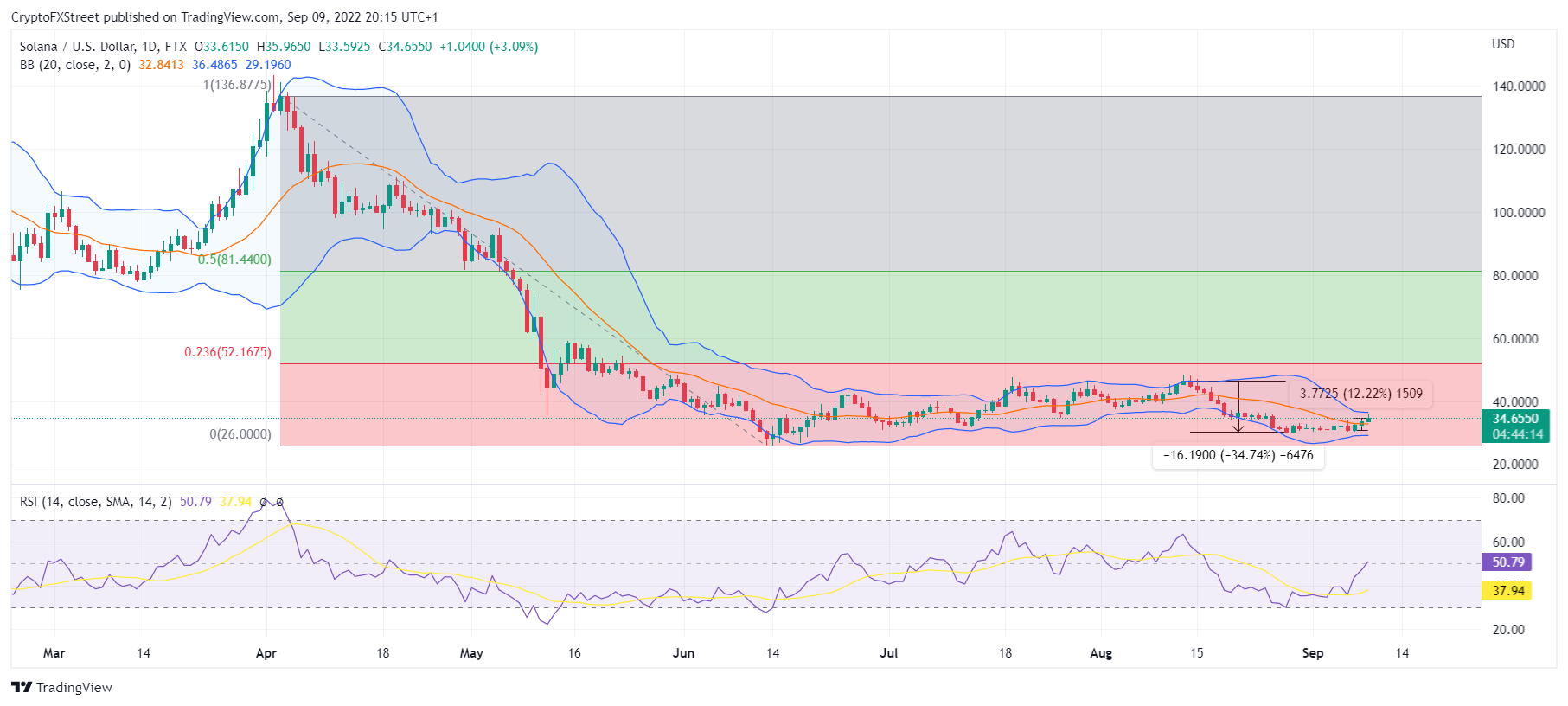
But as evinced by the narrowing Bollinger Bands, the volatility is pretty low at the moment, which means that SOL is not susceptible to any random price swings. This will sustain its gradual recovery, which is necessary currently since Solana is still below the 23.6% Fibonacci retracement level.
This is an important zone for the altcoin since breaching it sets up SOL for a recovery to the local top.
However, this will take time.
The crypto market is still in fear
Primarily the lack of assurance from the bulls has left the market in a state of “extreme fear”. This fear will keep both already existing and contemporary investors at bay. For the latter cohort, it works out for the best since the risk-adjusted returns on SOL are at negative 1.5, which is not the most ideal ROI.
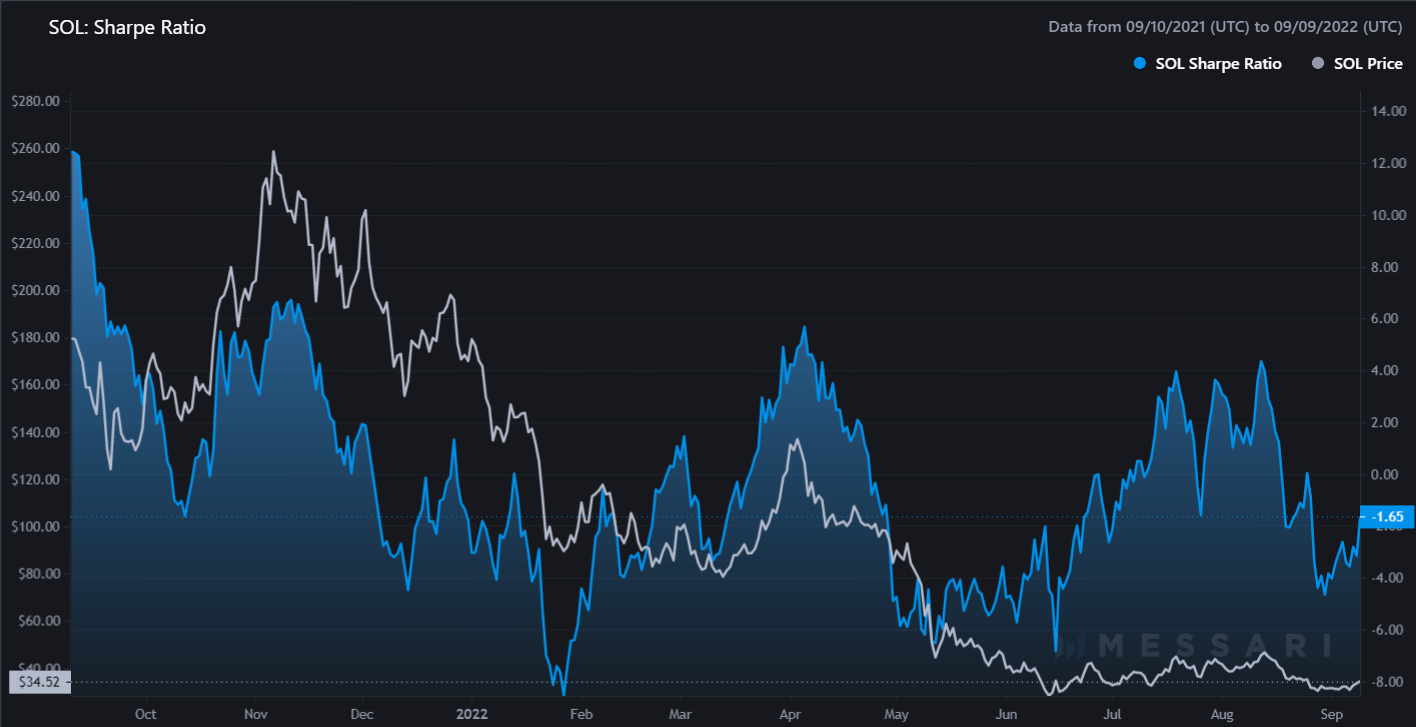
Solana risk-adjusted returns
Author

Aaryamann Shrivastava
FXStreet
Aaryamann Shrivastava is a Cryptocurrency journalist and market analyst with over 1,000 articles under his name. Graduated with an Honours in Journalism, he has been part of the crypto industry for more than a year now.