Ethereum researcher proposes MEV burn to protect ETH blockchain from manipulation
- Ethereum researcher Justin Drake has released the continuation proposal of EIP-1569, proposing MEV burn.
- Burning the extra income of maximum extractable value is likely to reduce incentives for manipulating the Ethereum blockchain.
- Ether stays above the $1,800 level, gearing up for recovery from its recent pullback.

Justin Drake, an Ethereum blockchain researcher, has proposed the burn of Maximum Extractable Value (MEV) from the ETH chain. Drake believes this action is likely to reduce incentives for the manipulation of the Ethereum blockchain in the long-term.
The altcoin’s price remains above the $1,800 level, as network researchers propose improvements to Ether’s blockchain.
Also read: Dogecoin daily transactions hit record high surpassing Bitcoin, DOGE gears up for recovery
Ethereum researcher releases continuation proposal of EIP-1559
Justin Drake, researcher at the Ethereum Foundation and a Bitcoin entrepreneur, has released a continuation of the Ethereum Improvement Proposal (EIP-1559). Drake addressed the controversial issue of MEV, the value extracted from the blockchain by miners to earn extra income.
Drake said that the burn of MEV would prevent individual miners or verifiers from earning incentives through the manipulation of order transactions on the Ethereum blockchain.
What is MEV and how verifiers manipulate it
Miners generate revenue from mining blocks on the Ethereum blockchain, essentially verifying transactions and earning incentives in return. However, this leaves miners in complete control of the sequence of transactions and by including, excluding or ordering them, they have the potential to extract higher value from the blockchain.
The value extracted from rearranging the sequence is in excess of the standard reward for mining each block, and the associated gas fees. This makes MEV lucrative to miners on the ETH blockchain.
Miners copy arbitrage trades on Automated Market Makers (AMM), a type of decentralized exchange, and select their transactions ahead of users to include in blocks, front-running and extracting maximum value. This is a manipulation of the Ethereum blockchain.
To understand this better, let's consider arbitrage trades by users. The settlement mechanism of decentralized exchanges allows for all transactions to be organized in batches and exposed, letting miners have a pick of the sequence and opening the block to manipulation.
Miners can copy arbitrageurs and execute their trades ahead of other users’ waiting for the block to be mined. This helps miners extract more value from each block while it thwarts the efforts of traders and manipulates the ETH blockchain.
Here’s why the ETH miner community is likely to oppose MEV burn
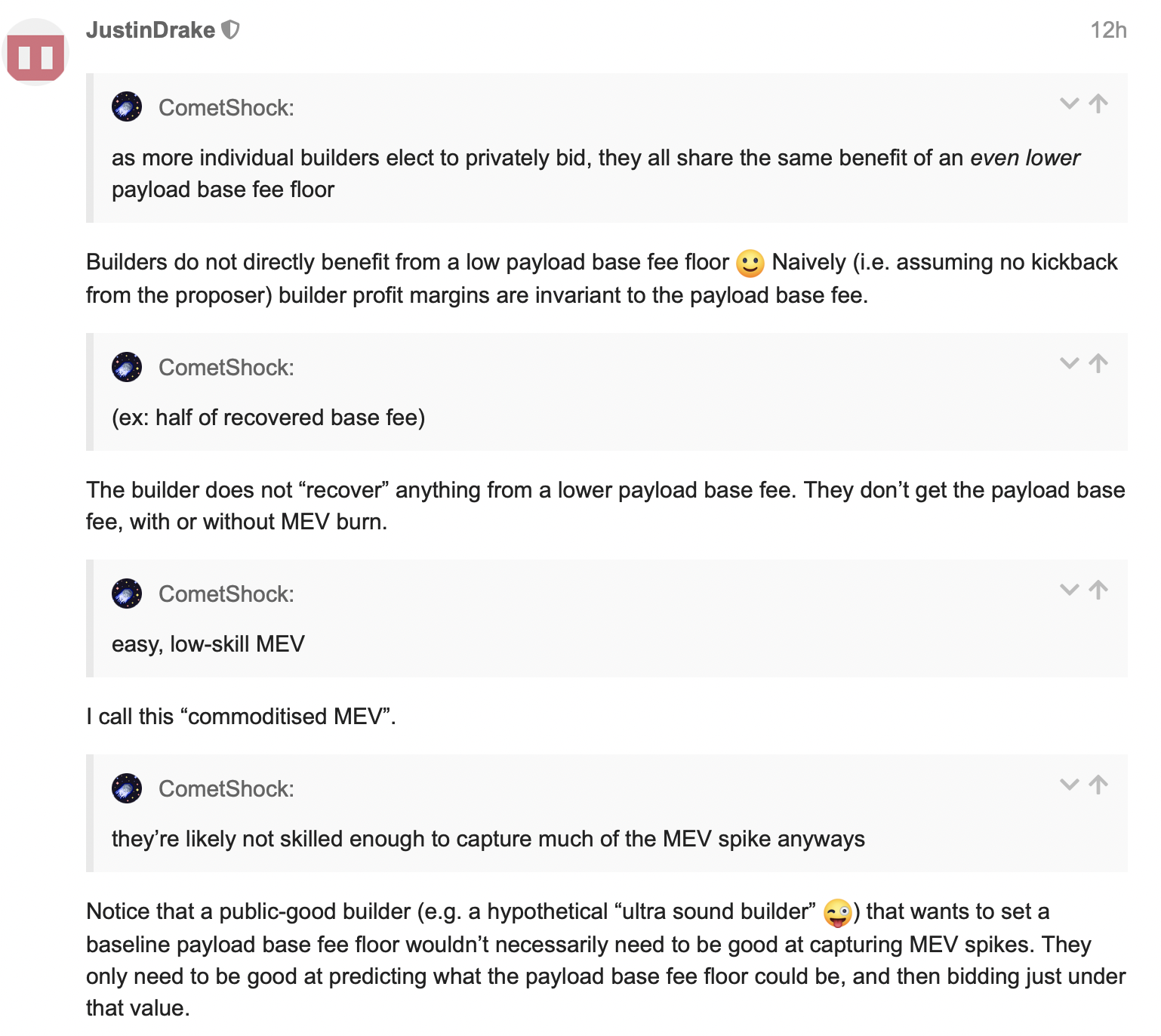
JustinDrake’s views on MEV burn
The MEV burn issue is a controversial one in the Ethereum community. Drake argued that “ultra-sound builders” in the network don’t need to extract MEV and just need to predict “base fee floor” to earn revenue.
CometShock, a community member, commented on Drake’s views and explained that capturing MEV spikes will differentiate verifiers on the Ethereum blockchain in the long-term. Miners that focus solely on base fee overbidding may not last very long in the face of few aggressive private-favoring proposers. This is a point of view that miners would share as well, given the opportunities that open up with extracting maximum value from each block during arbitrage trades or airdrops.
Therefore, while the proposal is focused on keeping the Ethereum blockchain secure and avoiding manipulation of the order of transactions, the issue is being debated in the developer community for long-term viability.
A security boost could contribute to Ethereum’s growth
The Ethereum blockchain witnessed two outages on May 12, when transactions did not reach finality and the smooth processing of the blockchain was hampered. Ether is looked upon as a smart contract network that is reliable, secure and scalable, in the developer community.
The outage was the first of its kind and it raised concerns among developers in the crypto ecosystem. Proposals such as MEV burn, in continuation of a portion of Ethereum gas fees being burned with every transaction, are therefore key to the long-term security and stability of the ETH blockchain.
In addition to turning the Ethereum blockchain deflationary, EIP-1559 tackled the transaction fee spikes to a certain extent, making ETH lucrative for developers and users. A continuation of EIP-1559 through MEV burn proposes to make the chain stable, removing the incentive that miners derive from manipulating the Ethereum blockchain.
Author

Ekta Mourya
FXStreet
Ekta Mourya has extensive experience in fundamental and on-chain analysis, particularly focused on impact of macroeconomics and central bank policies on cryptocurrencies.