Ethereum price action and derivatives data confirm bears are currently in control

Investors are unwilling to add long positions, as the Shanghai fork is expected to unlock a significant amount of ETH over a short period.
The price of Ether declined 6% between March 2 and 3, followed by tight-range trading near $1,560. Still, analyzing a wider time frame provides no clear trend, as its chart can point to a descending channel or a slightly longer seven-week bullish pattern.
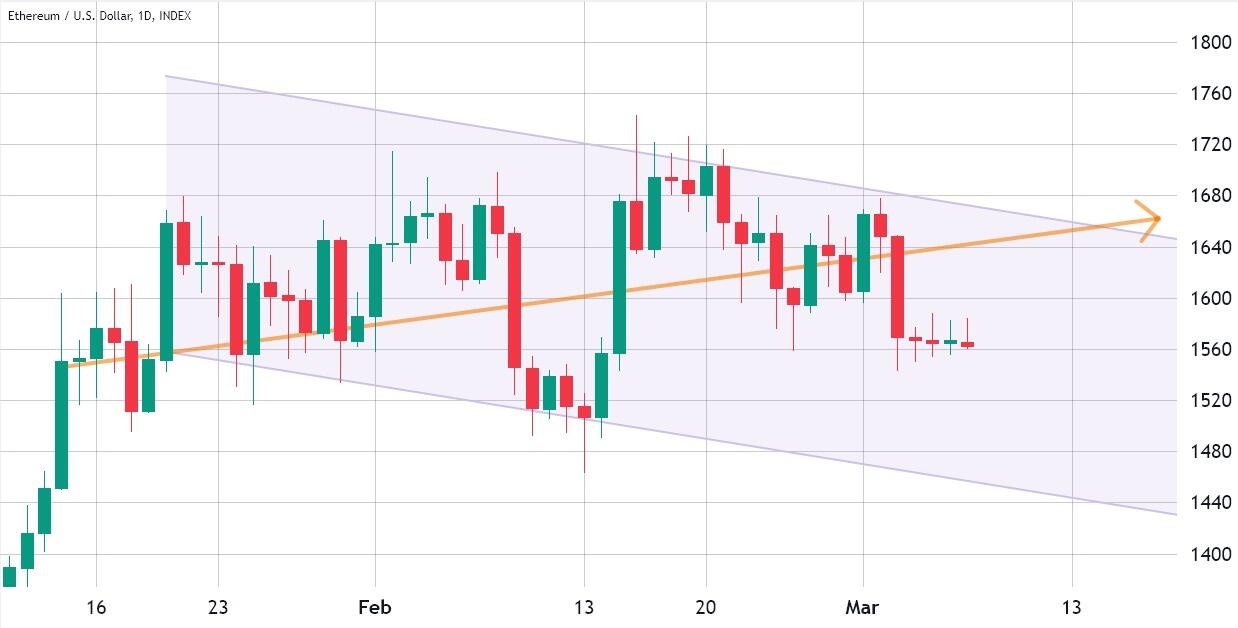
Ether (ETH) price index in USD, 1-day. Source: TradingView
Ether’s recent lack of volatility can be partially explained by the upcoming Shanghai hard fork, an implementation aimed at allowing ETH staking withdrawals. Those participants were each required to lock 32 ETH on the Beacon Chain to support the network consensus protocol.
After a series of delays, typical for changes in the production environment, the Shanghai Capella upgrade — also known as Shapella — is expected for early April, according to Ethereum core developer and project coordinator Tim Beiko. The Goerli testnet upgrade on March 14 will be the final rehearsal for the Shanghai hard fork before it is rolled out on the mainnet.
Recession risks increase, favoring ETH bears
On the macroeconomic front, United States Federal Reserve Chair Jerome Powell testified before the Senate Banking Committee on March 7. Powell stated that interest rates will likely rise higher than anticipated after “the latest economic data have come in stronger than expected.”
Evidence points to the Fed lagging behind the inflation curve, boosting the odds of harder-than-expected interest rate increases and asset sales by the monetary authority. For instance, an inflation “surprise” index from Citigroup rose in February for the first time in more than 12 months.
For risk assets, including cryptocurrencies, a more substantial move by the Fed typically implies a bearish scenario, as investors seek shelter in fixed income and the U.S. dollar. This shift becomes more pronounced in a recessionary environment, which many speculate is either coming or already here.
The regulatory environment is adding additional pressure for cryptocurrency firms, especially after U.S. Press Secretary Karine Jean-Pierre said the White House has noted that the crypto-friendly bank Silvergate had “experienced significant issues” in recent months.
Let’s look at Ether derivatives data to understand if the $1,560 level is likely to become a support or resistance.
ETH derivatives show reduced demand for longs
The annualized three-month futures premium should trade between 5% and 10% in healthy markets to cover costs and associated risks. However, when the contract trades at a discount (known as “backwardation”) versus traditional spot markets, it shows a lack of confidence from traders and is deemed a bearish indicator.
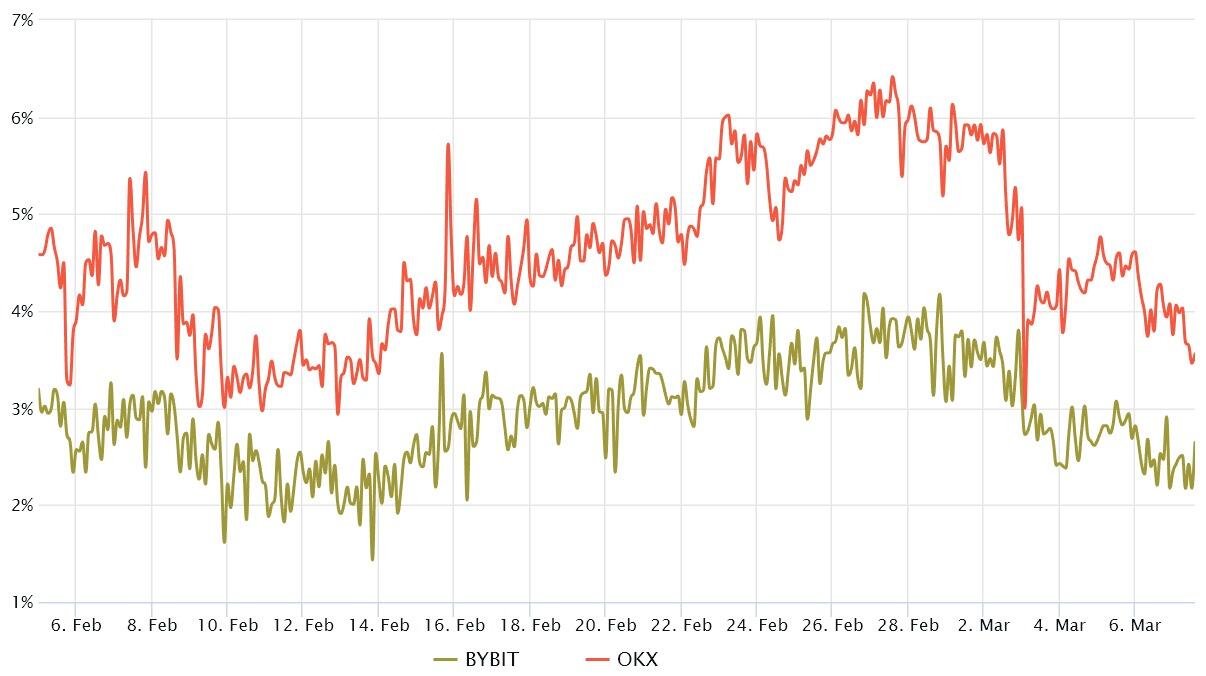
Ether 3-month futures annualized premium. Source: Laevitas
The chart above shows that derivatives traders became slightly uncomfortable as the Ether futures premium (on average) moved to 3.1% on March 7, down from 4.9% one week prior. More importantly, the indicator became more distant from the 5% neutral-to-bullish mark.
Still, the declining demand for leverage longs (bulls) does not necessarily translate to an expectation of adverse price action. Consequently, traders should analyze Ether’s options markets to understand how whales and market makers are pricing the odds of future price movements.
The 25% delta skew is a telling sign th market makers and arbitrage desks are overcharging for upside or downside protection.
In bear markets, options investors give higher odds for a price dump, causing the skew indicator to rise above 10%. On the other hand, bullish markets tend to drive the skew metric below -10%, meaning the bearish put options are in less demand.
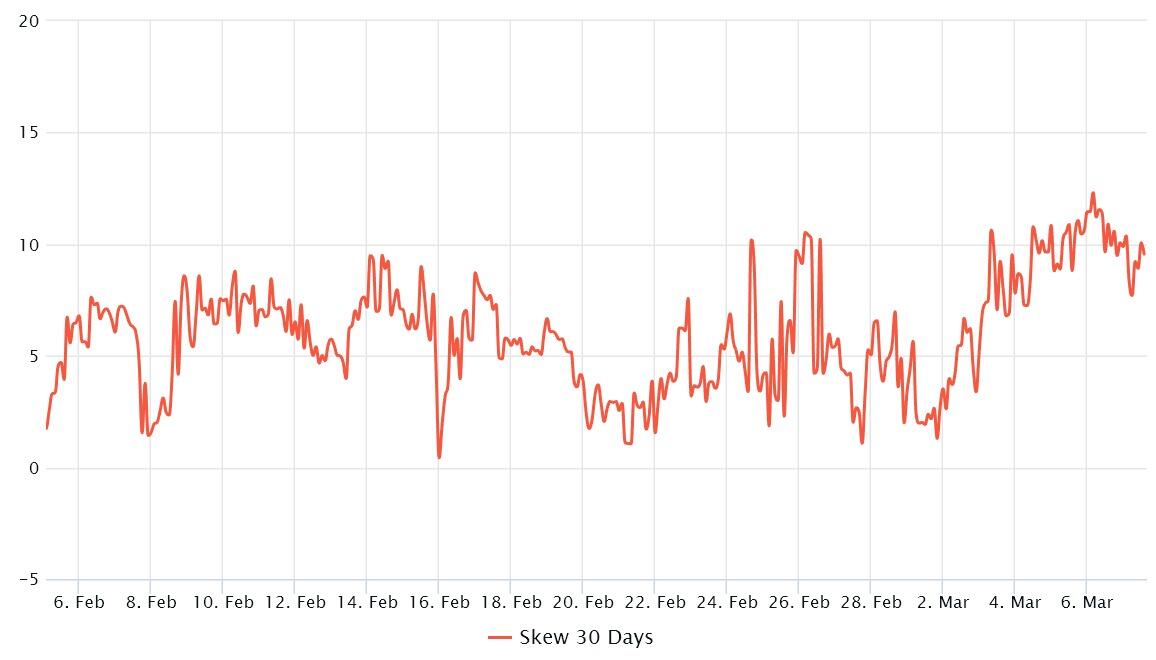
Ether 30-day options 25% delta skew: Source: Laevitas
The delta skew moved above the bearish 10% threshold on March 4, signaling stress from professional traders. A brief improvement happened on March 7, although the metric continues to flirt with bearish expectations as options traders place higher costs on protective put options.
Investors basing their decisions on fundamentals will likely look to the first couple of weeks following the Shanghai upgrade to measure the potential impact of the ETH unlock. Ultimately, options and futures markets signal that pro traders are less inclined to add long positions, giving higher odds for $1,560 becoming a resistance level in the coming weeks.
Author

Cointelegraph Team
Cointelegraph
We are privileged enough to work with the best and brightest in Bitcoin.