Bitcoin price dips below $41,000 on Monday amidst BTC transaction fee surge
- Bitcoin price suffered a correction, pushing BTC below $41,000 momentarily on Monday.
- Bitcoin Average Transaction Fee climbs to $38.43 per transaction, highest level in 2023.
- Crypto experts criticize rising transaction fees on Bitcoin, arguing Layer 1 chains do not scale.

Bitcoin price drops below $41,000 on Sunday as BTC holders engage in profit-taking activities, seen in on-chain data. On December 15, BTC inflow to exchanges hit its highest level since March 2023. Bitcoin analysts on crypto Twitter believe that BTC’s uptrend is close to its end.
Also read: Bitcoin price spikes to $42,000 in response to November US CPI data release
Daily Digest Market Movers: Bitcoin sees spike in transaction fees,exchange inflow climbs
- Bitcoin Average Transaction Fee (BATF) climbed to 38.43 on December 18, as the network saw an increase in transactions. The average transaction fee on Bitcoin hit a 20-month high since unconfirmed transactions continued to pile up.
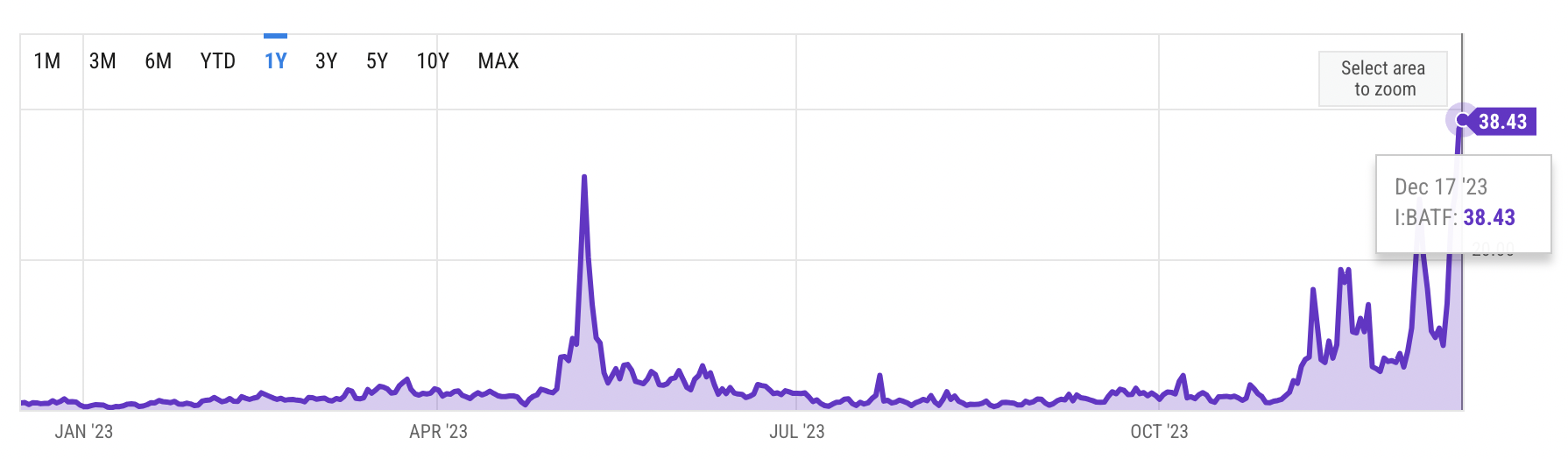
Bitcoin Average Transaction Fee. Source: Yahoo
- On December 16, transactions involving inscriptions, a new way to store data on the BTC blockchain, spent nearly $10 million in BTC transaction fees, based on data from Dune Analytics.
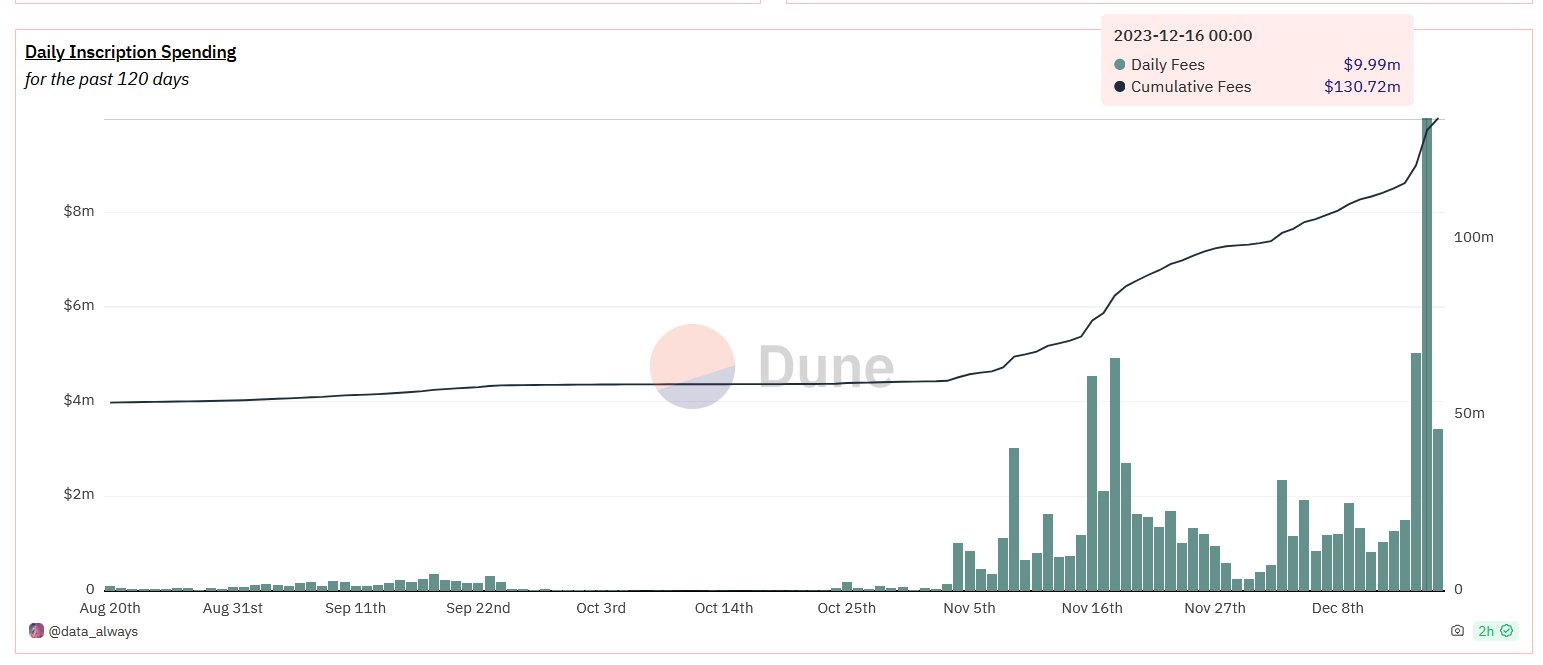
Bitcoin daily transaction fees. Source: Dune Analytics
- IntoTheBlock data reveals that Bitcoin noted an inflow of $860 million to cryptocurrency exchanges in the past week, the highest level since March. An influx of BTC to exchanges is typically indicative of traders’ intention to sell or book profits and it is likely that investors decided to cash in on profits after BTC’s recent rally.
- Michäel van de Poppe, crypto analyst and trader, believes that we are nearing the end of Bitcoin’s current uptrend. Poppe argues that $48,000 to $51,000 likely represents a BTC peak and a correction will probably ensue in the largest asset by market capitalization.
My expectations are that we're getting towards the end of this upwards run of #Bitcoin.
— Michaël van de Poppe (@CryptoMichNL) December 16, 2023
Perhaps $48-51K and then we'll correct and rotate towards the #Ethereum ecosystem, bringing Ethereum towards $3,000-3,500.
- Crypto expert behind the Twitter handle @_Checkmatey_ argues that Layer 1 chains do not scale and critiques Bitcoin’s transaction fee spike. The expert commented on the rise in transaction fees. He explained that before inscriptions arrived on the Bitcoin blockchain, BTC blocks were full of monetary transactions only, no other data was stored on the chain.
- For a chain that stores monetary transactions, BTC fees would peak when the chain processed a large volume of transactions, like 350,000 transactions in a day. However, the arrival of inscriptions on the Bitcoin blockchain has congested it and proved that Layer 1 chains like Bitcoin suffer from congestion when transaction count rises, these chains cannot be expected to scale and accommodate a surge in transactions.
Technical Analysis: Bitcoin price likely to dip below $40,000 before a rebound
- Bitcoin price is likely to suffer a drop below the $40,000 level, to a Fair Value Gap, as seen in the price chart below. Once the gap is filled, BTC price is expected to resume its uptrend and eye the $43,000 target, a level previously seen last week.
- Bitcoin price is currently below the 10-day Exponential Moving Average (EMA), and above two long term EMAs, t the 50 and 200-day.
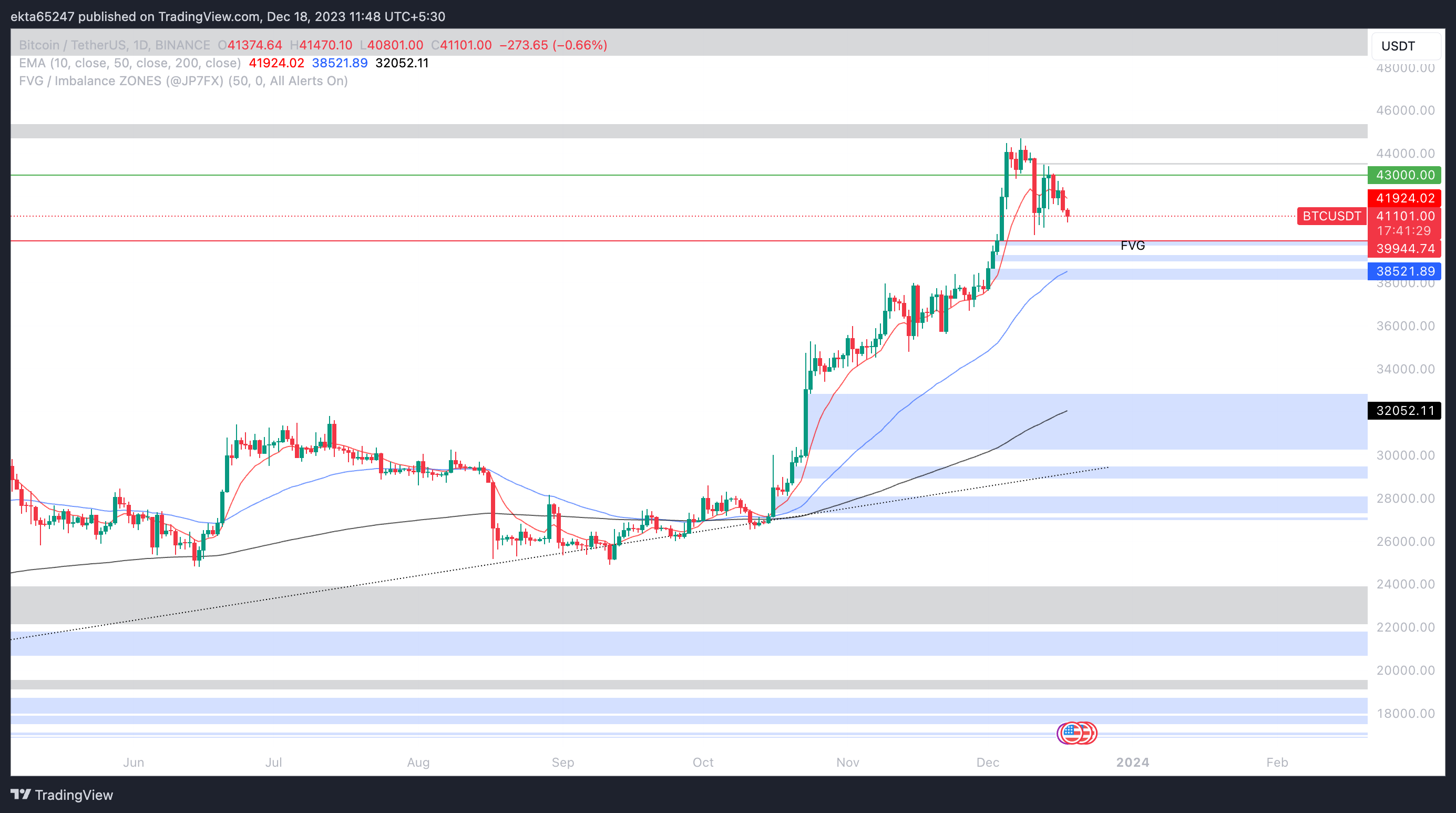
BTC/USDT 1-day chart
- A daily candlestick close below the psychological barrier at $40,000 could invalidate the bullish thesis for Bitcoin price.
Cryptocurrency prices FAQs
How do new token launches or listings affect cryptocurrency prices?
Token launches like Arbitrum’s ARB airdrop and Optimism OP influence demand and adoption among market participants. Listings on crypto exchanges deepen the liquidity for an asset and add new participants to an asset’s network. This is typically bullish for a digital asset.
How do hacks affect cryptocurrency prices?
A hack is an event in which an attacker captures a large volume of the asset from a DeFi bridge or hot wallet of an exchange or any other crypto platform via exploits, bugs or other methods. The exploiter then transfers these tokens out of the exchange platforms to ultimately sell or swap the assets for other cryptocurrencies or stablecoins. Such events often involve an en masse panic triggering a sell-off in the affected assets.
How do macroeconomic releases and events affect cryptocurrency prices?
Macroeconomic events like the US Federal Reserve’s decision on interest rates influence risk assets like Bitcoin, mainly through the direct impact they have on the US Dollar. An increase in interest rate typically negatively influences Bitcoin and altcoin prices, and vice versa. If the US Dollar index declines, risk assets and associated leverage for trading gets cheaper, in turn driving crypto prices higher.
How do major crypto upgrades like halvings, hard forks affect cryptocurrency prices?
Halvings are typically considered bullish events as they slash the block reward in half for miners, constricting the supply of the asset. At consistent demand if the supply reduces, the asset’s price climbs. This has been observed in Bitcoin and Litecoin.
Author

Ekta Mourya
FXStreet
Ekta Mourya has extensive experience in fundamental and on-chain analysis, particularly focused on impact of macroeconomics and central bank policies on cryptocurrencies.