AAVE targets 7% breakout as Aave V4 explores unified liquidity to optimize DeFi lending
- Aave reclaims its position above $220 as sentiment in the ecosystem improves on DeFi developments.
- Aave V4 aims to eliminate fragmentation and inefficiencies in DeFi lending protocols.
- Aave V4 builds on frameworks that aggregate assets to meet on-demand liquidity requirements.

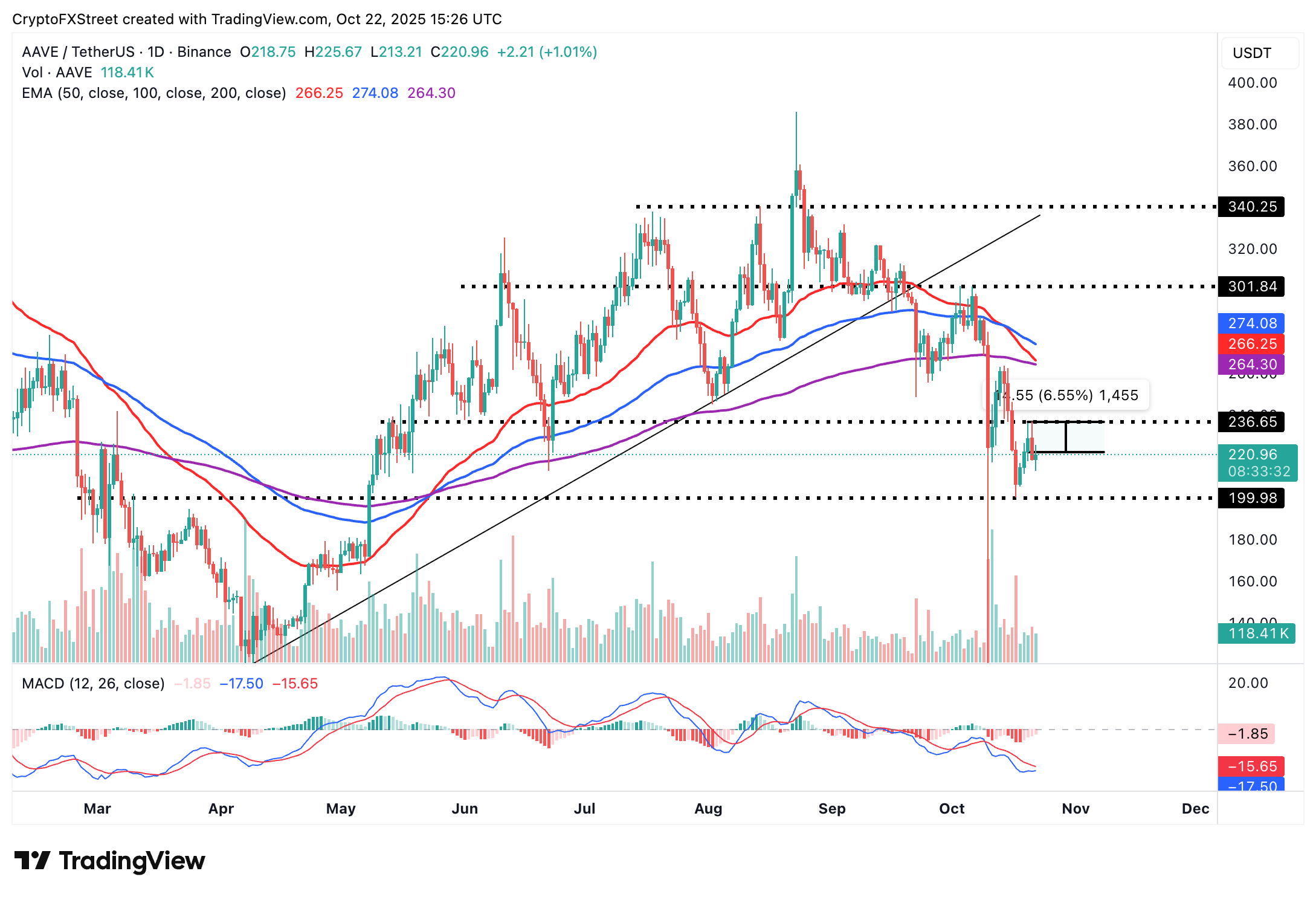
Aave (AAVE) regains bullish momentum, trading above $220 on Wednesday, as the broader cryptocurrency market generally declines. Attempts to breach the hurdle at $236 have not materialized following Friday’s sell-off to $200 and the October 10 flash crash to $80. However, a daily close above the immediate $220 level would reinforce AAVE’s short-term bullish outlook.
Aave V4 set to introduce unified liquidity optimization in DeFi
Aave V4, the next upgrade after Aave V3, aims to consolidate liquidity in the Decentralized Finance (DeFi) space by eliminating fragmentation and inefficiencies in lending protocols.
The network stated in a blog post that users, particularly institutions, face major challenges, such as the inability to scale and support large flows without triggering significant price or rate impacts.
Liquidity providers (LPs) also face obstacles, as they are uncertain about where to deploy capital across the fragmented DeFi ecosystem. End users also contend with risks such as high volatility and instances of market manipulation due to insufficient liquidity.
Aave V4 solves these challenges through the implementation of innovative Hub and Spoke architecture supported by Liquidity Hubs that consolidate and direct liquidity to platforms where it is needed the most. Aave V4 serves as both a liquidity management layer and a communication center.
“Through this setup, V4 provides flexible risk management, easier support for unique asset classes, and stronger network effects through Hub-level pooling while containing operational complexities,” Aave stated in the blog post.
An autonomous reinvestment module reassigns idle liquidity from the Hub to targeted external strategies, ensuring efficient capital deployment. The protocol continuously allocates, monitors and rebalances capital among protocols, solving liquidity fragmentation challenges in DeFi.
Technical outlook: AAVE bulls eye short-term breakout
AAVE is stable above its short-term $220 support at the time of writing on Wednesday, as sentiment surrounding the token improves following the developments around Aave V4.
A daily close above the same $220 level on the daily chart would reinforce the bullish grip, increasing the odds of AAVE extending its recovery above the resistance at $236.
Investors should watch for a potential buy signal from the Moving Average Convergence Divergence (MACD) indicator, which appears when the blue line crosses and settles above the red signal line.
AAVE/USDT daily chart
Conversely, the MACD maintains a sell signal triggered on October 10, when the crypto market experienced the largest deleveraging event in the history of the industry. Risk-off sentiment would remain sticky if the blue MACD line stays below the red signal line.
The 50-day Exponential Moving Average (EMA) validated a Death Cross pattern when it crossed below the 100-day EMA on October 15, underscoring the prevailing risk-averse sentiment. Aave risks a second Death Cross pattern if the 50-day EMA crosses below the 200-day EMA, increasing the chances of the decline stretching toward the $200 support.
Cryptocurrency prices FAQs
Token launches influence demand and adoption among market participants. Listings on crypto exchanges deepen the liquidity for an asset and add new participants to an asset’s network. This is typically bullish for a digital asset.
A hack is an event in which an attacker captures a large volume of the asset from a DeFi bridge or hot wallet of an exchange or any other crypto platform via exploits, bugs or other methods. The exploiter then transfers these tokens out of the exchange platforms to ultimately sell or swap the assets for other cryptocurrencies or stablecoins. Such events often involve an en masse panic triggering a sell-off in the affected assets.
Macroeconomic events like the US Federal Reserve’s decision on interest rates influence crypto assets mainly through the direct impact they have on the US Dollar. An increase in interest rate typically negatively influences Bitcoin and altcoin prices, and vice versa. If the US Dollar index declines, risk assets and associated leverage for trading gets cheaper, in turn driving crypto prices higher.
Halvings are typically considered bullish events as they slash the block reward in half for miners, constricting the supply of the asset. At consistent demand if the supply reduces, the asset’s price climbs.
Author

John Isige
FXStreet
John Isige is a seasoned cryptocurrency journalist and markets analyst committed to delivering high-quality, actionable insights tailored to traders, investors, and crypto enthusiasts. He enjoys deep dives into emerging Web3 tren



![Zcash breaks above 2018 highs, eyes 1600–2500 [Video]](https://editorial.fxsstatic.com/images/i/crypto-coins-1.png)