Yen drops after weak Japanese household spending and overtime pay

The Japanese yen eased slightly after the statistics office released the household spending data from Japan. The numbers showed that spending declined by 0.1% in May, after falling by 6.2% in the previous month. On an annualised basis, the spending declined by 16.2%. This is mostly because Japan was in a state of emergency in May as the number of coronavirus cases rose. The overall wage income of employees declined by 2.1%. Most importantly, overtime pay declined by 25.80% after declining by 12.80% in the previous month. Overtime pay is an important number because it is a good indicator of how busy companies are.
The New Zealand dollar eased slightly as traders reflected on the latest business confidence number from New Zealand. According to the NZ Institute of Economic Research, economic activity dropped sharply in June. The net 37% of companies that reported a decline in trading activity was the lowest it has been since 2009. 25% of companies said that they expect weaker demand in the third quarter. That confidence was slightly better than the -70% that was reported in the previous month. Subsequently, businesses reduced their employees and other forms of investments in a bid to preserve cash. Meanwhile, in Australia, the RBA left interest rates unchanged at 0.25% as most analysts were expecting.
Asian stocks were mixed today as traders reflected on the performance of the global economy. In China, the Shanghai Composite index rose by 0.45%, extending the 5% gains made yesterday. In Hong Kong, the Hang Seng index declined by 0.45% after tensions emerged between Hong Kong and social media companies. In a statement, Facebook and Twitter said that they would stop collaborating with Hong Kong government because of the national security law. In Taiwan, the main index declined by 0.30% while in South Korea, the KOSPI fell by 0.40%. Meanwhile, futures tied to the Dow Jones, DAX index, and FTSE 100 are down by 0.40%, 0.35%, and 0.30%, respectively.
USD/JPY
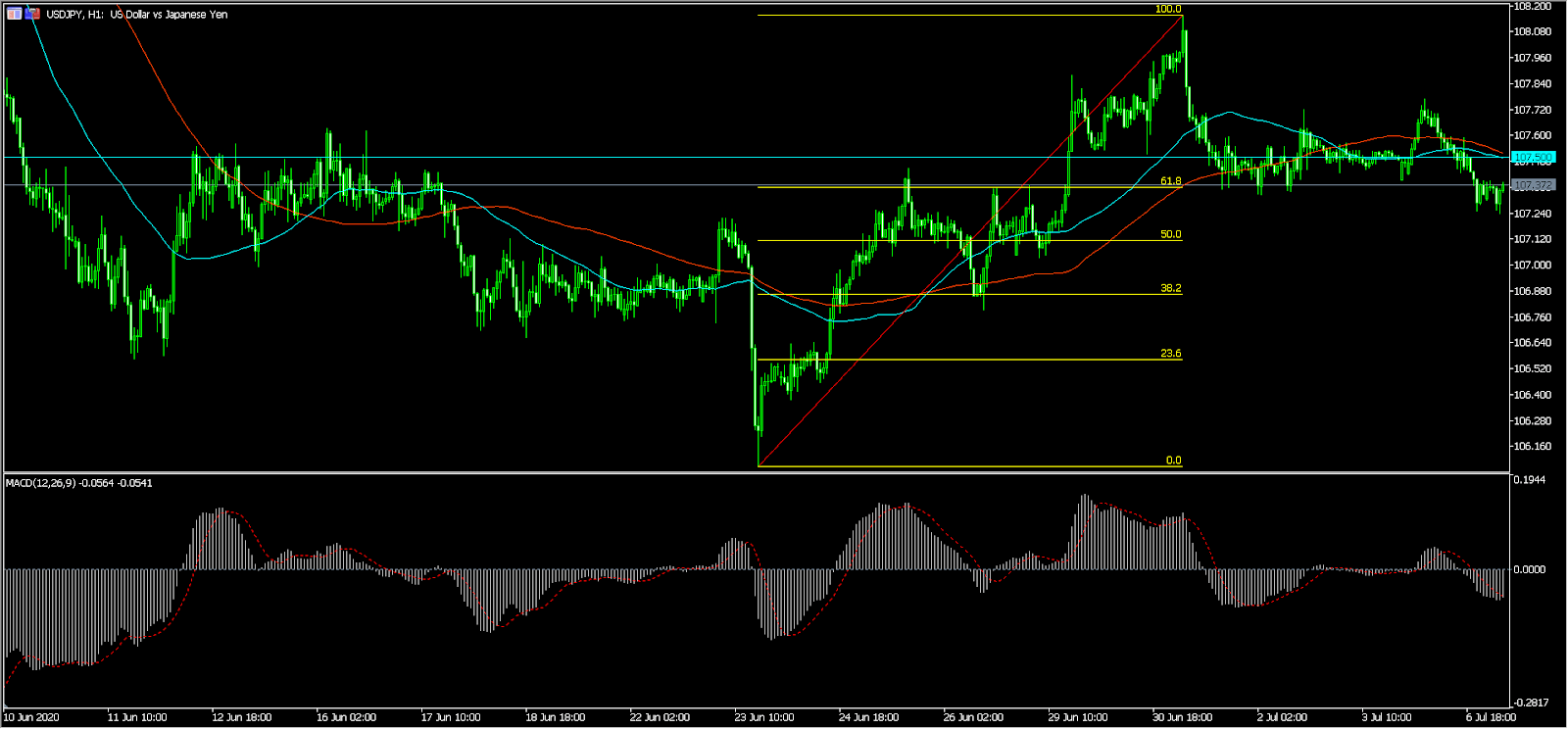
The USD/JPY pair rose to an intraday high of 107.35 from the previous low of 107.23. On the hourly chart, the price is slightly below the 50-day and 100-day exponential moving averages while the MACD has continued to decline. The price is also along the 61.8% Fibonacci retracement level. The likely scenario is where the pair continues to rise as bulls attempt to move above 107.50, which is along the 50-day and 100-day EMAs.
EUR/USD
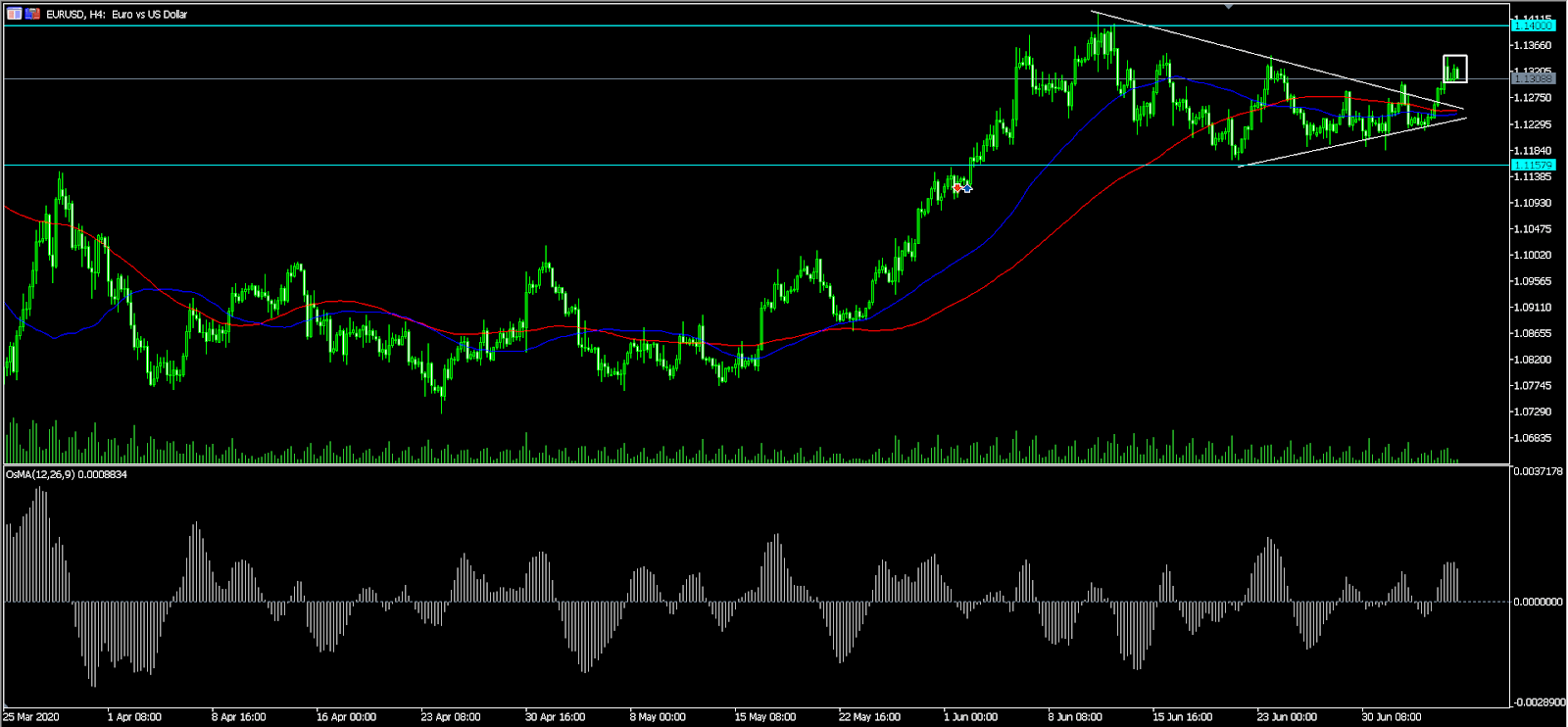
The EUR/USD pair is little changed during the Asian session. On the four-hour chart, the pair moved above the triangle pattern that is shown in white. It is now forming a bullish pennant pattern that is shown in white. It is also slightly above the short and medium-term moving averages. Also, the moving average of oscillator is above the neutral line. This is likely to see the price continue rising as bulls target the next resistance level at 1.1400.
XAU/USD
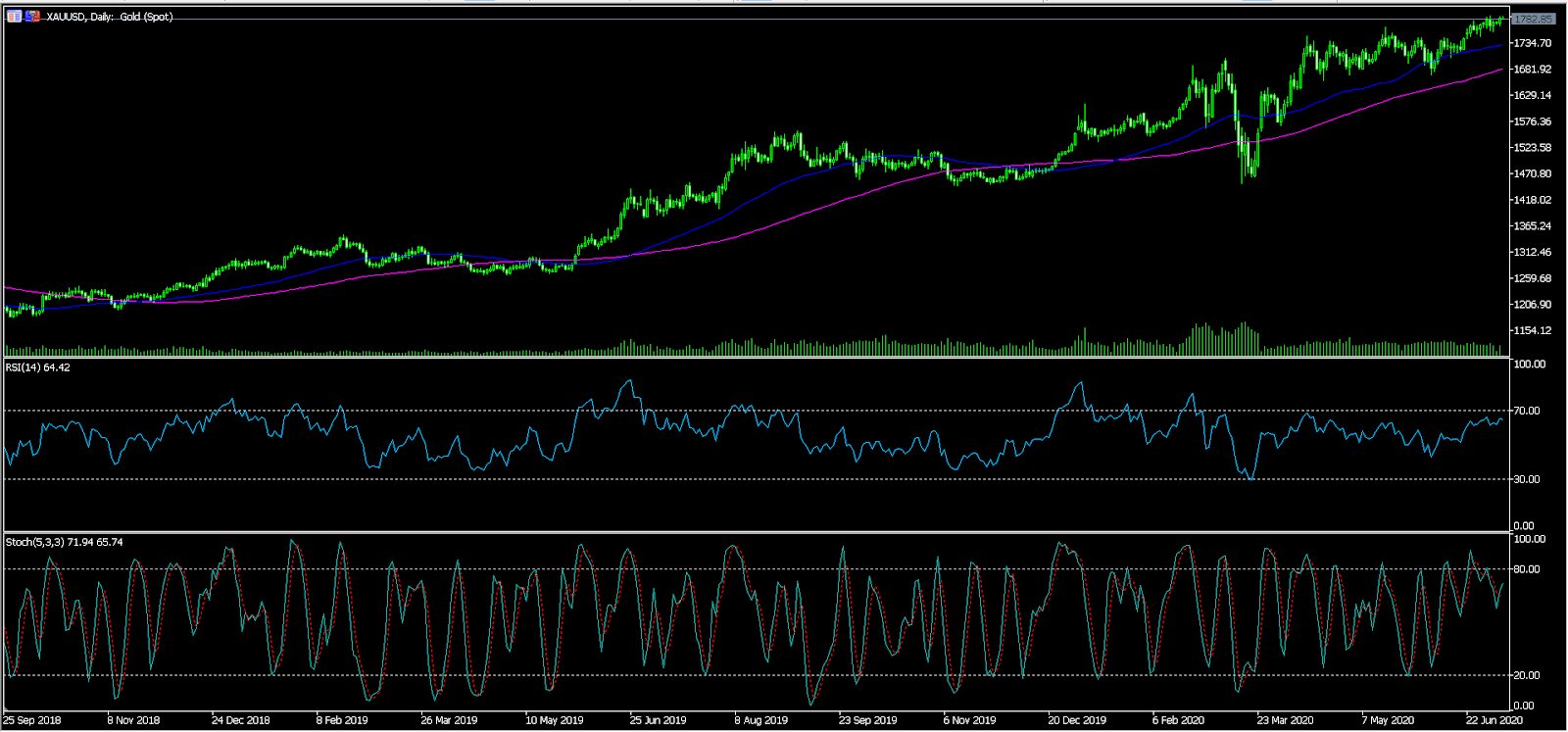
The XAU/USD pair is trading at 1782, which is a few pips below the seven-year high. The price is above the short, medium, and long-term moving averages. The MACD and the RSI have moved higher while the main and signal lines of the stochastic oscillator are slightly below the overbought level. Therefore, the pair will likely continue rallying as traders attempt to test the all-time high of 1900.
Author

OctaFx Analyst Team
OctaFX
OctaFX is a market-leading forex broker, providing personalised forex brokerage services to customers in over 100 countries worldwide.