With UK inflation decelerating, the chances for the Bank rate hike move to autumn
- The UK CPI rose 2.4% in April compared with 2.5% y/y expected by the market while core inflation rose 2.1% in April compared with 2.2% y/y expected.
- The UK inflation confirms the Bank of England dovish stance echoed by May Inflation Report.
- With inflation lower than expected, the Bank of England is in no hurry to normalize its monetary policy and the Bank rate is expected to remain at 0.5% until autumn this year.

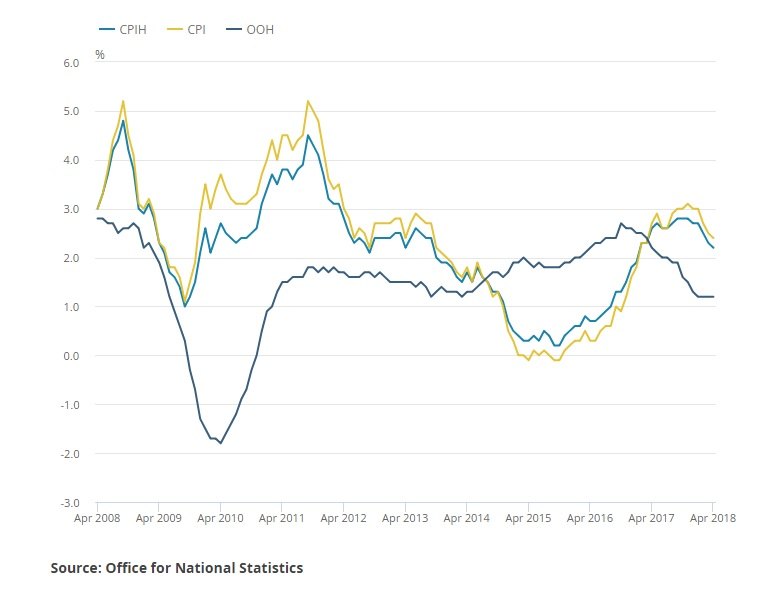
The UK Consumer Price Index (CPI) rose 2.4% over the year in April, decelerating from 2.5% y/y in March while core inflation decelerated to 2.1% y/y from 2.3% in the previous month. The UK CPI index including owner occupiers’ housing costs rose2.2% over the year in April, decelerating from the autumn 2017 high of 2.7% y/y.
"The largest downward contribution to the change in the rate came from airfares, which were influenced by the timing of Easter," the Office for National Statistics (ONS) said in the report on inflation on Wednesday.
"Rising prices for motor fuels produced the largest, partially offsetting, upward effect," the ONS further noted.
The UK inflation data confirm the Bank of England forecasts published in May Inflation Report that saw inflation decelerating towards its 2% inflation target much faster than originally estimated in February and falling off the 3.1% cyclical inflation peak from December last year. The core inflation in April is standing just one-tenth of a percent off the Bank of England inflation target.
“Growth—at 0.1% in the first quarter of this year—was much weaker, and inflation—at 2.5% in March—was notably lower than we had projected in February,” the Bank of England Governor Mark Carney said in the opening remarks at the press conference after publishing May Inflation Report on May 10.
Decelerating inflation is Sterling negative as it buys the Bank of England time before it has to act on interest rates. The Bank Of England Governor and the Monetary Policy Committee (MPC) external member Gertjan Vlieghe both shared their outlook for the monetary policy saying “interest rates in the UK will go up very gradually over the next few years.” While testifying in UK parliament on Tuesday, the Bank of England officials confirmed that the weather-related blip in the UK GDP growth rate in the first quarter and slowing inflation were among the main reasons for the MPC members to turn dovish in May.
The UK inflation
Author

Mario Blascak, PhD
Independent Analyst
Dr. Mário Blaščák worked in professional finance and banking for 15 years before moving to journalism. While working for Austrian and German banks, he specialized in covering markets and macroeconomics.

















