Will debt sink the American empire?


"Will Debt Sink the American Empire?"
So asks the Wall Street Journal, in an uncharacteristically gloomy article for the bull market's paper of record.
They kick off with the problem: America is "cruising" into an uncharted sea of federal debt, with a government seemingly incapable of turning it around.
In other words, the uniparty has set its course, and there's no cavalry coming.
The runaway train of deficits
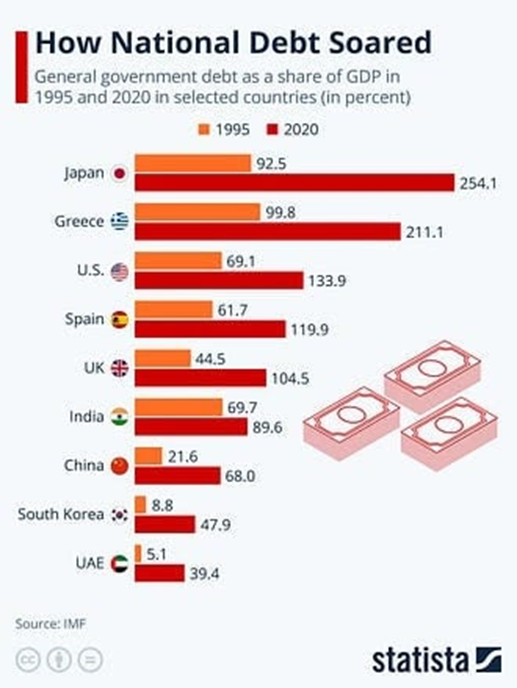
We're currently adding a fresh trillion of debt every hundred days, on our way to $35 trillion.
Meanwhile, the deficit is about to break $2 trillion – for perspective, all federal revenue under George W Bush averaged around $2 trillion.
Debt interest *alone is set to cross $1 trillion, eclipsing even our bloated military budget that beaches quarter-billion dollar piers in Gaza for sport.
The next milestone after that is Medicare spending, which together with Social Security has its own $78 trillion unfunded liability, according to its own Board of Trustees – outside estimates are higher.
Governments are rabid by nature
Now, none of this is shocking: governments by nature try to spend too much – indeed, much of economic history is made up of governments desperately trying to finance their mountains of debt.
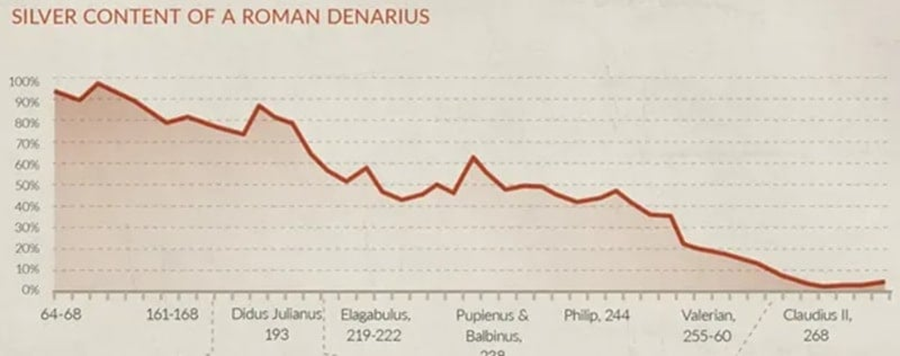
Debt brought down Rome, first with hyperinflation then with a gutted military that barbarians walked right over.
It brought down Spain, as New World gold finances an effective government takeover of the private sector. And France, bankrupted by financing foreign wars – in this case, the American Revolution. The Qing collapsed under debt and even Great Britain who owned half the earth for nearly a hundred years.
It's why we got the Magna Carta – indeed, Constitutions – as kings pleaded for more money. It's how we got central banks, as first Britain then the rest of the world licensed money printers in exchange for debt finance.
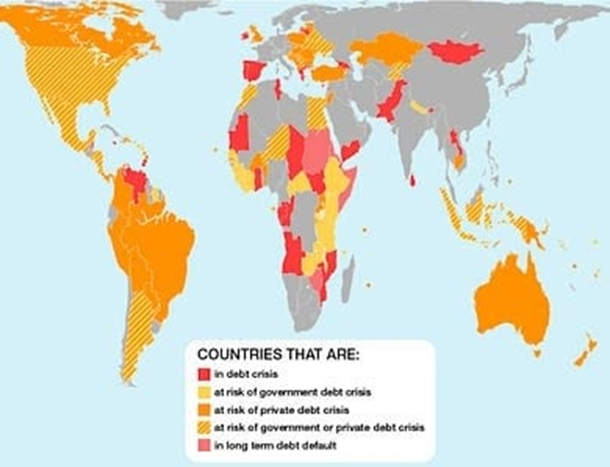
To this day government debt crashes countries – countries from Turkey to Venezuela to Nigeria are currently undergoing debt crises, with Argentina desperately trying to pull out of one.
How does it end?
And, with so many historical cases, we know exactly how this ends: investors stop buying government debt, shutting out governments and leading to massive austerity and soaring inflation as the government retrenches.
Going by history, the government will cancel the trillions it promised — starting with Social Security and Medicare — then pull back to where it can pay the Praetorian Guard and not much else.
In short, once debt hits the magic line, Washington goes from Sugar Daddy to wild animal. And, historically, it happens much faster than people imagine — in Hemingway’s famous phrase, countries go bankrupt gradually then all at once.
There is a ray of hope
Washington’s spending freight train can be stopped – in fact, we did stop it in the '90s under Clinton and Gingrich: From 1997 to 2000 we ran budget surpluses totaling nearly $600 billion.
The key was gridlock – two parties that despised each other so much that the only thing they could agree on was to sabotage each other’s plans.
Unfortunately, whether it was corporate donors or golden parachutes for politicians, both parties have long since folded and are now eager to cooperate so long as they both get everything they want. So Democrats feed their activist army at taxpayer expense, while Republicans instead give ammo to Ukraine.
This all means there is a ray of fiscal hope.
If, say, President Trump were to face a democrat Congress that hates him so much it blocks everything he does – not an impossible thing to imagine.
Or, if you swing that way, a President Biden – or Harris – is subjected to similar antipathy from a GOP Congress.
Or, dare we dream, a GOP that actually stands up on the debt ceiling, damn the media torpedos., or wait a couple of years and it's a crisis in the entire country.
We know which one Washington will pick. But it's ultimately the voters who run the joint.
To receive free commentary and analysis on the gold and silver markets, click here to be added to the Money Metals news service.
Author
Peter St. Onge, PhD
Money Metals Exchange
Peter St. Onge writes articles about Economics and Freedom. He's an economist at the Heritage Foundation, a Fellow at the Mises Institute, and a former professor at Taiwan’s Feng Chia University. His website is www.ProfStOnge.com.