What this week’s Fed announcement means for the US dollar
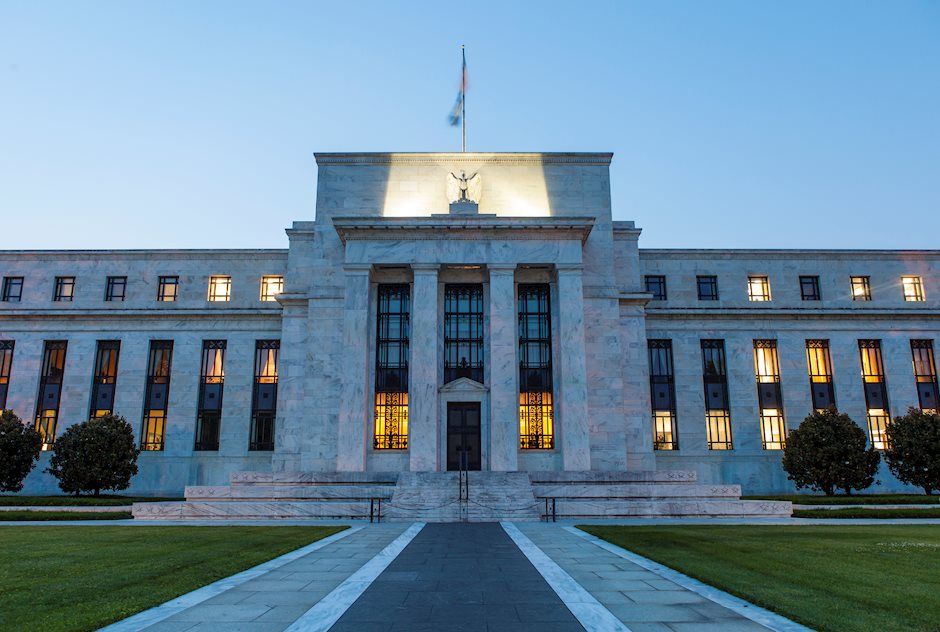

The dollar has traded lower against every other G10 currency in the past week, with the greenback on course for its worst week since May following Wednesday’s FOMC meeting.
The bank’s communications and comments out of chair Powell’s press conference were rather mixed. Powell didn’t appear particularly concerned with the recent spread of the delta variant. He noted that the economic implications had tended to be less with each successive wave and that it was reasonable to assume that would be the case this time around. Powell also continued to downplay the impact of rising US inflation. He admitted that prices had risen faster than expected in recent months, although once again stressed that the inflation spike would likely fade and that patience was required in response.
The Fed’s slightly less pessimistic view on the pandemic and its impact on the US economy was hawkish, although investors have sold the dollar on the lack of clarity surrounding the bank’s timetable for tapering its asset purchase programme. Going into the meeting, markets were keeping a close eye on the bank’s communications for any hint that a tapering could be on the horizon. Powell stated that the bank had taken the first ‘deep-dive’ into how to scale back purchases, although no decision had been made regarding its timing. Perhaps more importantly for markets, he also stressed that the bank was still ‘a ways away’ from considering raising interest rates. This is a slight contrast in tone from the June meeting, where the dollar rallied sharply following a shift higher in the bank’s interest rate projections.
It was Powell’s comments on interest rates that the market has perhaps latched onto the most in the past couple of days. With virus uncertainties lingering in the background, we think that policymakers are right to not necessarily rush into normalising policy. We now see it as less likely that we’ll get a hint that tapering could be on the way at the August Jackson Hole conference. We may instead have to wait until the September FOMC meeting for a signal as to the timing of QE tapering. At this point, the Fed should have a much clearer idea as to the state of the health crisis and the nature of the recent spike in US inflation.
Until then, however, we think that the dimming prospect of US rate hikes any time soon and the continued rollout of vaccines around the world may weigh on the dollar in the near-term. The near total removal of all virus restrictions in the US and UK makes us increasingly confident that other, less developed nations will be able to follow suit once they catch up with their respective vaccination programmes. This, we believe, should trigger a broad improvement in risk sentiment, which tends to be followed by a weaker dollar.
Author
Matthew Ryan, CFA
Ebury
Matthew is Global Head of Market Strategy at FX specialist Ebury, where he has been part of the strategy team since 2014. He provides fundamental FX analysis for a wide range of G10 and emerging market currencies.