USDJPY: US$Jpy finished Friday unchanged


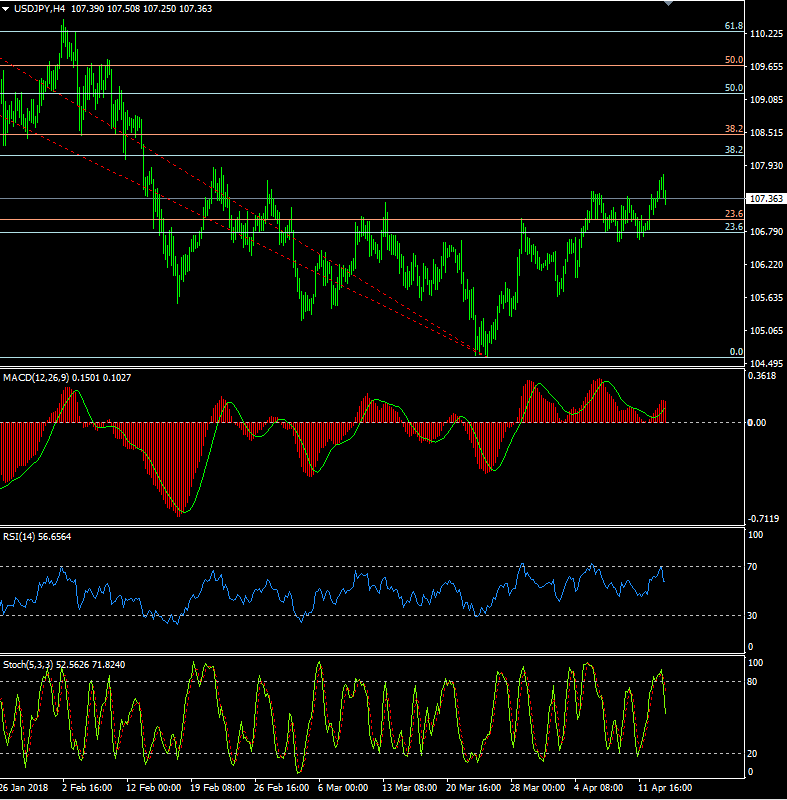
US$Jpy finished Friday unchanged, after a squeeze up to 107.75 failed and saw a return to 107.30, roughly where it had started, as early risk-on sentiment turned around and saw traders cut positions, in sympathy with the lower stock markets, ahead of the weekend.
1 hour/4 hour indicators: Mixed.
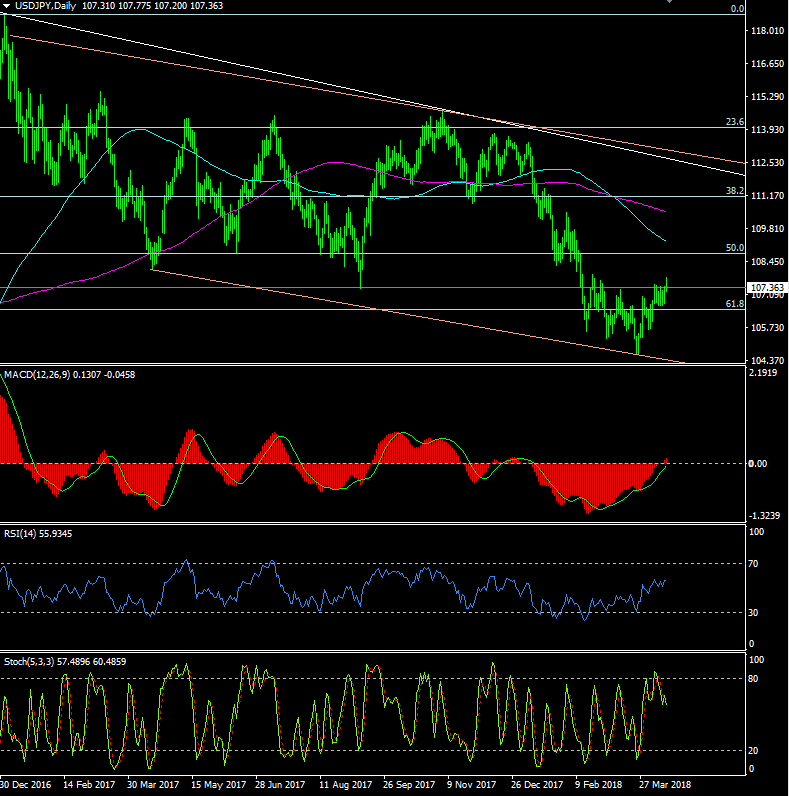
Daily Indicators: Turning higher
Weekly Indicators: Turning lower
Preferred Strategy: The daily momentum indicators retain a constructive bias and the weeklies are also now turning higher so sentiment does look to be improving for US$Jpy despite the increasing M.E tensions that could see a return of Yen demand at any time. The short term charts look a bit heavy though so a fairly neutral stance is required but, technically, buying dips still seems to be the plan.
On the topside, back above minor resistance at 107.50 would find offers at 107.75 and then again at the mid-February highs at 107.90. Above here, 108.10 would then be a target above which could see a move to 108.45/50.
On the downside, buyer will be seen at 107.20 (Friday low/Daily cloud base) and at 107.00 ahead of good support at 106.55/65, below which could see a reverse towards 106.20, 106.00, and possibly towards the 3 April low of 105.68 although this seems unlikely right now.
As before, if stocks turn sharply lower again, probably taking US$Jpy along for the ride despite the currently positive medium term indicators, a move back below the 200 MMA (105.60) would open the way to 105.30, a break of which would allow a return to 104.60. Below that, there is little to support the dollar until 103.50 – This currently looks well beyond the horizon, and overall, while the dailies remain positive, I prefer to be trading from the long side and looking to buy dips.
Buy US$Jpy @ 106.80. SL @ 106.45, TP @ 107.80

Economic data highlights will include:
M:
T: Industrial Production, Capacity Utilisation
W: Merchandise Trade Balance
T:
F: National Japan CPI
Author
Jim Langlands
FX Charts
Jim Langlands began his trading career in the commodities markets in London in 1976, before moving to Australia in 1979 to work as a floor trader on the Sydney Futures Exchange.

















