|

USD keeps struggling

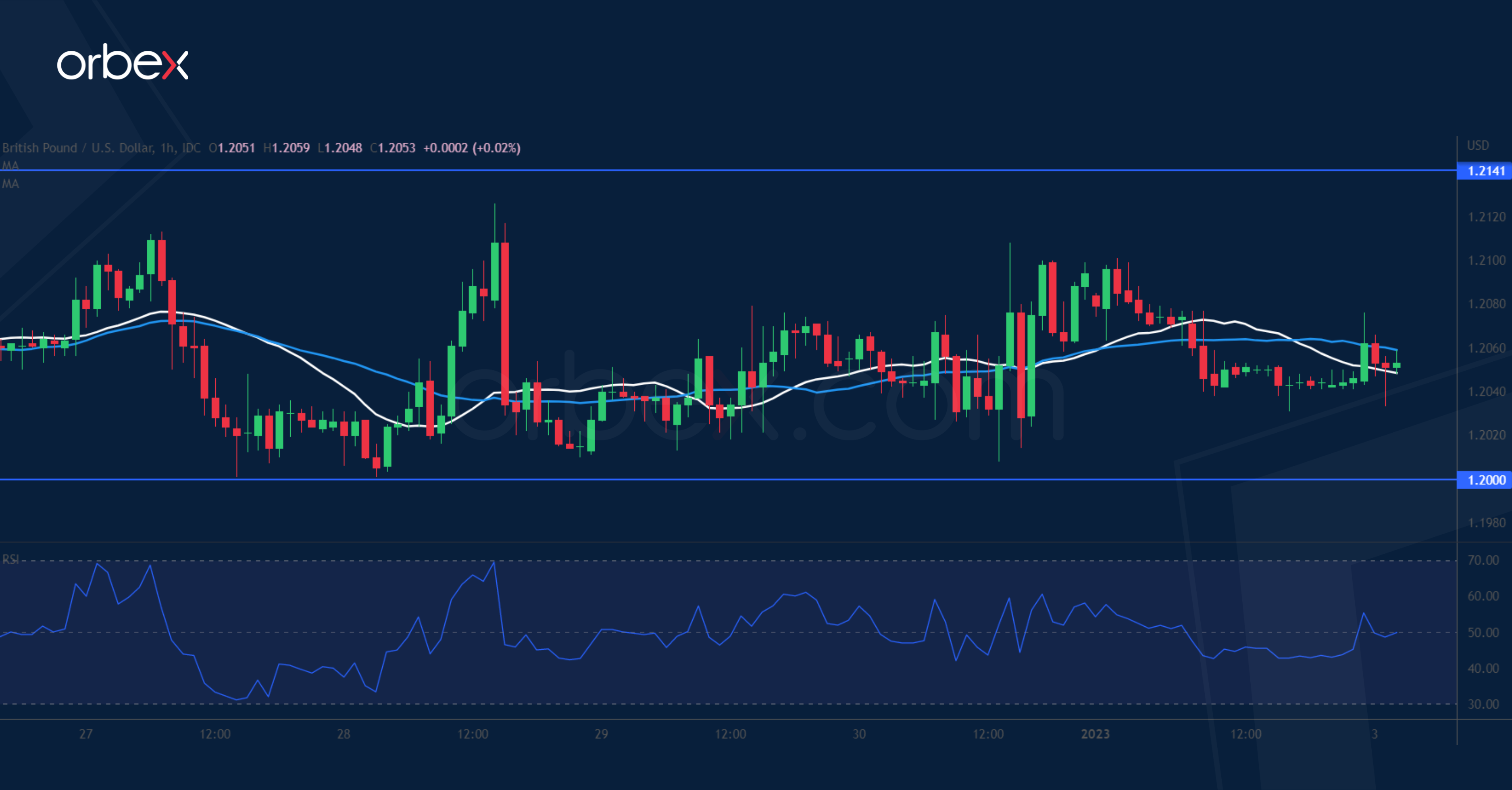
GBP/USD seeks support

The pound underperforms as market participants remain worried about the UK’s economy in 2023. The pair continues to drift lower due to buyers taking profit after a two-month long rally and new sellers getting into the game. The psychological level of 1.2000 sits at the origin of last December’s rally and the sideways action is a sign of little buying. Though the price would remain depressed as long as it is under 1.2140, sentiment may only turn around if the bulls reclaim 1.2280. 1.1900 is a critical level to keep Sterling afloat.
Chart

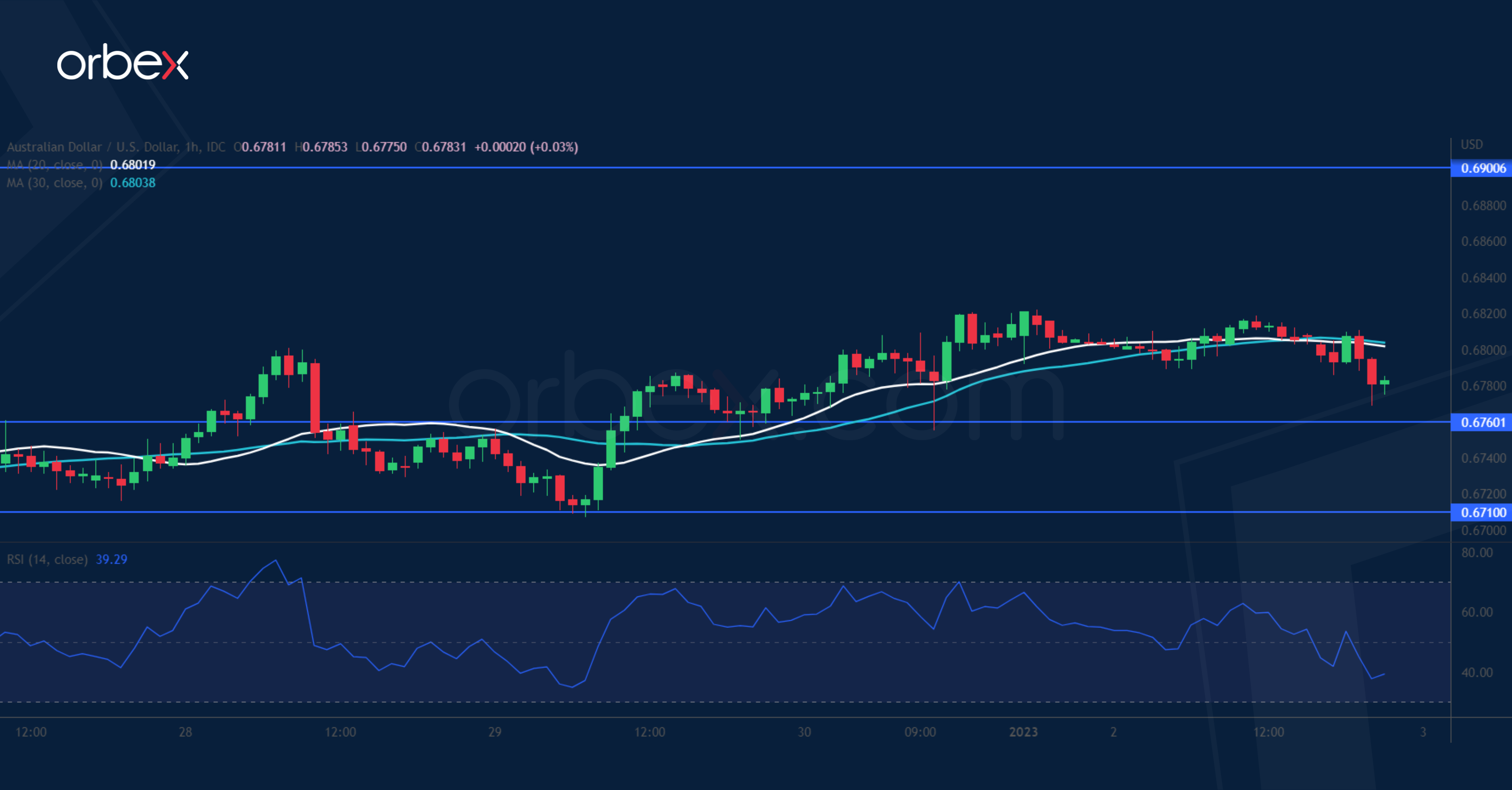
AUD/USD recoups losses

The Australian dollar edges higher as traders shun safe haven assets like the greenback. The pair has clawed back a big chunk of its losses from the liquidation in mid-December. The bulls have shifted their focus to the previous peak at 0.6900. A bullish breakout would extend the aussie’s recovery in the medium-term. In the meantime, they may consolidate their holding above 0.6800 with 0.6760 as the closest support. That would attract more buying interest. 0.6710 is a second layer of defence in case of further hesitation.
Chart

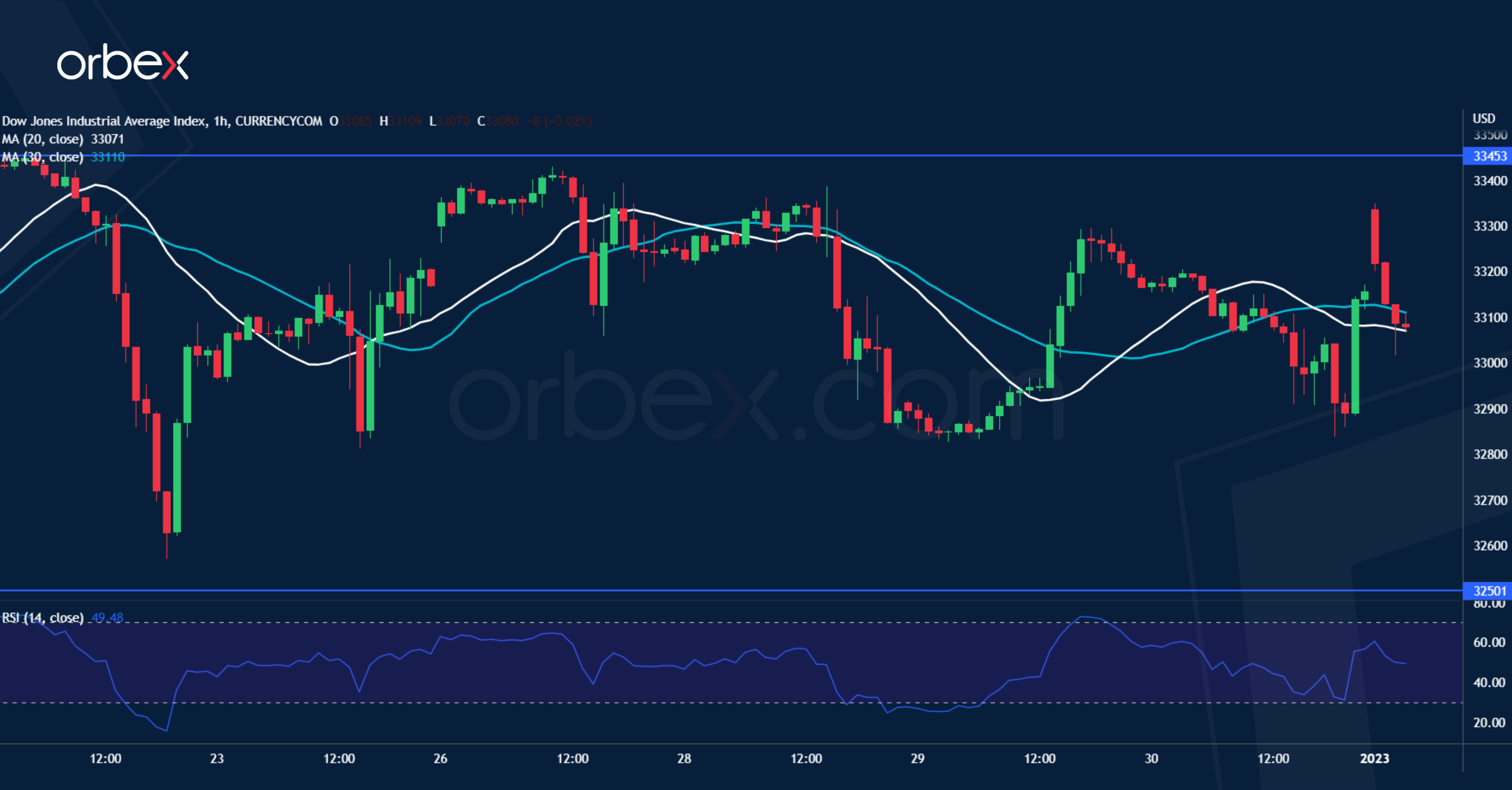
Dow Jones 30 awaits breakout

The Dow Jones ebbs and flows as investors probe risk appetite at the start of the year. The index has been struggling to hold onto the critical floor at 32500. The horizontal consolidation is a sign of a fragile balance and a breakout would heighten volatility due to increased pressure from both sides, shaping a new trading range for the days to come. A close above 33450 may carry the index back to 34100. However, a bearish breakout could trigger a new round of sell-off towards 31500 with more buyers abandoning ship.
Chart

Author

Jing Ren

Jing-Ren has extensive experience in currency and commodities trading. He began his career in metal sales and trading at Societe Generale in London.


More from Jing Ren
Share:

Editor's Picks

AUD/USD flatlines near 0.6965 as less hawkish RBA counters USD weakness

AUD/USD holds steady above a two-week low, trading near 0.6965 in the Asian session on Wednesday as early midterm election results heighten political uncertainty and weigh heavily on the US Dollar. Moreover, reviving safe-haven demand triggers a fresh leg down in US bond yields, offsetting Fed hike bets and exerting additional pressure on the buck. However, a less hawkish RBA caps the Aussie.

USD/JPY declines below 158.00 as USD weakens on midterm election results

USD/JPY comes under heavy selling pressure on Wednesday, dropping below 158.00 during the Asian session as the US Dollar slumps to a one-month low amid heightened political uncertainty after early US midterm vote counts. Moreover, the prospect of gridlock in Washington drives safe-haven flows, triggering a fresh leg down in US bond yields and further weighing on the buck.

Gold reclaims $4,000 and above

Gold manages to regain some composure, leaving behind two consecutive daily pullbacks and reclaiming the area above the key $4,000 mark per troy ounce on Wednesday. The strong decline in the US Dollar, declining US Treasury yields and lower crude oil price all contributes to the yellow metal’s recovery.

Crypto Today: Bitcoin, Ethereum, XRP extend advance as US Dollar slides on Democrats' US midterm victory

Bitcoin trades above $78,000 on Wednesday as risk-on sentiment improves in the broader cryptocurrency market. Ethereum mirrors BTC’s recovery outlook, hovering above $2,300. Ripple similarly exchanges hands above $1.28, marking two consecutive days of gains.

US midterms 2026: Investor Q&A on the Democratic sweep
1. Gridlock replaces the stimulus narrative. A Democratic Congress would constrain Trump's ability to pursue additional fiscal expansion and legislative tax measures. But it cannot simply reverse the president's entire economic agenda. Executive powers, existing legislation and presidential vetoes remain important. 2. AI faces a higher hurdle, not an extinction event.
The 2% inflation target came from a throwaway remark. It now moves trillions
The Federal Reserve's 2% inflation goal grew out of an off-the-cuff remark by a New Zealand politician in 1988. Bond investors still price long-term US debt as if 2% holds, so a change in how the Fed measures inflation would move markets.