USD/JPY Weekly Forecast: Waiting for the US to improve
- USD/JPY rebounds from 105.40 support, maintains downward bias.
- Resistance at this week’s high 106.20 blocks passage above with 106.50 behind.
- Japanese July statistics show little incipient economic recovery.
- Dollar weakness and the state of the US economy ordered trading.

Monday’s drop through support at 106.20 defined the week as it became resistance for the following sessions. Thursday’s attempt to break above failed and the pair closed at 105.77.
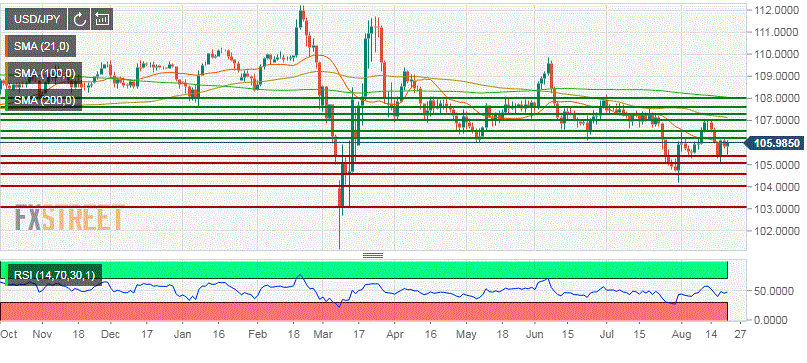
The USD/JPY remains near the center of the wide downward sloping channel that goes back to early April and the immediate consolidation after the market panic. The lower border was established by the sharp drop in the last week of July that reversed on the 31st.

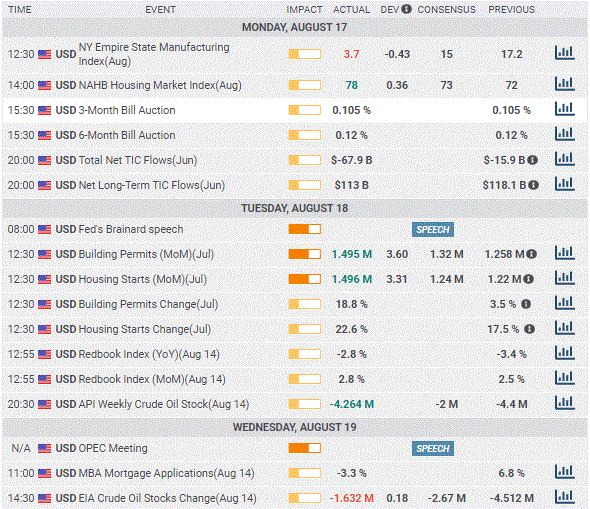
The general dollar weakness of the past month has been based on the perception that the US recovery has slowed under assault from rising Covid rates. The statistical support for this view is thin largely based on initial jobless claims which rose 10% in the two middle weeks of July, fell 33% in the subsequent two weeks and jumped back 12% to 1.106 million in the latest (August 14) week.
Other US July data has been relatively good. Payrolls added 1.763 million jobs, more than forecast bringing the rehired to 9.23 million, 42% of the March and April losses. Purchasing managers’ indexes were strong in manufacturing and services with the latter new orders index at an all-time record. Employment indexes were the exception with both services and manufacturing remaining well in contraction with little motion higher.
Existing home sales soared a record 24.7% in July, outstripping the 14.7% forecast and June’s strong 20.2% gain. The 5.86 million annualized selling rate is the highest since the pre-financial crash housing bubble. Sales were aided by some of the cheapest mortgage rates in history as the Federal Reserve bond purchase program part of its Covid relief package forces commercial yields lower.
At first look at August’s numbers were impressive. IHS Markit’s purchasing managers’ index was better than forecast with the manufacturing PMI at 53.6 on a 51.9 estimate and July’s 50.9 score. Services registered 54.8 on a 51 forecast and the July reading of 50.
The US labor economy is the crux of the recovery. Until improvement is unambiguous and advancing the dollar is unlikely to shake its weakness, even if the Japanese recovery trails the American by a large margin.
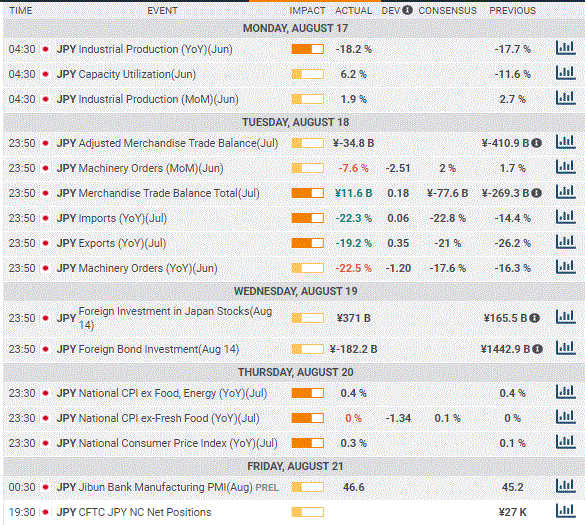
Japanese industrial production fell 18.2% on the year in June, down from 17.7% in May and the ninth retreat in a row. On the month production fell 1.9%, less than 2.7% drop in June.
Imports fell 22.3% in July not as bad as the 22.8% forecast but much worse than June’s 14.4% decline. Exports declined 19.2%, improving on the 21% prediction and the 26.5% drop in June.
Consumer prices recovered slightly with national CPI over the year rising to 0.3% in July from 0.1% and core CPI remaining at 0.4%.
The Jibun Bank preliminary manufacturing PMI for August rose to 46.6 from 45.2 in July. This gauge has been in contraction for 16 straight months.
USD/JPY outlook
As has been true for most of the post-pandemic period and especially for the past month’s accelerated decline in the USD/JPY it has been US economic developments that have provided motive force.
This week’s rebound from 105.40, far above the July 31 low at 104.19 and equally far from the bottom of the descending channel at 104.12, shows an ebbing downward velocity. But lack of a vigorous decline is not the same as recovery. For the USD/JPY to break the negative cycle the US has to show signs of a strengthening economy, particularly a resumption of robust job growth.
Japan statistics August 17-August 21
 US statistics August 17-August 21

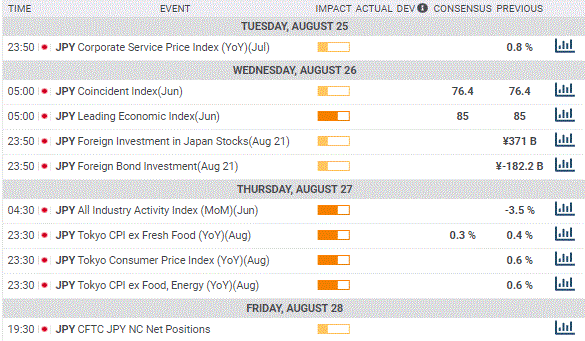
Japan statistics August 24-August 28
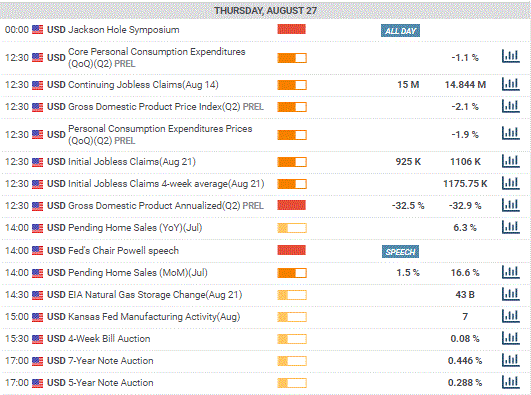
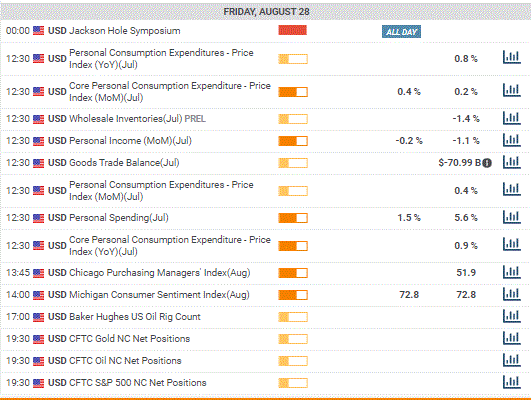
US statistics August 24-August 28

USD/JPY technical outlook
The mildly negative relative strength index at 46.75 is indicative of the lack of selling conviction. Downside momentum is expiring but as yet there is no substitute. Resistance lines are more prevalent and stronger due to the long period of post-panic range trading. Support stems from the far more limited late July dip to 104.19 which defined the lower border of the downward channel or the panic bottom in early March. The moving averages are split with the 21-day at 105.90 just below the market, the 100-day at 107.12 backing 107.00 resistance and the 200-day at 108.05 coincident with the 108.00 resistance line.
Resistance: 106.20; 106.50; 107.00; 107.30; 107.60; 108.00
Support: 105.40; 105.00; 104.55; 104.00; 103.00
 USD/JPY sentiment poll
Author

Joseph Trevisani
FXStreet
Joseph Trevisani began his thirty-year career in the financial markets at Credit Suisse in New York and Singapore where he worked for 12 years as an interbank currency trader and trading desk manager.