USD/JPY Weekly Forecast: Inflation fears drive the US dollar
- USD/JPY touches another two-decade high at 134.56 on Thursday.
- Treasury yields and risk-off outlook fuel US dollar gains.
- US inflation set new four-decade record, prompting equity plunge.
- FXStreet Forecast Poll technical analysis is strongly bearish.

Treasury yields in the US returned to their early May highs this week adding practicality to the recession and equity fears that have revived the dollar safety trade.
Dollar yen rose 2.5% from Monday’s open, reaching 134.56 on Thursday, its highest since February 2002. The USD/JPY has been on a tear for the past three months, soaring 16.5% from its 114.82 close on March 4.
Treasury yields in the US have been the prime source of dollar strength. From March 4 at 1.721%, the 10-year yield has added 141 basis points to 3.131%. The 2-year has gained 166 points to 2.97%.
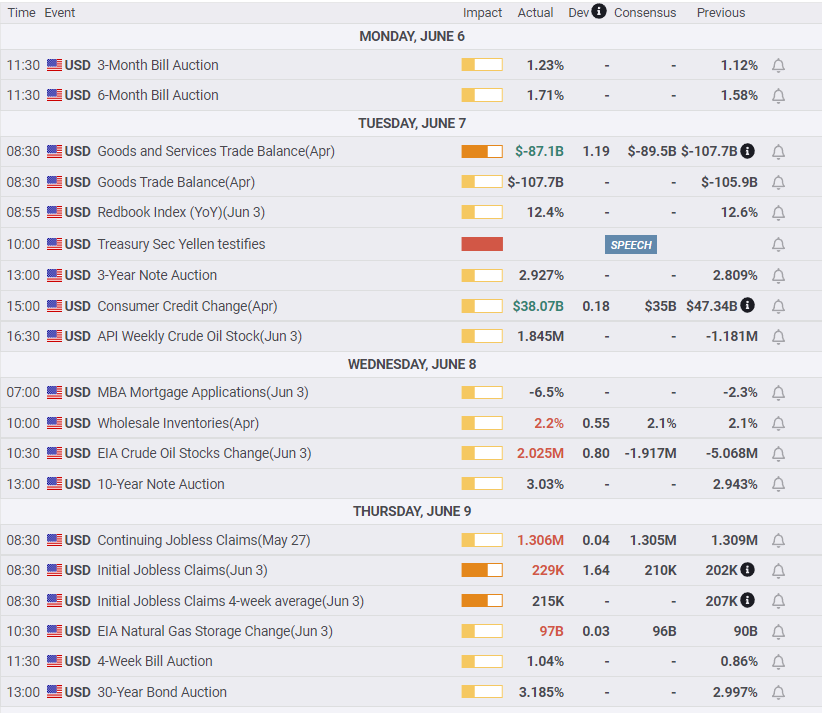
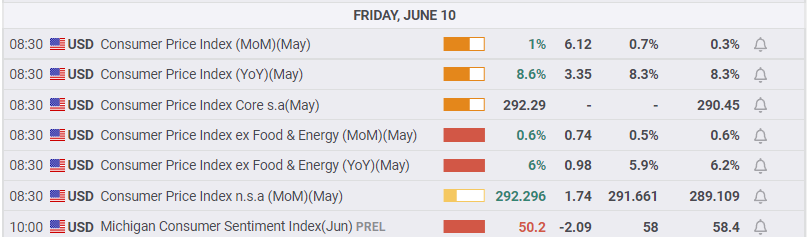
Inflation drove to a new four-decade high in the US in May. The Consumer Price Index (CPI) surged to 8.6%, up from April’s 8.3%, where it had been forecast to remain. Core CPI dropped to 6.0% from 6.2%, slightly above its 5.9% forecast.
In early Friday trading after the 8:30 am CPI numbers, the US 10-year note had added 8.9 basis points of yield, topping its May 3 high of 3.130%. The 2-year note climbed 15.3 points to its best return in almost four years.
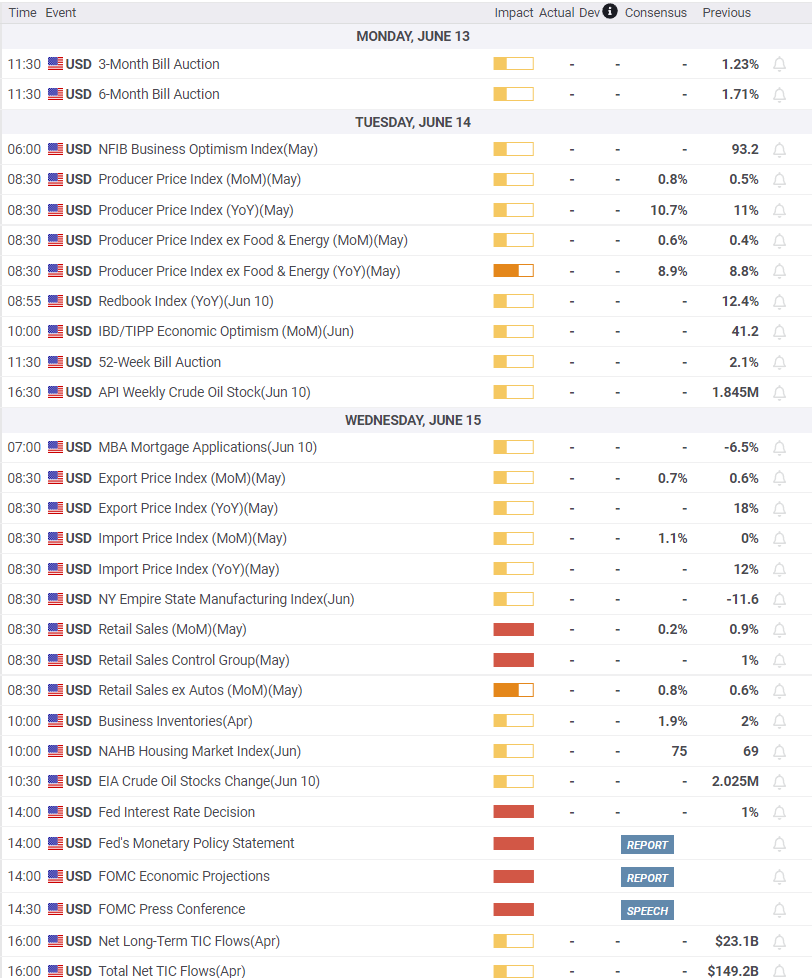
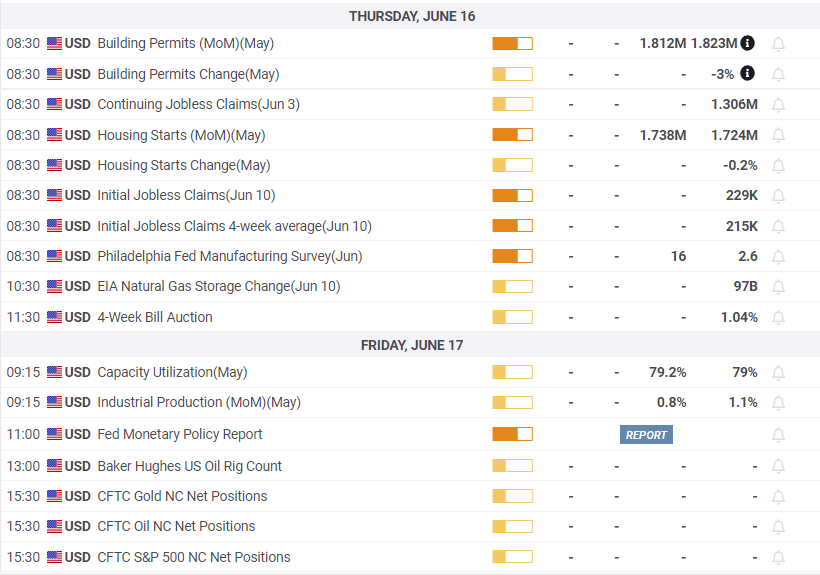
Anticipation around next week’s Federal Reserve meeting, where a 0.5% increase in the base rate is expected, and new economic and rate projections are due, in addition to the start of the balance sheet reduction, had brought Treasury yields back to or above their post-pandemic highs even before the May CPI surprise.
Consumer sentiment in the US tumbled to a level below its nadir in the 2008 financial crisis. The Michigan Consumer Sentiment Index fell to 50.2 in June, far below its 58.0 forecast and May’s 58.4 reading.
Equities in the US dropped sharply after the inflation numbers with the Dow down more than 600 points in morning trading and the S&P 500 falling around 100.
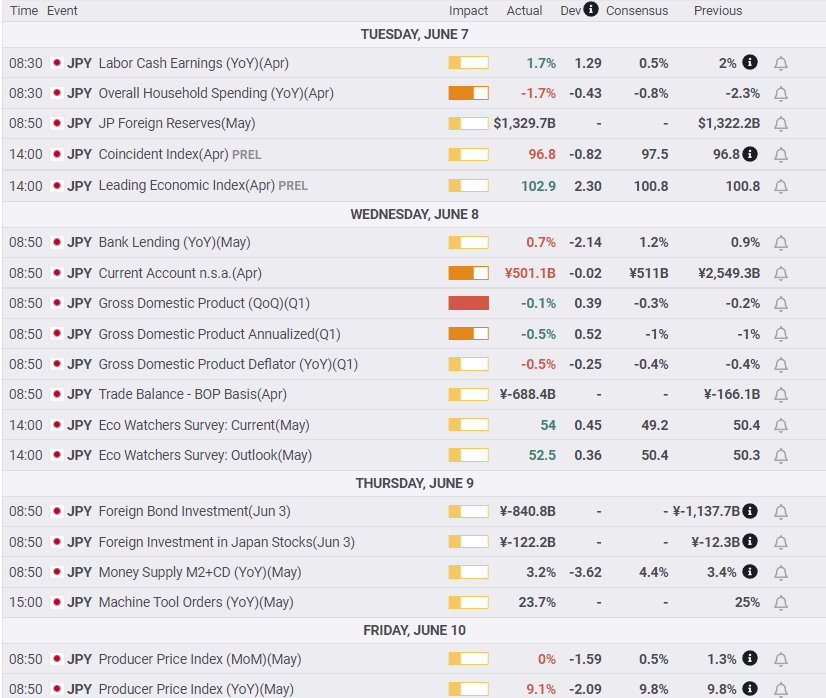
Japanese economic data was mixed. Labor Cash Earnings for April at 1.7% were more than triple the 0.5% forecast and March was revised to 2% from 1.2%. Household Spending, however, was more than twice as weak as expected, -1.7% vs -0.8% and continued March’s 2.3% decline.
Revised first quarter annualized GDP improved to -0.5% from -1.0%. The Eco Watchers Survey for May, that monitors regional economic trends, beat forecasts with the current and outlook results turning in the best levels of the year. Producer prices trimmed their gains in May with the yearly increase falling to 9.1%, from 9.8% and monthly dropping to flat from 1.3%.
USD/JPY outlook
The USD/JPY is overextended, especially on the 5.8% gain since May 25 close at 126.82. Nevertheless, the fundamental drivers of US interest rates and safety-trade fears of a global recession show no slackening. May’s surprising US inflation numbers will only excite speculation for a 75 basis point hike at the Federal Reserve’s Wednesday meeting, even if the odds for such are low. New economic and rate projections from the central bank and Chair Jerome Powell's news conference will be the major considerations. In the March set of Projection Materials, the central tendency for the fed funds at year end was 1.9% and GDP was to be 2.8% for 2022. Those figures will head in opposite directions, how much higher for rates and lower for GDP are the crucial questions. The Fed will also initiate its long-touted balance sheet reduction this month.
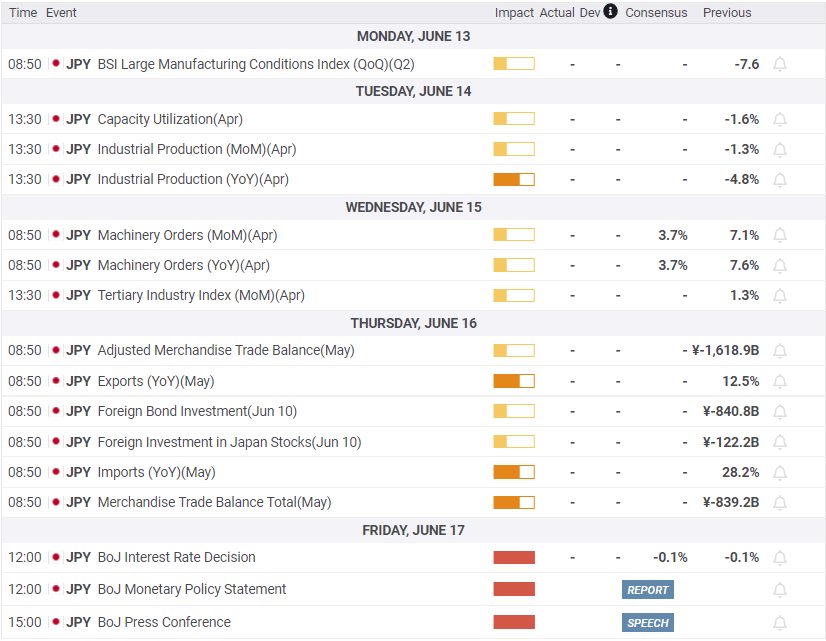
The Bank of Japan (BoJ) meets on Thursday and no policy changes are expected. But even the stoic BoJ will find it hard to ignore the weakness of yen trading at nearly 135 to the US dollar, its lowest point in over two decades.
 out-637906870677456693.png)
The USD/JPY outlook is higher with a good potential for temporary profit-taking pullbacks.
Japan statistics June 6-June 10
US statistics June 6–June 10
FXStreet
Japan statistics June 13–June 17
FXStreet
US statistics June 13–June 17
FXStreet
USD/JPY technical outlook
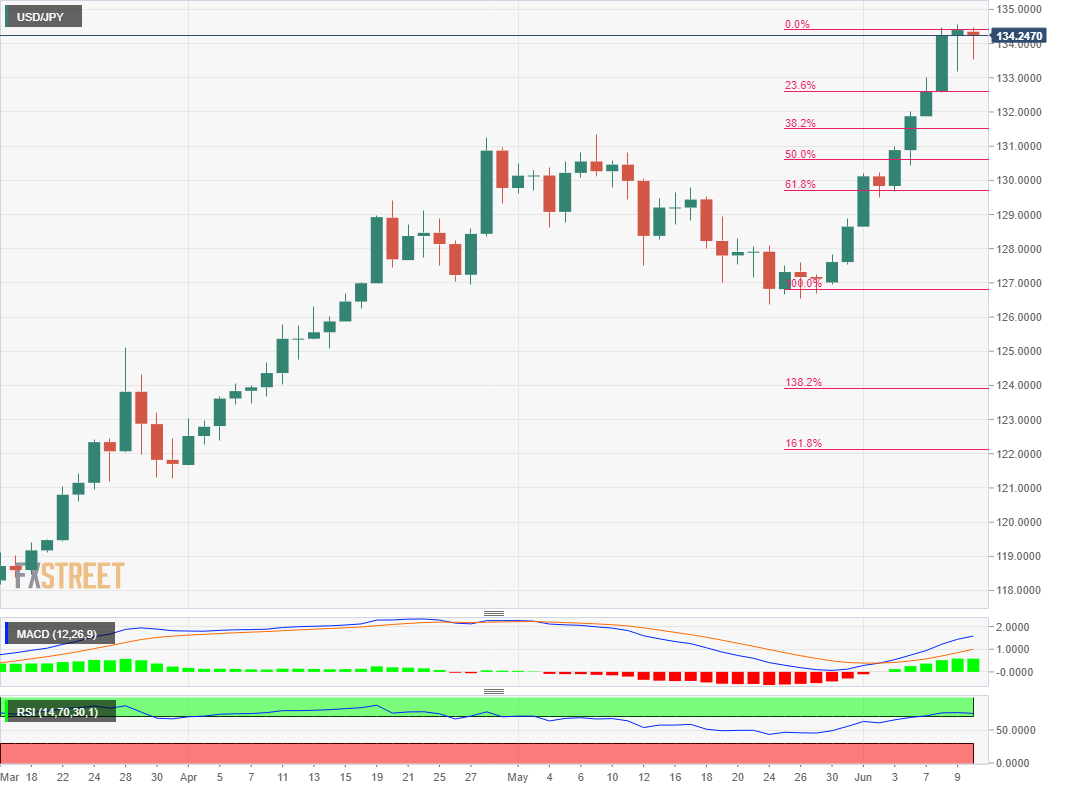
The MACD (Moving Average Convergence Divergence) has retained its upward bias despite the lack of meaningful penetration above Wednesday's close at 134.25. The Relative Strength Index (RSI) has been overbought since Tuesday without negative effect on the USD/JPY.
Average True Range (ATR) indicates a continuing high potential for volatility.
 tech 1-637904771902717441.png)
The Fibonacci levels for the March to May rise and the more recent gain from May 25 illustrate the dilemma. There has been no rebound for the yen. The drop to the 23.6% Fibonacci level of the earlier March to May move ended in another and sharper leg higher. For the overall March to June run from 114.82 to 134.45, or the later rise from 126.82, there has been no decline at all.
Friday’s natural venue for weekend profit-taking was short-circuited by US May CPI and USD/JPY remained above 134.00.
The technical motivation for selling the USD/JPY is strong even if the fundamental direction remains higher. Next week’s Federal Reserve meeting on Wednesday has sufficient scope for a rate or projections surprise that profit sales will be limited until the meeting’s conclusions are known.
Four-hour charts provide the best evidence of support above 130.00.
Support: 133.50, 132.85, 132.50, 132.20, 131.85, 131.55, 131.00, 130.50
 tech 2-637904772134692355.png)
The USD/JPY rise to two-decade highs has taken the pair to thinly traded technical levels on the daily charts. Moving averages have yet to catch up with the rapid ascent of the USD/JPY.
 tech 3-637904772404328567.png)
Resistance: 134.55
Support: 132.60, 131.90, 130.90
Moving Averages: 21-day 129.65, 50-day 128.48, 100-day 122.69, 200-day 117.96.
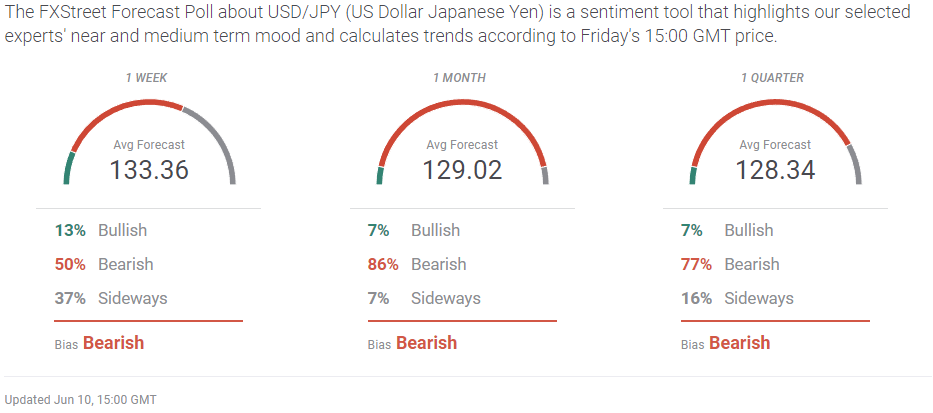
FXStreet Forecast Poll
The rapid and unchecked rise of the USD/JPY has generated a heavily bearish outlook in the FXStreet Forecast Poll.
Author

Joseph Trevisani
FXStreet
Joseph Trevisani began his thirty-year career in the financial markets at Credit Suisse in New York and Singapore where he worked for 12 years as an interbank currency trader and trading desk manager.