USD/JPY Weekly Forecast: Will the market credit an improving US economy?
- Better than expected US payrolls provide respite for the dollar on Friday.
- Resistance at 106.00 capped the rally and remains strong.
- Dollar likely to remain weak until US economy resumes stronger recovery.

After waiting all week the US payrolls delivered numbers good enough to rally the dollar back to its recent high but nowhere near strong enough to dispel the negative Covid inspired assumptions about the US economy.
The USD/JPY closed its five sessions at 105.92, points from where it opened on Monday at 105.89. The July 27 break of the 106.00 support line that had held for four months remains the decisive move. Last Friday’s profit–taking run returned the pair to the 106.00 line, now resistance. Monday’s pop to 106.47 and Tuesday’s to 106.20 had no follow through and the pair drifted lower each day thereafter. The post-NFP run brought the USD/JPY back to 106.00 where it closed. Two weeks of trading and no movement.
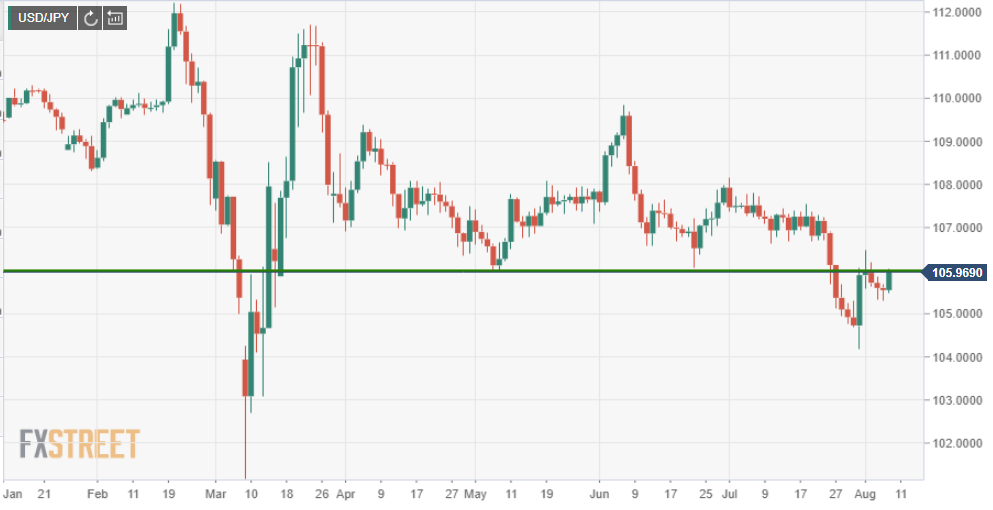
The logic of US dollar weakness over the last three weeks has been predicated on a Covid launched slowdown in the economy. The primary exhibit in that case was the mid-July rise in initial jobless claims.
Markets will now have to decide if the July payrolls were the confirmation of a deepening slowdown, a normal deceleration from June’s torrid hiring pace or a one month reflection of the already retiring Covid surge in June and early July.
The action was once again all on the dollar side and should remiain there inthe week ahead.
Japan statistical summary August 3-August 7
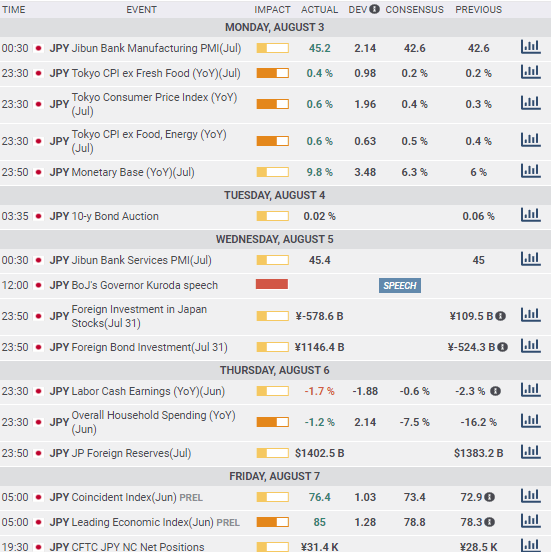
Mild improvement in PMI readings and an uptick in inflation in July were countered by the gloomy pronouncements of Bank of Japan Governor Haruhiko Kuroda on Wednesday.
Mr. Kuroda said the economy could worsen if the government imposes serious measures to contain the Covid outbreak. Japan is in the midst a recession that began in the fourth quarter and shows little sign of easing. Kuroda warned that if the recession deepened the country’s financial system could be at risk.
The Jibun Bank manufacturing PMI for July rose to 45.2 from 42.6 in June for the 15th straight month of contraction. The services index climbed to 45.4 in July from 45 in June, contraction is now at six months with the last reading over 50 at 51 in January.
Consumer inflation rose modestly on the year in July suggesting that demand may be putting a floor under prices. The consumer price index rose 0.6% in July from 0.3% in June for the highest monthly increase since the same 0.6% rate in January
Core inflation also rose 0.6% on the year in July from 0.3% in June for the highest rate since 0.7% in March.
Labor cash earnings dropped for the third month in a row in June falling 2.1% following the 2.3% drop in May and the 0.7% decline in April.
Overall household spending declined for the ninth straight month slipping 7.8% in June after falling 16.2% in May and 11.1% in April.
The coincident index for June was unchanged at 73.4 as forecast and the leading economic index rose to 78.8 from 78.4 in May.
US statistical summary August 3-August 7
Strong reading for purchasing managers’ indexes in July though not in employment did not change the market's negative view of the US economy. It is hard to see how the level of incoming business suggested by the new orders gauges will not prompt substantial hiring in August. .
The unexpected drop in initial claims at the end of July and the better than expected payrolls were little help in fortifying the dollar.
Looking ahead the claims numbers will again take center stage. If they continue to drop, then the market may soon be convinced that the July Covid slowdown is over.
Monday
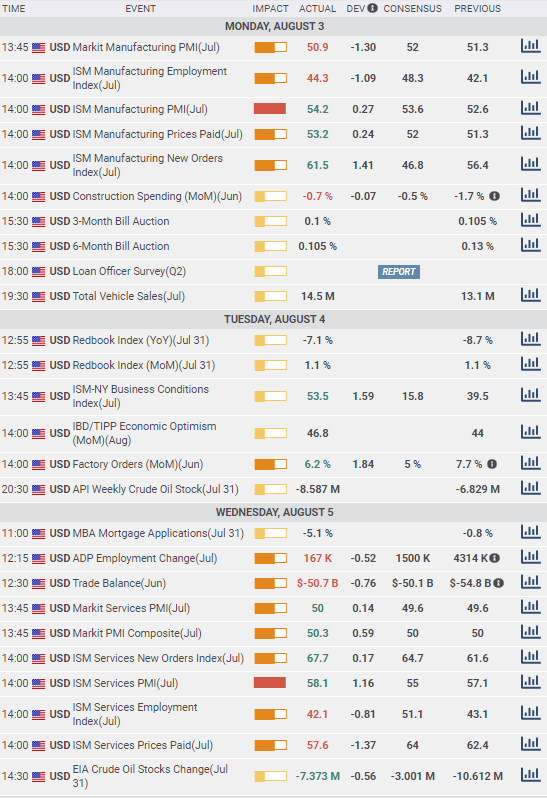
Manufacturing PMI from the Institute for Supply Management was 54.5 in July better than both the forecast of 53.6 and the June reading of 52.6. New orders jumped to 61.5 from 56.4, reversing the 46.8 prediction. Prices paid rose to 53.2 in July from 51.3.
Construction spending for June fell 0.7% on a -0.5% estimate and June's 1.7% drop.
Tuesday
Factory orders rose 6.2% in June following May’s 7.7% increase.
Wednesday
Private payrolls from ADP at 167,000 were far weaker than the 1.5 million prediction but had no predictive value for NFP.
Services PMI registered 58.1 in July after June’s 57.1. The forecast was 55. New orders soared to 67.7 an all-time record. Employment stayed in contraction at 42.1 down from 43.1 in June. Prices paid fell to 57.6 in July from 62.4.
Thursday
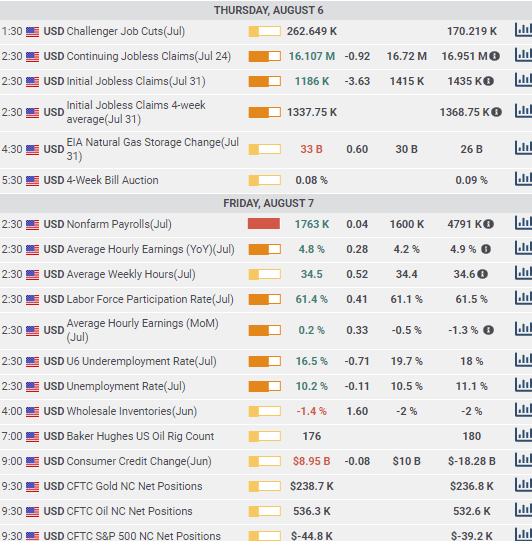
Initial jobless claims fell to 1.186 million in the July 31 week, well below the 1.415 million forecast. It was the first decline in three weeks and the lowest level since the pandemic layoffs began in late March. Continuing claims slipped to 16.107 million from 16.951 million. The four-week moving average for claims decreased to 1,337.75 from 1,368.75
Friday
Non-farm payrolls in July added 1.763 million positions, 1.6 million had been forecast and 4.8 million were created in June. The unemployment rate (U-3) fell to 10.5% from 11.1% and the underemployment rate (U-6) dropped to 16.5% from 18.0%. Average hourly earnings rose 0.2% on the month and 4.8% on the year. Average weekly hours rose 0.1 to 34.5 and the labor force participation rate dropped to 61.45 from 61.5%.
USD/JPY outlook
The course of the USD/JPY over the next few weeks depends on the recovery of the US economy.
If statistics point to a resumption of the pace in May and June then the dollar will soon adopt that energy and rally. Absent that improvement the greenback will continue to sag even though the recovery in Japan is likely to be even weaker and more questionable.
Resistance at 106 is the immediate consideration. If that holds there is limited support to 105.00 and little beneath. The area above 106, especially above 106.50 occupied trading for four months and is replete with resistance and then support lines.
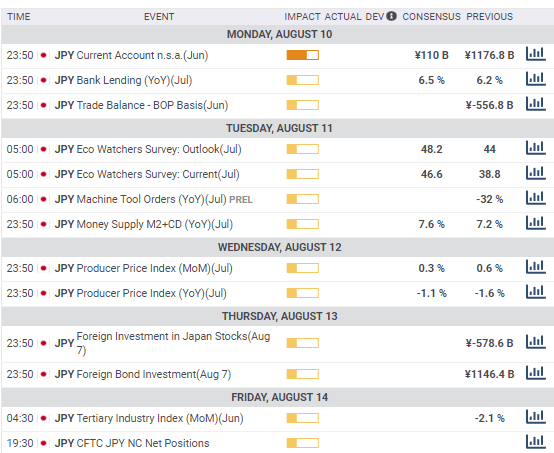
Japan statistics August 10-August 14
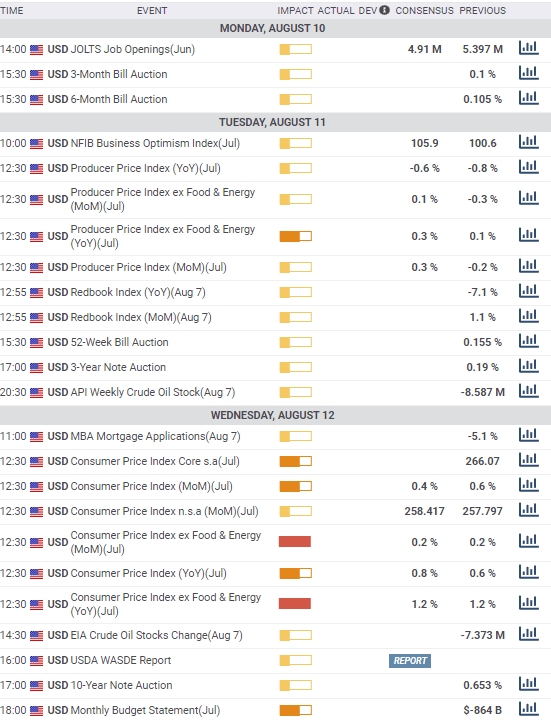
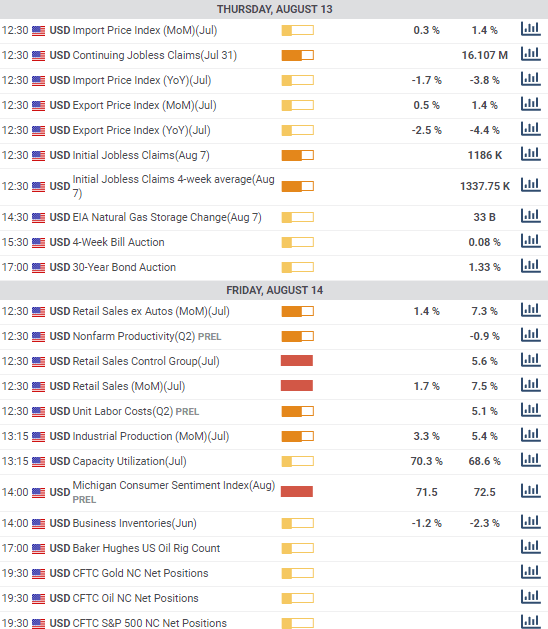
US statistics August 10-August 14
USD/JPY technical outlook
The relative strength index returned to 45.16 on Friday just over where it opened the week and its highest level since July 22. The moving average are all above current levels with the 100-day providing emphasis to the 107.40 resistance line and the 200-day backing up 108.00. Support is sparse below 106 due to the infrequent trading in those levels over the last three years. Resistance is plentiful above 106 for the opposite reason.
Resistance: 106.00; 106.40; 107.00; 107.40; 108.00
Support: 105.35; 105.00; 104.20; 103.00

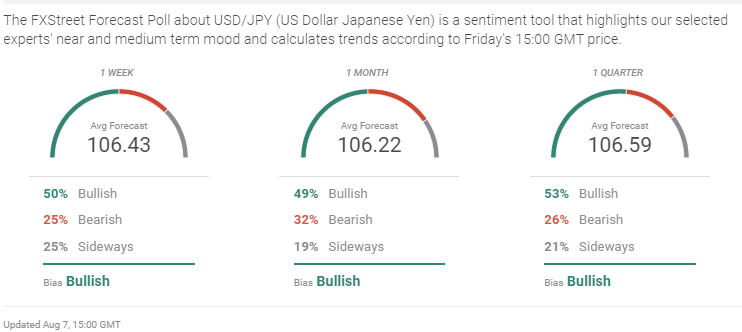
USD/JPY sentiment poll
Author

Joseph Trevisani
FXStreet
Joseph Trevisani began his thirty-year career in the financial markets at Credit Suisse in New York and Singapore where he worked for 12 years as an interbank currency trader and trading desk manager.

















