|

USD/JPY analysis: unconvinced bulls at risk of giving up

USD/JPY Current price: 112.54

  • Rising US Treasury yields kept the USD/JPY pair above 112.00.
  • Critical dynamic support at 111.65, the 100 DMA.
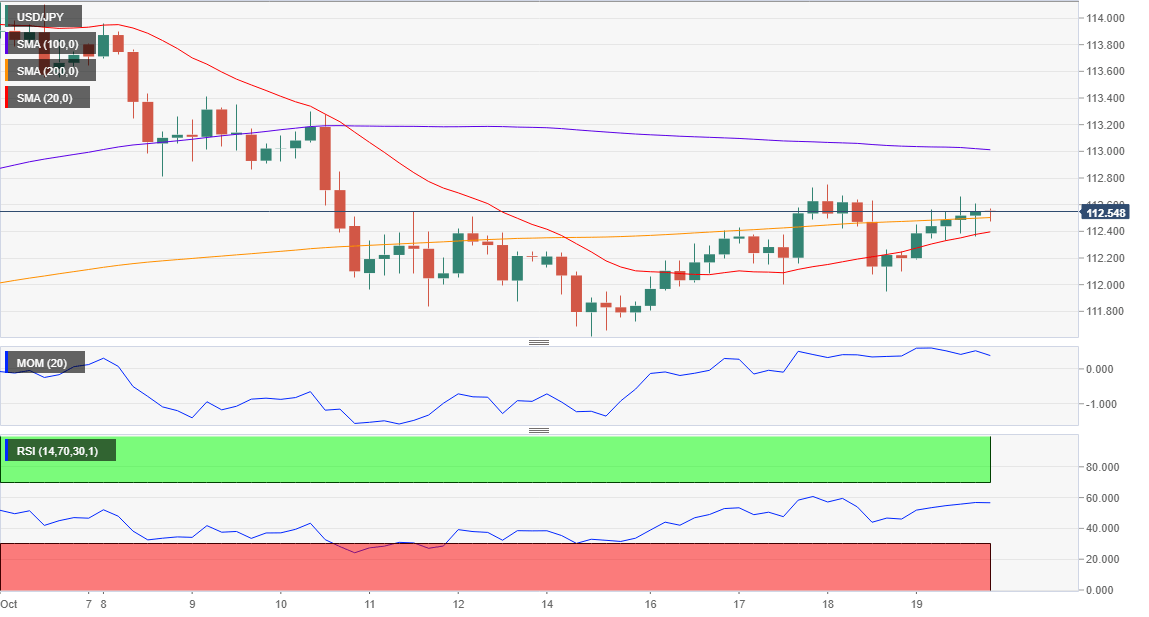
The USD/JPY pair continued trading within familiar levels Friday, finishing the week modestly up in the 112.50 price zone, as bond yields rose following the Fed's announcement to maintain the tightening path. The pair advanced at the end of the week on the back of easing fears, which saw most worldwide indexes moving off their lows, and despite soft US data. The yield on the benchmark 10-year Treasury note closed at 3.19%, while for the 2-year note it settled at 2.91%. Japan will open the macroeconomic week releasing the August All Industry Activity Index, foreseen up by 0.4% MoM following 0.0% in July.

The pair held at the lower end of the previous week's range and the daily chart shows that technical indicators are in negative ground, with the Momentum heading firmly lower within oversold levels and the RSI directionless around 49, skewing the risk to the downside. The same chart shows that the pair had found buyers around the 100 DMA, a key support for these upcoming days at around 111.65. In the 4 hours chart, the pair settled around the 200 SMA and below the 100 SMA, both directionless, while technical indicators stand in positive ground, the Momentum aiming north but the RSI directionless, all of which reflects the limited upward potential.

Support levels: 112.10 111.65 111.30   

Resistance levels: 112.60 113.00 113.40

View Live Chart for the USD/JPY

Author

Valeria Bednarik

Valeria Bednarik was born and lives in Buenos Aires, Argentina. Her passion for math and numbers pushed her into studying economics in her younger years.


More from Valeria Bednarik
Share:

Editor's Picks

AUD/USD keeps range near mid-0.7100s as USD bulls await US CPI

AUD/USD steadies near mid-0.7100s in the Asian session on Friday, stalling the previous day's sharp decline to an over one-week low. The August PPI report reaffirmed Fed rate-hike bets and boosted the US Dollar on Thursday, which weighed heavily on the pair. However, hawkish RBA expectations limited losses for the Aussie as USD bulls now await the release of the US consumer inflation figures before placing fresh bets.

USD/JPY holds lower ground toward 154.00; looks to US CPI

USD/JPY holds lower ground toward 154.00 in the Asian session on Friday after hot Japanese PPI data bolster a more hawkish BoJ repricing and provide fresh impetus to the Japanese Yen. However, the downside appears capped as the US Dollar preserves overnight gains ahead of the latest US consumer inflation data.

Gold: Gains remain capped by $4,400

Gold regains composure and trades with decent gains on Friday, managing to refocus attention on the $4,440 mark per ounce troy. Therefore, the precious metal reverses Thursday’s decline as the US Dollar alternates gains with losses at the end of the week.

Ripple Price Forecast: XRP extends decline as returning ETF inflows fail to lift outlook
Ripple (XRP) falls below $1.33 on Friday, marking the third consecutive day of declines. The token continues to track the broader cryptocurrency market downturn, with investors closely monitoring heightened macroeconomic uncertainty ahead of the United States (US) Consumer Price Index (CPI) release and next week’s Federal Reserve (Fed) monetary policy decision.
Weekly focus – The hawks set the tone
Risky assets came under pressure this week as energy prices kept creeping higher and the ECB surprised the markets with a hawkish tone. The price of Brent crude touched USD 110 per barrel on Thursday night, highest since mid-May, as news emerged that the Yemeni Houthis had reached control of key port cities and islands near the Bab el-Mandeb strait.
Venezuela’s 65-billion-barrel Oil deal could reshape America’s inflation fight
The United States (US) has secured unprecedented access to part of Venezuela’s vast Oil reserves. The timing is particularly significant as the war with Iran is disrupting Middle Eastern supplies, keeping energy prices elevated and reviving concerns about inflation.