USD/CAD Weekly Forecast: The fading US dollar safety trade
- West Texas Intermediate falls 11.7% for the week on Ukraine war stalemate.
- USD/CAD rebounds modestly on Thursday and Friday with sliding oil prices.
- Rising risk appetite in March from Ukraine talks has weakened the US dollar.
- FXStreet Forecast Poll is bullish out to one quarter.

In normal markets, the USD/CAD trades inversely to the price of oil. Energy is a major component of the Canadian economy and rising oil prices increase sector profits without cost or investment.
Since the Russian invasion of Ukraine on February 24, that relationship has been mostly in abeyance. Immediately after the attack markets took to the safety of US assets and the dollar as a hedge against economic and political turmoil. As the Russian gambit to swiftly replace the Kyiv government turned into a failure and negotiations started, markets have withdrawn the dollar’s risk premium. The move has been similar to the risk aversion flight to the greenback when the pandemic first appeared in the West in March 2020.
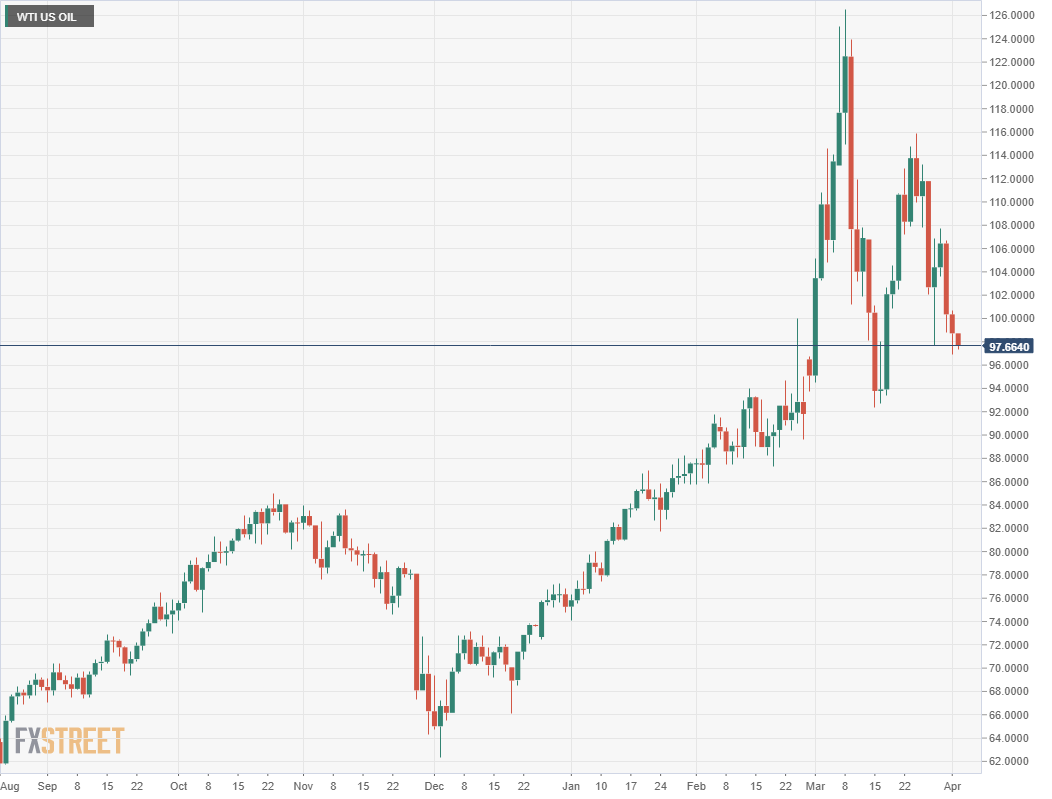
From West Texas Intermediate’s (WTI) high close of $122.49 on March 8, to its finish on March 30 at $106.43, WTI fell 13.1%. For the same dates, USD/CAD dropped 3.1%, from 1.2891 to 1.2482. To put in terms of the Canadian dollar, the loonie rose 3.3% against the US dollar in those three weeks even though its main economic strut, oil and energy prices dropped more than 10%.
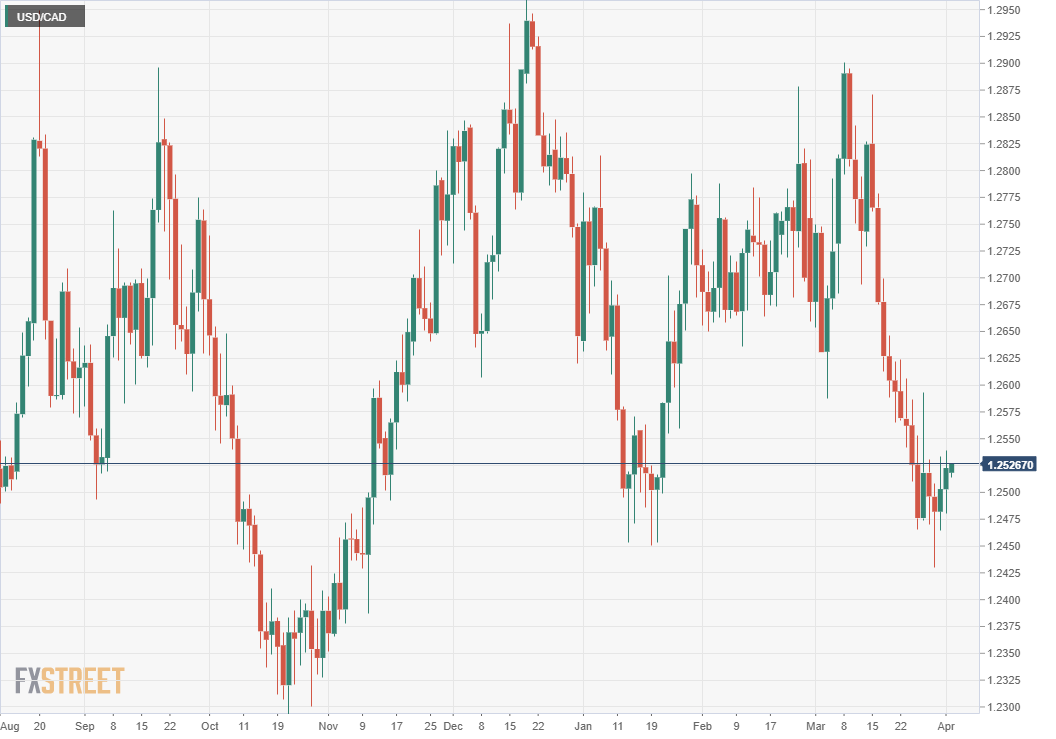
After falling for almost three straight weeks despite plunging oil prices, USD/CAD staged a very modest return to economic trading on Thursday and Friday, adding 36 points to 1.2518, as crude oil dropped 7.2% from $106.43 to $98.73.
Ukraine and economic growth
The Ukraine war remains the crux of market attitudes. If the conflict proceeds from here to negotiations and settlement without a return to full-scale combat, market attention will return to the economic prospects of the US and Canadian economies and the price of oil.
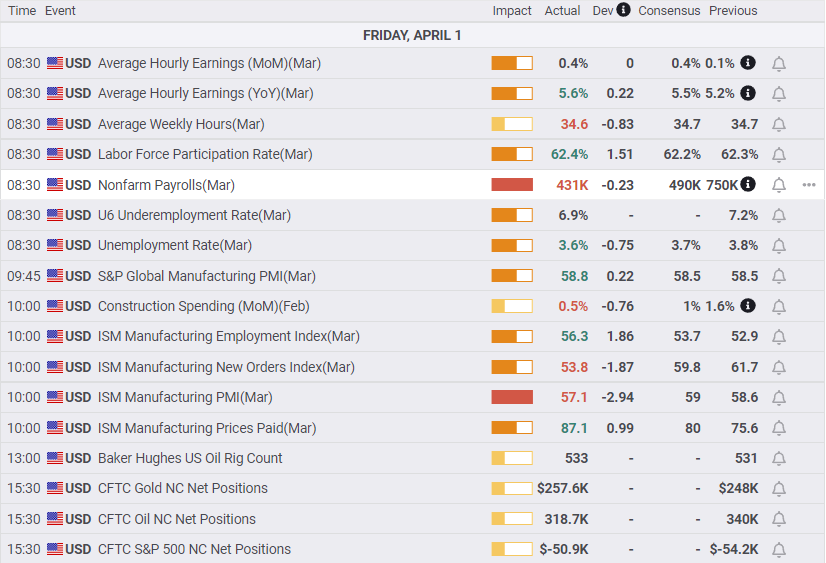
Can the consumer keep the US economy afloat as purchasing power is drained by rampaging inflation? American economic growth has already fallen sharply from 7% in the fourth quarter to 1.5% in the Atlanta Fed’s estimate for January, February and March.
The Canadian and US economies are among the most closely linked developed economies in the world and growth tends to rise and fall in tandem without providing either side with a definite market edge.
Canadian statistics were limited to January GDP which at 0.2% was better than the flat forecast.
In the US, payrolls and PCE inflation were the main data points. The Fed’s favorite inflation gauge, the Core PCE price Index rose to 5.4% in February, a four-decade record. With inflation in the manufacturing pipeline even higher, consumer prices are set for further increases in the months ahead. The March Purchasing Managers’ Index in manufacturing at 57.1 was down from February’s 58.6. More importantly, the New Orders Index dropped to 53.8 from 61.7, for its lowest reading since May 2020, suggesting that inflation may be a drag on consumer purchases.
Bank of Canada and the Federal Reserve
The Canadian and American central banks have begun to remove their pandemic accommodation, each has enacted one 0.25% hike and more are coming. The Bank of Canada (BoC) meets on April 13, the Fed three weeks later on May 4. Tiff Macklem, the BoC governor, who has the final say on policy, may raise the base rate by 0.25% to 0.75%. His counterparty, Fed Chair Jerome Powell will oversee either a 0.25% or 0.5% hike in May. Treasury futures have the odds for the larger increase at 69.4%.
The next several months are likely to see the rates in the US and Canada leapfrogging each other higher, with any momentary edge provided by scheduling resulting in no permanent advantage.
USD/CAD outlook
Economic growth in the US and Canada over 2022 is likely to mirror each other, as is central bank policy, without either providing direction to the USD/CAD.
The fading US dollar safety trade, which has undermined the USD/CAD for three weeks, depends on the outcome of the Ukraine war. Energy prices are under the same stipulation. At Friday’s close, the remaining WTI premium from the Russian invasion was 7.4%, opening at $91.92 on March 24 and ending Friday at $98.73.
If the war proceeds, however fitfully, to a negotiated settlement that premium will disappear.
Lower WTI prices will boost Dollar Canada, slowly at first, then faster as it becomes clear that the Ukraine war is finished.
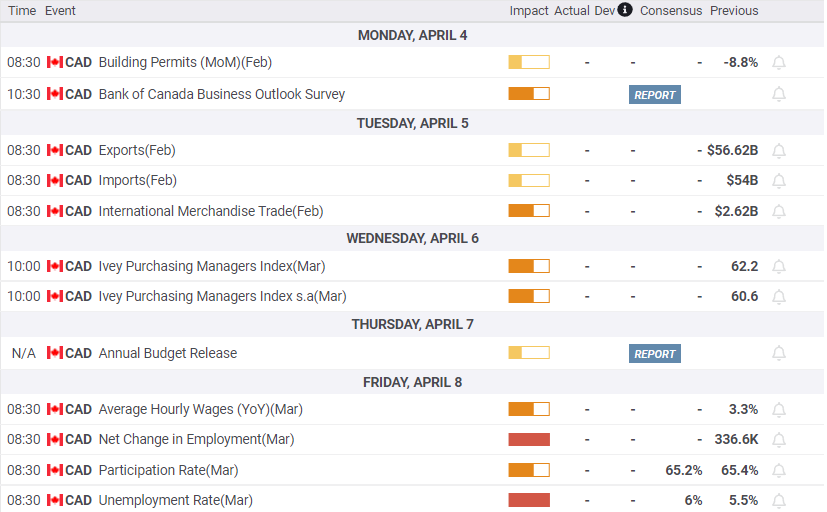
Canadian employment is the main business in the coming week, but it will evince little market response.
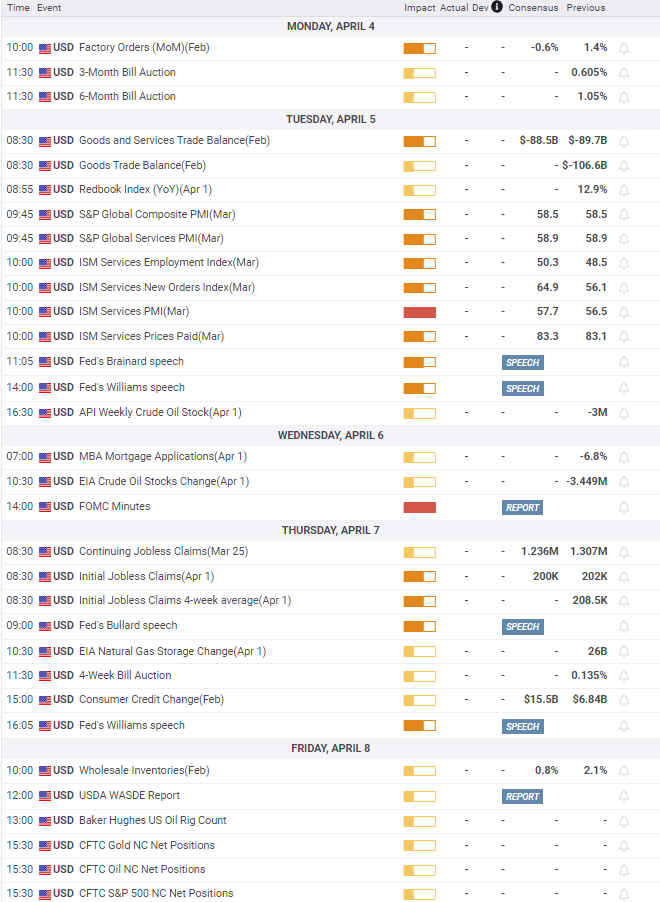
In the US Services, PMI will be watched carefully for the slippage that surfaced in the manufacturing report last week. Inflation's potentially damaging impact on consumer spending is still a lively topic.
The outlook for the USD/CAD is higher, largely on the possibility of falling oil prices.
Canada statistics March 28–April 1

US statistics March 28–April 1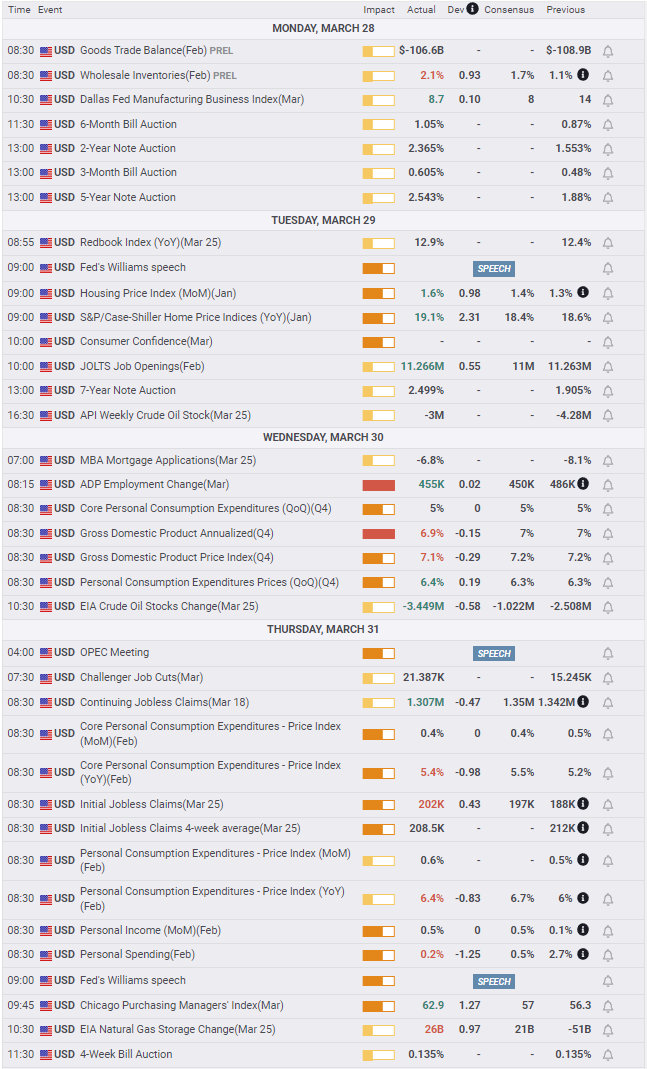
FXStreet
Canada statistics April 4–April 8
FXStreet
US statistics April 4–April 8
USD/CAD technical outlook
The MACD (Moving Average Convergence Divergence) has closed the gap between the price and signal line, with an upward cross this week a distinct possibility. The Relative Strength Index (RSI) has also moved upward and a venture over the neutral line appears likely. Either, or both would be positive signals for the USD/CAD. Average True Range (ATR) has been declining throughout the three-week fall in USD/CAD. A move above resistance at 1.2550 should restore some volatility.
 tech 1-637846226916855453.png)
The rapid drop of the USD/CAD in the last two weeks has carried the 21-day moving average (MA) through the 50-day and 100-day MAs to rest at the 200-day MA. All four averages are now far above market value and the combined 21-day and 200-day MAs at 1.2620 are a somewhat unusual resistance barrier.
Resistance: 1.2550, 1.2600, 1.2620, 1.2645, 1.2675,1.2700
Support: 1.2500, 1.2475, 1.2440, 1.2390, 1.2360
 tech2-637846329895646332.png)
FXStreet Forecast Poll
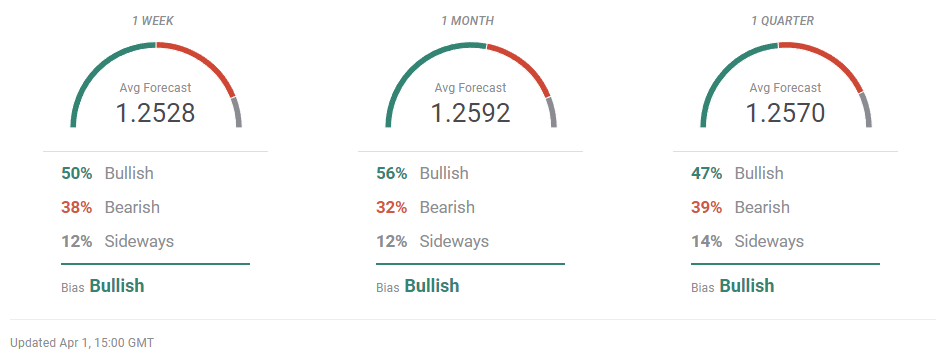
The FXStreet Forecast Poll reflects the nearly oversold status of the pair and the likely rebound from support bolstered by the decline in WTI as the Ukraine war winds down.
Author

Joseph Trevisani
FXStreet
Joseph Trevisani began his thirty-year career in the financial markets at Credit Suisse in New York and Singapore where he worked for 12 years as an interbank currency trader and trading desk manager.