US March Retail Sales: Is the consumer retreat tactical?
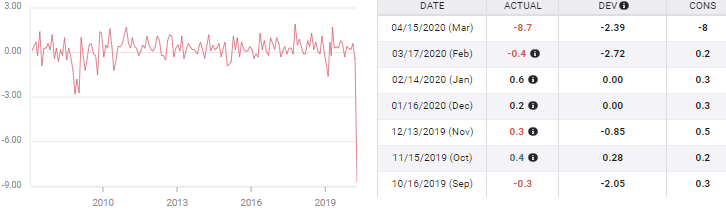
- Overall monthly sales drop 8.7%, in March, the largest amount on record
- Receipts at non-store retailers rose 3.1%.
- Sales ex-autos fall 4.5%, less than the -4.8% forecast.
- Control group sales which informs GDP personal consumption expenditures rose 1.7%.

Retail sales, the engine of the engine of the US economy, plunged by the largest amount in the 28-year series history, as job losses and ‘stay-at-home’ orders forced consumers to drastically curtail spending. A boom in internet shopping was not enough to overcome the drag from more traditional retail venues.
The Reuters survey of analysts had predicted an 8% drop in sales.
Retail sales
Market reaction
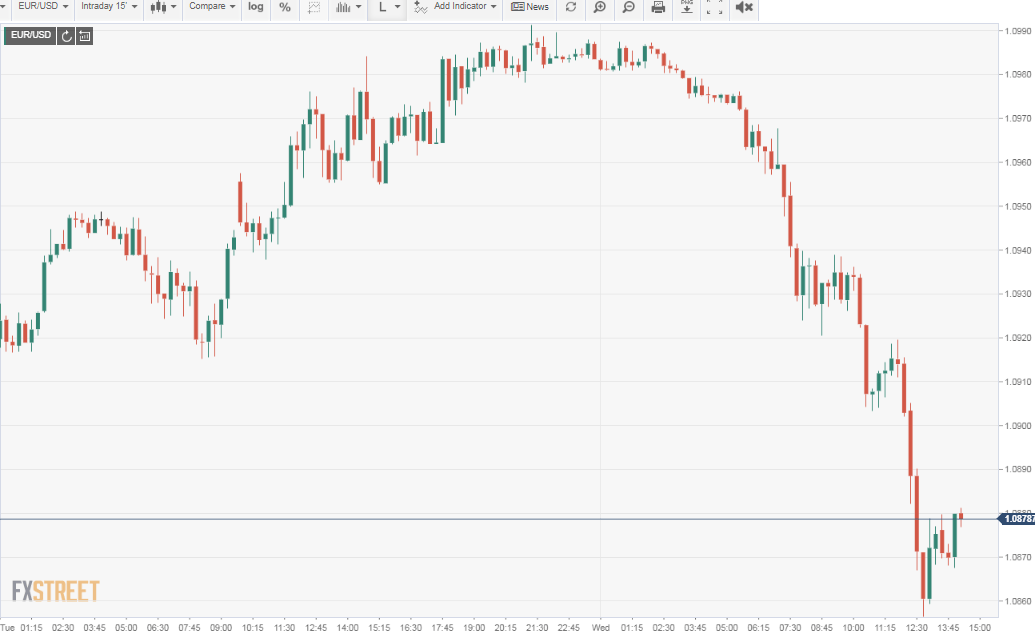
Equities fell on the open with the Dow dropping more than 500 points as several large banks, including Bank of America, Goldman Sachs and Citigroup reported sharply lower profits. The dollar initially rose modestly against the majors (euro, yen, sterling, aussie and Canada) on the retail report but retained only a small portion of the improvement 90 minutes later.
Unemployment and shelter orders
More than 16 million US workers have filed for unemployment insurance since the middle of last month, by far the largest and swiftest deterioration of the labor market in US history.
The government mandated business shutdowns and sheltering orders affect about 90% of the population and their length will depend on the success of curbing the spread of the Coronavirus.
A number of localities, including New York City and state, the US epicenter, are seeing declines in the rate of new infections and hospitalizations and totals are well below original predictions. Earlier warnings of shortages of essential medical equipment such as ventilators and intensive care units have not materialized and governors on the East and West coasts are discussing the timing and procedures for the partial reopening of commerce.
The Federal government has advised maintaining the current restrictions until the end of April.
Small business sales
For most small and medium sized businesses, which employ the vast majority of Americans, cash flow from sales is essential to operations. Even with Washington’s $2.3 trillion fiscal and payroll support package they cannot survive for long in suspension. If large numbers are not to be forced into bankruptcy with the additional unemployment that would create, businesses will have to be allowed to open.
Purchases that normally involve store visits saw the largest fall in sales. Automobile dealerships sold 25.6% fewer cars, furniture and home furnishings store receipts dropped 26.8% and food service and drinking establishments declined 26.5%.
Internet shopping, the Census Bureau’s non-store retailers category, rose 3.1% as many families turned to Amazon and the delivery services at such giants as Walmart for food, staples and other essentials
Food and beverage store purchases rose 25.6% as did the health and personal care group including pharmacies, which gained 4.3%.
Discretionary purchases were also skipped by many consumers. Sporting goods, hobby and books stores had a 23.3% decline in sales, electronic retailers slipped 15.1% and clothing store sales plunged 50.5%, the greatest of any category.
Conclusion
Consumer spending, which comprises about 70% of US economic activity, rose 1.8% in the fourth quarter as GDP expanded at a 2.1% annualized pace. Estimates for spending in the second quarter run as low as -41% but the reality will depend on the success local and state governments have in permitting the resumption of commercial life and employment.
The 1.7% gain in core retail sales, the 'control group category' which represents industry sales and is used by the Bureau of Economic Analysis to estimate personal consumption expenditures (PCE), the consumption component of GDP seems anomalous with an 8.7% drop in overall sales. The Atlanta Federal Reserve GDPNow model estimate for annualized fiirst quarter growth was lowered to -0.3% following the sales figures, from 1.0% on April 9.
The full impact of the collapse in employment and consumption will not be felt until April and though a negative quarter is expected by many, the ultimate figure will depend on how quickly the economy can be restarted.
Once workers return to their jobs consumer spending can probably be expected to resume a good portion of its normal volume, the biggest question is when.
Author

Joseph Trevisani
FXStreet
Joseph Trevisani began his thirty-year career in the financial markets at Credit Suisse in New York and Singapore where he worked for 12 years as an interbank currency trader and trading desk manager.
















