US manufacturing sector recedes for the third month but new export orders soar
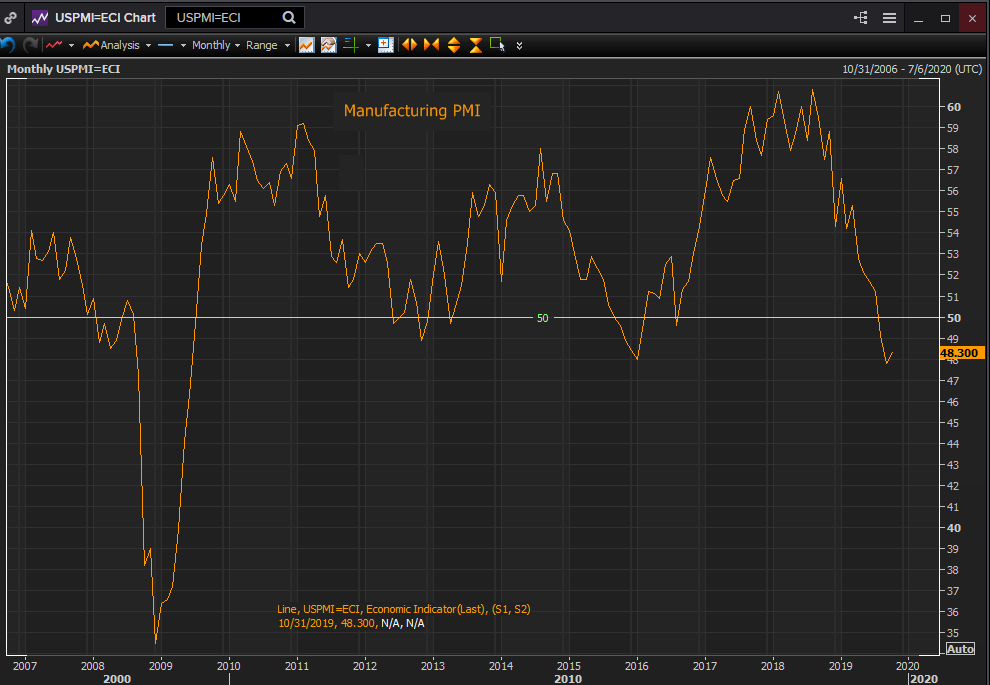
- The October purchasing managers’ index for manufacturing registered 48.3 up from 47.8 in September.
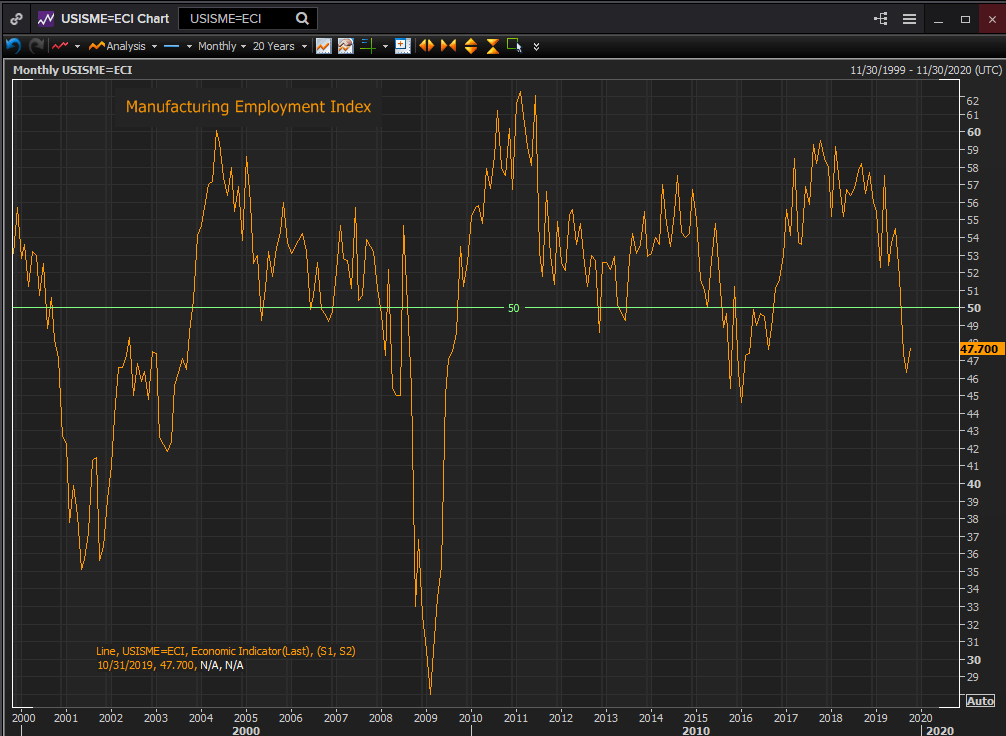
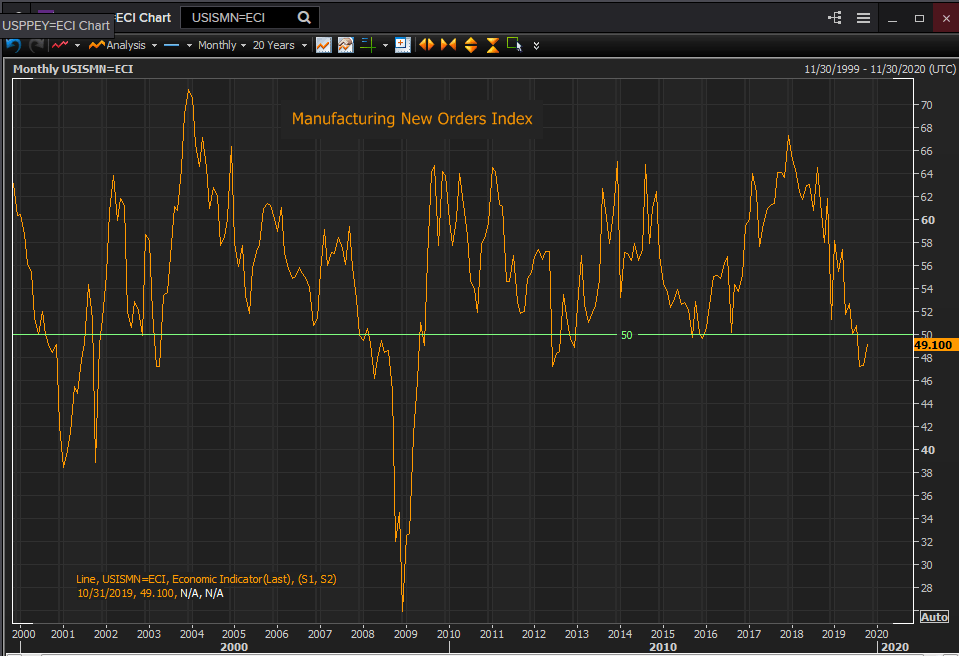
- Employment index rises 1.4 to 47.7, new orders gain 1.8 to 49.1.
- The new export orders index soars 9.4 to 50.4.

American manufacturing contracted for the third straight month in October as the yet unsigned trade deal with China made little impact, but turns in key gauges suggest that the recovery may already have started.
The purchasing managers’ index from the Institute for Supply Management scored 48.3 last month missing the median forecast of 48.9 but up from September’s 47.8. Reading below 50 indicate that sector or business line had contracted.
Reuters
September’s measure had been the lowest since May 2009 one month before the end of the recession, and capped a year of decline from the third quarter’s 15 year top of 60.8. The dip to 49.1 in August had ended 35 straight months of expansion.
The two year old trade war with China and the imposition of competing tariffs had been the largest drag on sentiment and activity in the manufacturing sector, which though only about 15% of US GDP is considered a leading indicator for economic direction.
The index of production dropped to 46.2 in October from 47.3, order backlogs were just 44.1, the sixth month in a row of decline and down from 45.1 in September. Prices also decreased for the fifth month at 45.5.
However, two important indexes rose, employment from 46.3 to 44.7 and new orders from 47.3 to 49.1. And perhaps most surprisingly new export orders jumped 9.4 points from 41 to 50.4, putting it back, if only weakly, into expansion.
Reuters
Reuters
Opinions from the surveyed executives also showed recovery. “Comments from the panel reflect an improvement from the prior month, but sentiment remains more cautious than optimistic,” noted Timothy Fiore, chair of the ISM Manufacturing Business Survey Committee in the accompanying statement.
Author

Joseph Trevisani
FXStreet
Joseph Trevisani began his thirty-year career in the financial markets at Credit Suisse in New York and Singapore where he worked for 12 years as an interbank currency trader and trading desk manager.