US macroeconomic data preview: FXStreet Surprise Index hints bullish turning point, another boost for USD rally
- Big week for US macroeconomic releases, with PMIs surveys and NFP report set to rock markets.
- United States FXS Surprise Index might be nearing its low, has the chance to turn around.
- Lower expectations for some US top-tier events gives room for positive surprises.

United States' economic releases are back after the last long weekend of the summer and traders should get ready for plenty of macroeconomic-driven action from the US this week. It's a very important week to shape the outlook of the US economy before the very-much expected September Federal Reserve meeting.
The current picture is bleak, as the FXStreet Surprise Index for the US economy is far from being in great shape, making 7-year lows for the top-tier economic releases and riding a 1-year downtrend for the whole economic data package. But there are some signs that these trends could be nearing its end, or at least getting ready to take a pause.
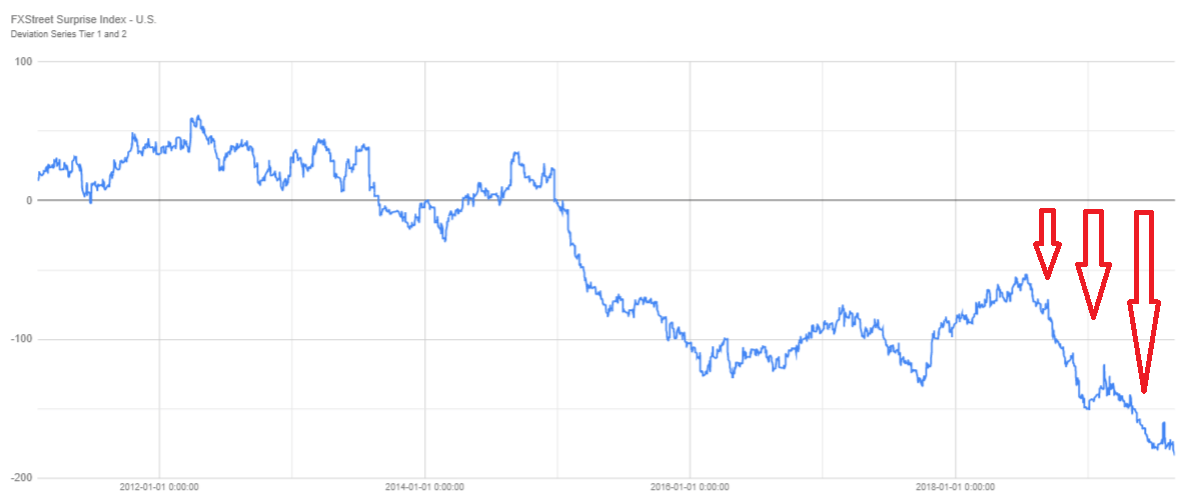
This chart shows the FXS Surprise Index performance for the top-tier US macroeconomic events, which has been deteriorating for a while now and is currently at its lowest level (-182.21) since we started calculating it back in January 2011. This means most of the big releases have been surprising to the downside, a trend that has been particularly strong since July 2018.
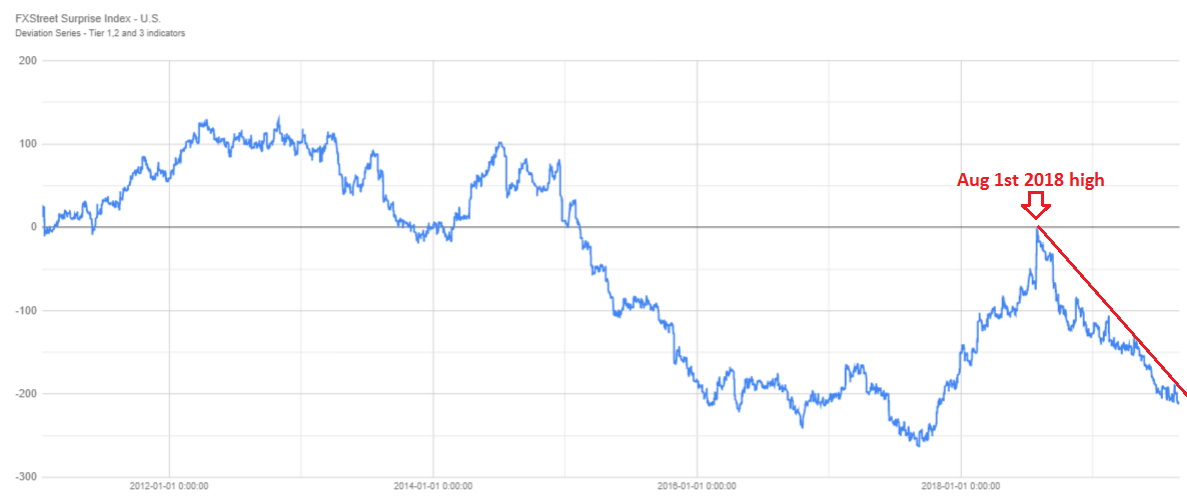
If we look at the FXS Surprise Index performance for the whole US data package, the picture doesn't get much prettier. The current level (-212.56) is still far from its all-time lows (-263.38 in September 2017) but the downtrend for the last year has been quite steep and is barely showing any retracements.
Help us improve. Your opinion counts! Leave your feedback here
FXS Surprise Index Oscillators indicating a potential turning point
The cyclical nature of the economic indicators makes the FXS SI Oscillator also an interesting chart to look for potential turning points, which might be getting closer.
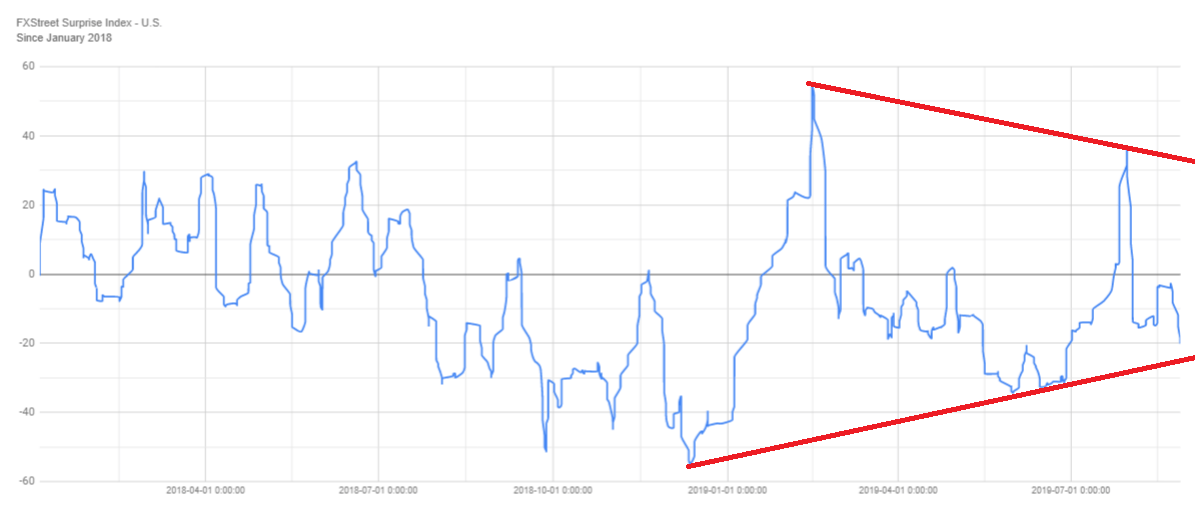
The FXS SI Oscillator for the US top-tier events is forming a symmetrical triangle formation originating in the -54 low from last December, which should trigger at some point a bullish breakout. The bullish swing needed for that could happen soon, as the Oscillator is close to touching the diagonally rising lower trendline.
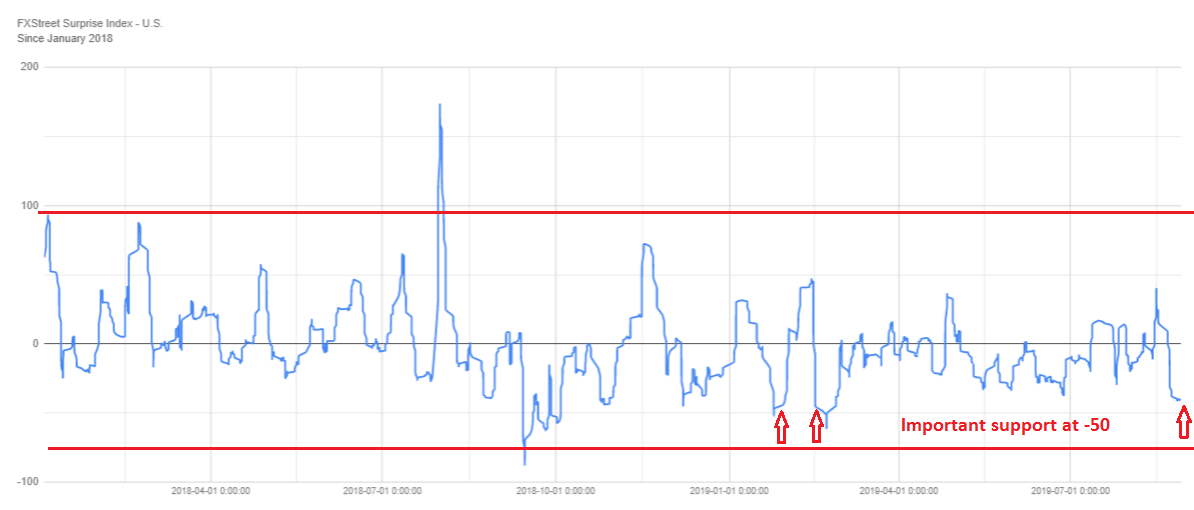
Kind of a similar potential bullish swing might be found looking at the FXS SI Oscillator for the whole US data package, which shows a much more stable and horizontal trend. That said, the Oscillator has abruptly descended for the last couple of week from positive territory to close to -50, just where it triggered its latest two big spikes back in January and February.
Lower expectations provide room for bullish surprise
Top-tier data releases will start on Tuesday at 14 GMT with the ISM Manufacturing PMI, expected to print a 51 level, which would continue its current stable downtrend. From its last 10 releases, six have been on the negative side, but the modest expectations for this one provide a good chance for a positive one.
More: US Manufacturing Purchasing Managers’ Index Preview: Revival is near
Action will continue on Thursday with the ISM Non-Manufacturing PMI (14 GMT), forecasted to release a 53.9 level, which would be a slight improvement over its last release. This service-sector business survey is also riding a very-consistent downtrend which might be more likely to continue, as expectations are higher here. Moreover, six of the last eight releases have been on the red side.
The data-packed week will finish with a bang on Friday with the high-stakes Non-Farm Payrolls report, the last one before the crucial September Fed interest rate decision. The NFP headline number is forecasted at 159k, just about the average number for the last couple of trimestres, which have thrown a couple of awful readings mixed with other solid readings. Average Hourly Earnings (YoY) are expected to tick a tad lower, from 3.2% to 3.1% and that also provides a chance for another positive surprise like the one seen on the last release, where the same decrease was expected but wages stayed at 3.2% YoY
Conclusion
The FXStreet Surprise Index for the United States economy has been consistently trending down for over a year, with most of big-data releases also underperforming expectations. Despite this bearish trend, this week's data offers an opportunity to turn things around or, at least, pause the streak of negative releases. That would likely provide another boost to the already surging US Dollar.
About the FXStreet Surprise Index
FXStreet Surprise Index quantifies, in terms of standard deviations of data surprises (original releases vs. survey median), the extent to which economic indicators exceed or fall short of consensus estimates.
Economic reports with better- or worse-than-expected news are assigned a positive or negative deviation value, while reports meeting expectations get a 0 deviation value. Adding up the values of the deviations, and you get an initial series showing how economic data are progressing relative to the consensus forecasts of market economists. The deviation formula employs a ratio function to replicate behavioral anchors of market participants.
Preserving the properties of these underlying series, the index finally shows the detrended momentum of the surprises in relation to previous weeks.
Surprise Indexes are constructed for the United States, Euro Area, Germany, United Kingdom, Canada, Japan, Australia, and New Zealand.
Author

Jordi Martínez
FXStreet
Jordi Martínez is the Editor in Chief at FXStreet, leading editorial operations at the company, before being promoted to the role in 2023, he worked in several editorial positions at FXStreet, including roles as Senior Editor and