US-Iran conflict intensifies

JPY weakens, risking market intervention
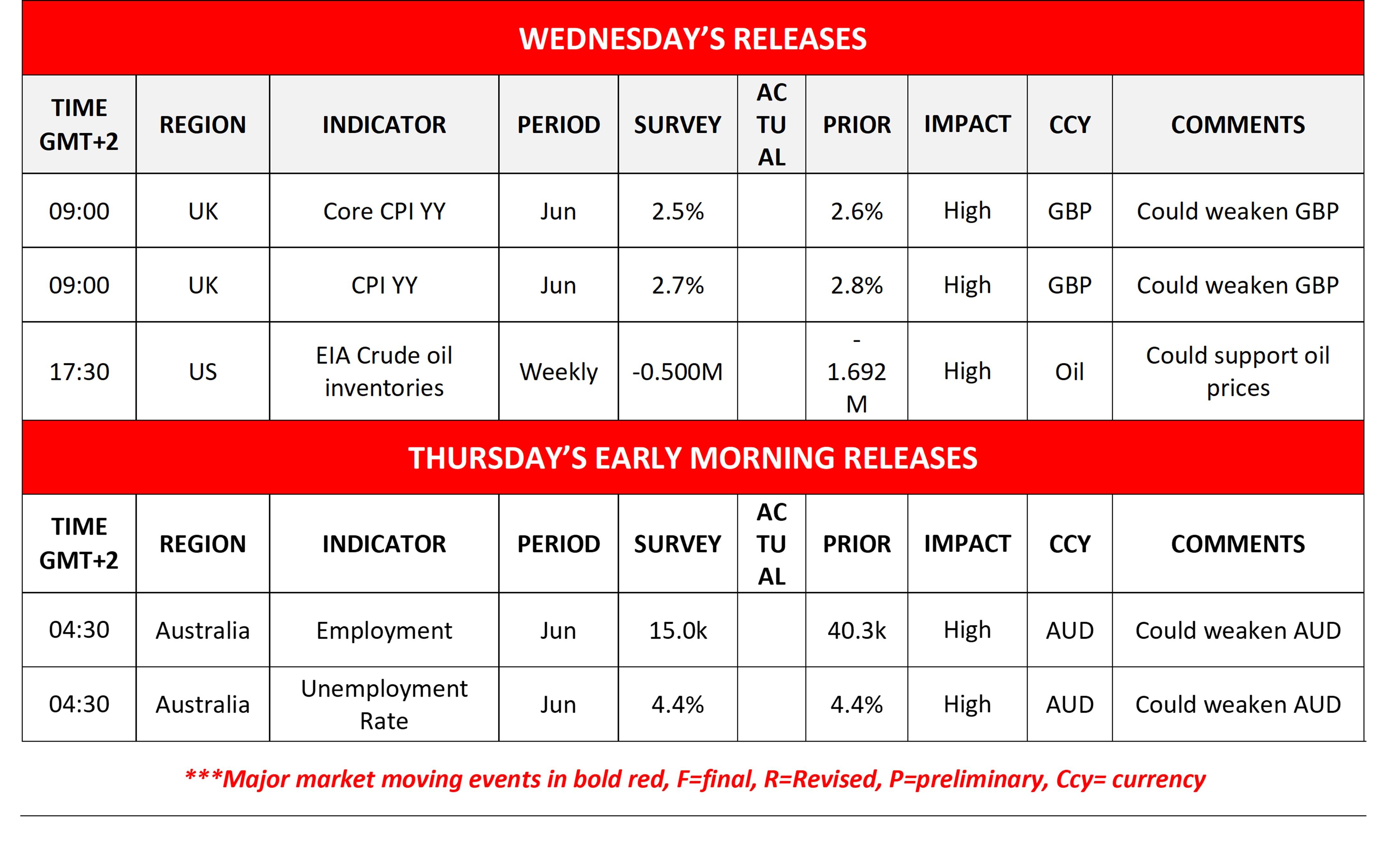
The Yen retreated against the USD, reaching new 40-year lows and JPY traders sounded the alarm for a new market intervention operation by Japanese authorities. We worry that a new market intervention by Japan may be performed without warning and be deeper than previous similar operations aiming to strengthen JPY. Another characteristic move in the FX market was the weakening of the pound against the USD as UK’s June CPI rates slowed down and pound traders are still weighing the new Labour Government’s intentions. Lastly we highlight the release of Australia’s employment data for June in tomorrow’s Asian session and a possible wider easing than expected in the Australian employment market could weigh on the Aussie.
Alphabet’s earnings report in focus
Wall Street’s key indexes moved higher yesterday, in a sign of relief for US equity markets participants. Today, Alphabet is monopolising our interest in US stock markets. Investors are worried about the delay in the launch of Gemini 3.5 Pro, while the loss of key employees also tends to create worries for further delays. Today, we get Alphabet’s earnings report and despite the EPS and revenue figures being the market’s attention, the market mover may prove to be the company’s forward guidance .
Oil prices continue to rise
Oil prices continued to rise yesterday and during today’s Asian session, as worries for the situation in the Middle East intensified. The US and Iran exchanged salvos for an 11th day in a row, while in Yemen the Houthis are warning, practically U-turning vessels at the Red Sea, effectively blockading Saudi Arabia. The situation is very tense at the current stage and an overspill or further escalation of the US-Iran conflict is quite possible, which could drive oil prices even higher.
Gold edges higher
Gold edged higher yesterday, despite a strengthening of the USD. On a fundamental level, the main issue for gold traders, may be the rise of oil prices and market worries for a subsequent reignition of inflationary pressures in the US economy which may force the Fed maintain a tight monetary policy. Should we see market expectations for the Fed turning more hawkish we may see gold’s price losing ground.
Other highlights for today
Today we get the US EIA weekly crude oil inventories figure.
Charts to keep an eye out
USD/JPY edged higher yesterday, reaching new 40 year highs, by breaking the 162.80 (S1) resistance line, now turned to support. The RSI indicator remains between the readings of 50 and 70, implying a bullish predisposition of the market for the pair, yet the Bollinger bands tend to remain narrow implying low volatility for the pair. Should the bulls remain in charge, we may see USD/JPY aiming for the 165.50 (R1) resistance line Should the bears take over, we may see USD/JPY breaking the 162.80 (S1) support line and start aiming for the 160.50 (S2) support level.
WTI rose yesterday, opening the way for the 88.60 (R1) resistance line. We intend to maintain our bullish outlook for the commodity’s price as long as the upward trendline guiding it remains intact. The rise of the RSI indicator implies an intensification of the bullish market sentiment, supporting our outlook. Yet the commodity’s price action is flirting with the upper Bollinger band, which may slow down oil bulls or even cause a correction lower. Should the bulls maintain control, WTI may break the 88.60 (R1) line and start aiming for the 93.30 (R2) level. Should the bears take over, WTI may break the prementioned upward trendline, the 82.00 (S1) line, and continue lower aiming for the 76.60 (S2) level.
Calendar follows
USD/JPY daily chart
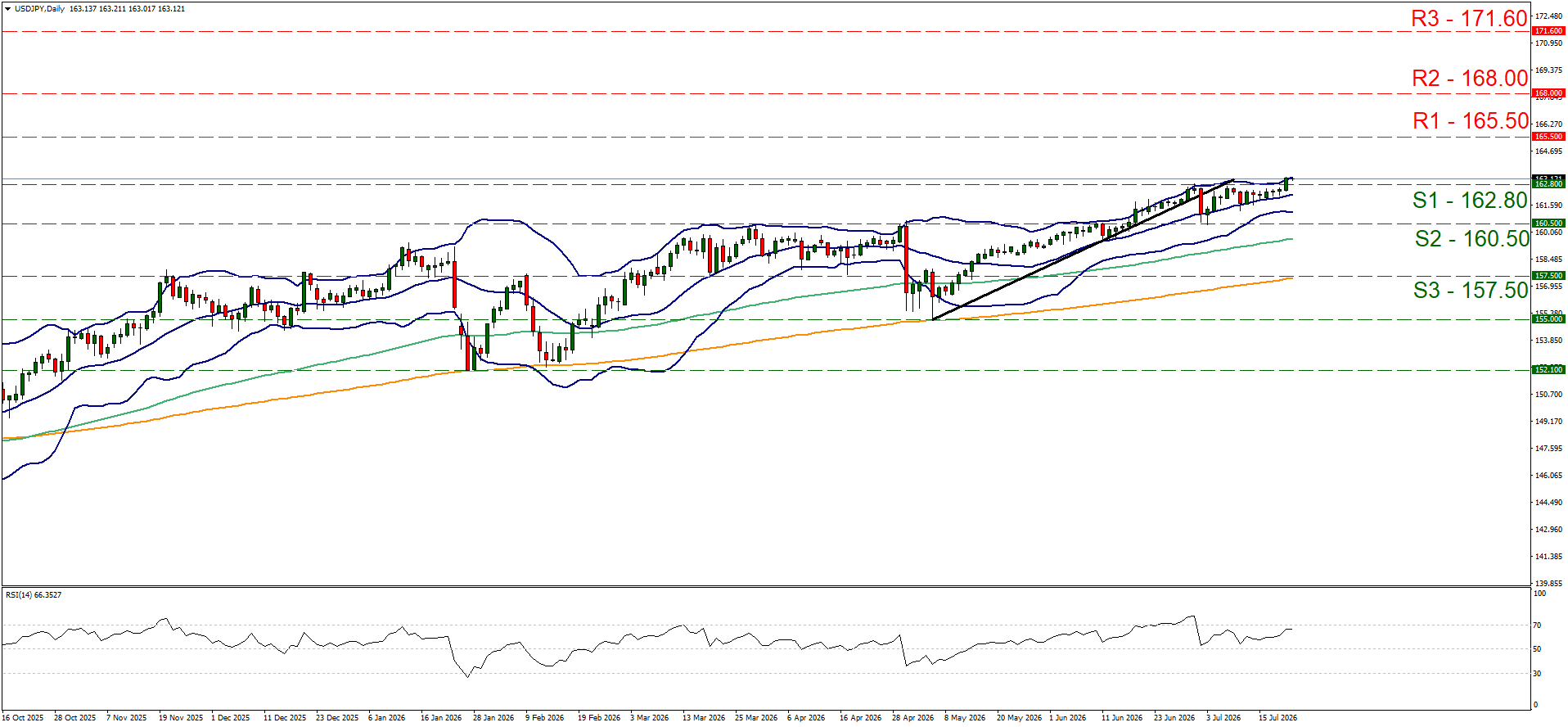
- Support: 162.80 (S1), 160.50 (S2), 157.50 (S3).
- Resistance: 165.50 (R1), 168.00 (R2), 171.60 (R3).
WTI daily chart
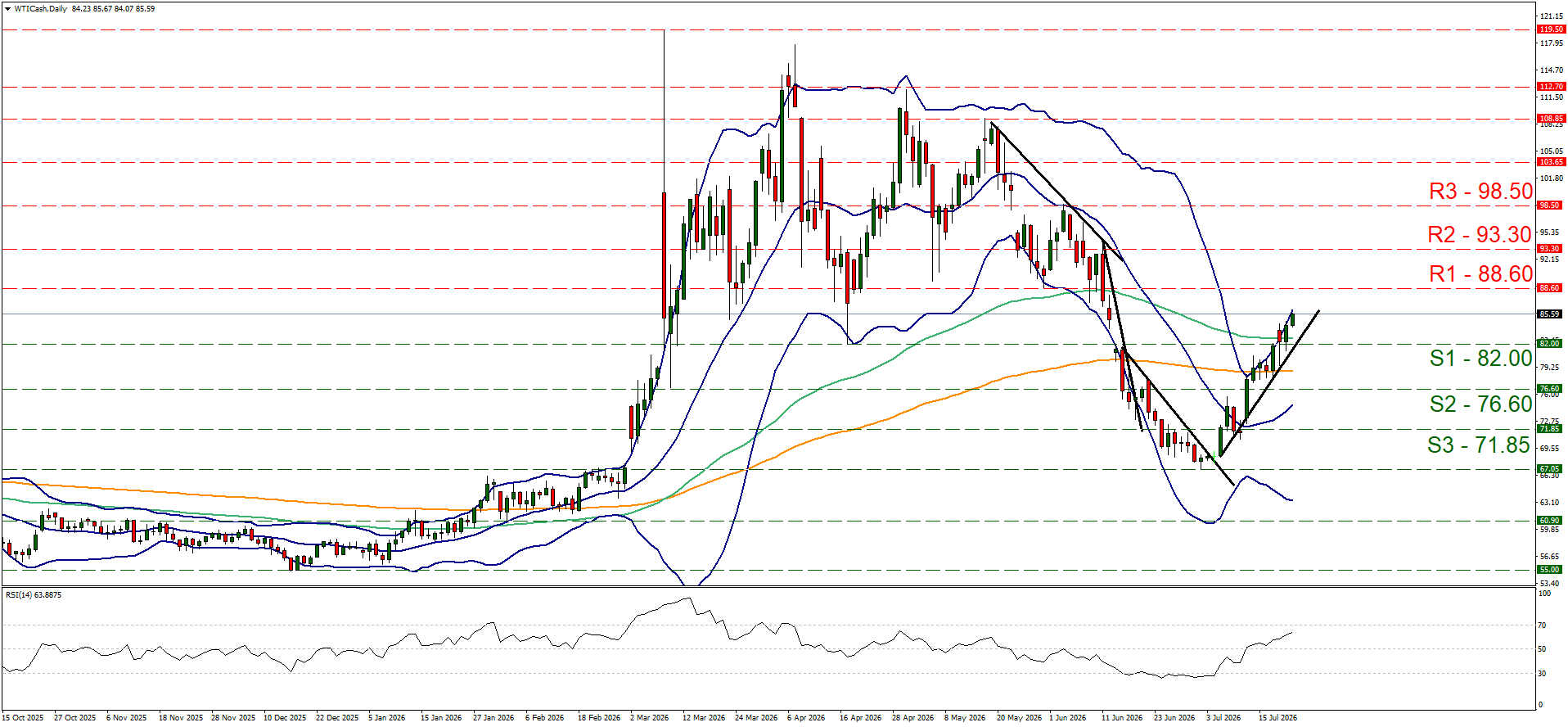
- Support: 82.00 (S1), 76.60 (S2), 71.85 (S3).
- Resistance: 88.60 (R1), 93.30 (R2), 98.50 (R3).
Author

Peter Iosif, ACA, MBA
IronFX
Mr. Iosif joined IronFX in 2017 as part of the sales force. His high level of competence and expertise enabled him to climb up the company ladder quickly and move to the IronFX Strategy team as a Research Analyst. Mr.