US Initial Jobless Claims Preview: Unemployment filing and payrolls reverse in September
- Claims forecast to fall to 820,000 from 837,000 maintaining their slow decline .
- Continuing claims to dip to 11.4 million from 11.767 million.
- Purchasing Managers’ Indexes were expansive in September but employment lags.
- Markets have continued to discount the high claims figures.

New requests for unemployment insurance in the US are subsiding at a glacial pace that saw more claims filed each week in September than Nonfarm Payrolls added in the entire month.
Payrolls rose 661,000 last month but in the latest week of October 2 the four week average for initial claims was 867,250. That is the first month since the recovery began in May that the weekly unemployment average has topped the monthly payrolls.
Initial Claims
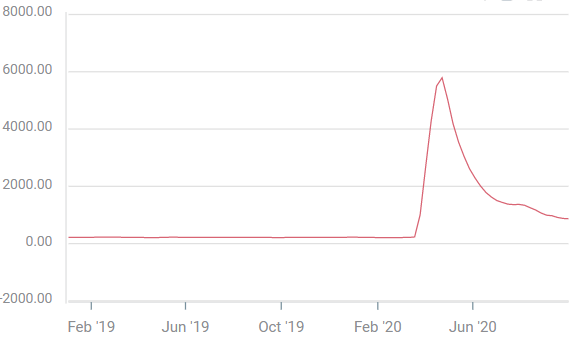
The continuing high rate of layoffs means that unless the economy begins to generate more jobs the unemployment rate could reverse and the potential for a substantial fourth quarter slowdown becomes very real.
GDP, Q2 and Q3
The US economy contracted at a 31.4% annual rate in the second quarter, the largest and fastest drop on record.
Returning growth in the third quarter is currently estimated at 35.3% by the Atlanta Fed GDPNow model. That forecast includes the September Nonfarm Payrolls numbers and the purchasing managers’ indexes. The next release will be on October 9 after wholesales trade figures. The final third quarter estimate will be on October 28.
The rebound in economic activity in the third quarter follows the pattern of consumer spending which collapsed in March and April and recovered sharply in May, July and July. That robust return of consumption was largely due to the volume of purchases deferred by the near total lockdown of the US economy for two months.
What impact the number of unemployment workers, 11 million according to the payroll accountings, represented by the 7.9% jobless rate and the 12.8% underemployment rate will have on consumer spending in the fourth quarter is unknown.
Retail sales and the GDP component control group averaged increases of 0.87% and 1.28% monthly for the six months from March to August.
Conclusion and markets
The continuing loss of over 800,000 jobs a week is a threat to the recovery and the long term health of the US economy that cannot be underestimated.
Nonfarm Payrolls
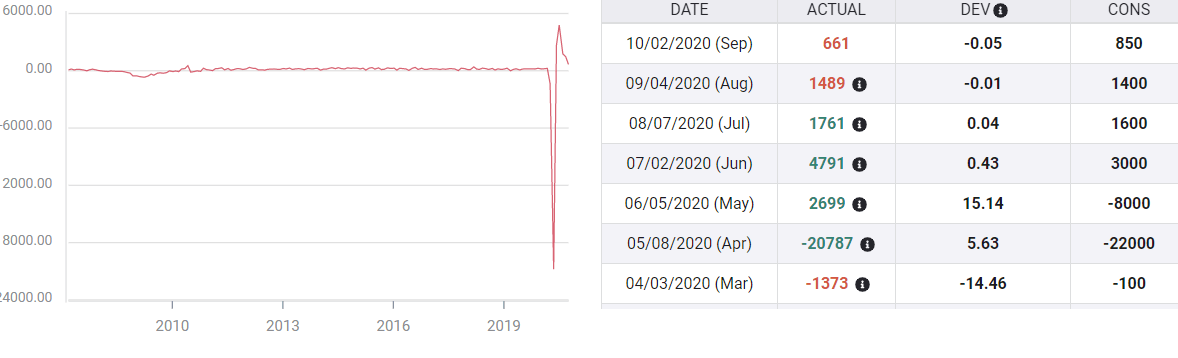
Markets have stopped paying attention to the figures in the Congressional drama over stimulus spending and the never-ending cacophony of the presidential race. This week’s numbers will have little or no impact on equities or the dollar.
Author

Joseph Trevisani
FXStreet
Joseph Trevisani began his thirty-year career in the financial markets at Credit Suisse in New York and Singapore where he worked for 12 years as an interbank currency trader and trading desk manager.
















