US Existing Home Sales Preview: Unemployment strikes the housing market
- Home purchases expected to drop most in four years.
- Sales in the largest category were at 13 year high in March.
- US GDP forecast to contract sharply in the first quarter.

American home sales which had soared in February reflecting the excellent labor market of the past three years should reverse sharply in March as the Coronavirus closures kept buyer and sellers socially distant in the second half of the month
Sales of existing homes, about 90% of the US housing market, are forecast to drop 8.1% which would be the largest one month decline since November 2015. The annualized selling rate in February of 5.77 million units was the highest in 13 years and a 6.5% increase from January’s 5.42 million. On the year sales were up 7.2% in February

Unemployment hits housing
The US economy has been hammered by extensive government ordered business shutdowns and social restrictions in the second half of the month and the layoff of 22 million workers in the past four weeks.
Initial jobless claims
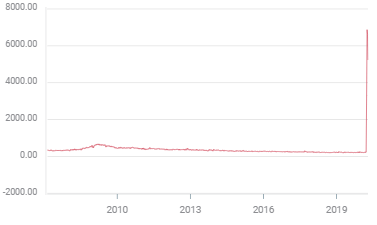
Housing ownership is a barometer of consumers’ long term economic view. For most US individuals and families it is their largest lifetime purchase and the most common financing is a 30-year mortgage.
The number of people willing to take on the commitment of buying a house has been rising steadily since dropping to a three year low of 4.93 million annually in January 2019. Job security, rising wages and the lowest unemployment in half-a-century had finally repaired a housing market that had suffered its largest bubble and collapse a decade earlier.
Information from the real estate brokerage Redfin showed a nearly 150% jump year over year in listed home being taken off the market in the last week of March. Housing inventory was already weak, down 10% on the year in February with an average supply dropping to 3.1 months from 3.6%.
US GDP to decline in Q1
The decline in US economic growth in March is predicted to have been steep enough to push the entire quarter into contraction despite having been expanding at an estimated 2.7% rate in late March by the Atlanta Fed’s GDPNow model.
Estimates for annualized GDP in the first three months of the year are -4% in the Reuters survey of economists and -0.3% from the Atlanta Fed on April 16, with an update due on the April 24.
If the economy does contract it would be the first negative quarter since the start of 2015 and only the third negative since the end of the financial crisis recession in June 2009. The Bureau of Economic Analysis will issue its preliminary estimate on Wednesday April 29, followed by two revisions at one month intervals.
Author

Joseph Trevisani
FXStreet
Joseph Trevisani began his thirty-year career in the financial markets at Credit Suisse in New York and Singapore where he worked for 12 years as an interbank currency trader and trading desk manager.