US December retail sales require a dose of skepticism
- Retails sales unexpectedly dropped 1.2% in December, sales ex-autos plunged 1.8%
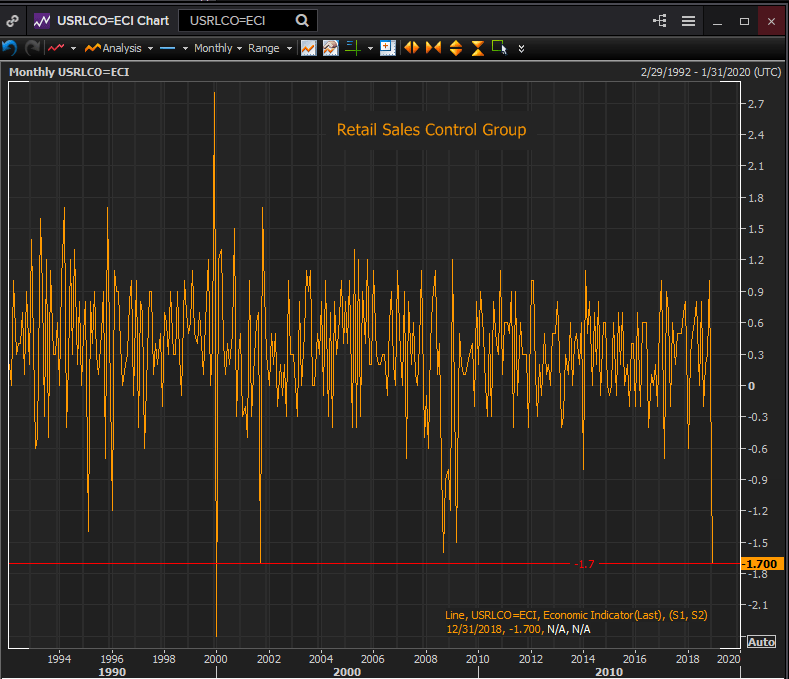
- The 'control group', GDP component fell 1.7%
- MasterCard and the Redbook Survey reported higher sales, Amazon record purchases

The December retail sales report from the US Census Bureau has generated a fair amount of doubt among analysts about the accuracy and comprehensiveness of the statistics.
The headline sales figure came in at -1.2% far below the expected 0.2% gain for the largest single month fall since September 2009. Sales ex-autos was -1.8% on a 0.1% forecast.
The so-called control group which excludes building materials, motor vehicle and gasoline purchases and food service and is the consumption component of the Bureau of Economic Analysis’ GDP calculation fell 1.7% far below the 0.4% median forecast. That is the second biggest monthly drop in the series which goes back to 1992.
Reuters
Private sector sales data was in sharp contrast to the government figures.
The weekly Redbook index for same store sales rose 6% each week in December. The 9.3% annual gain in same store sales in the last week of 2018 was the largest on record. The Redbook survey charts sales at existing retail outlets which comprise over 80% of the Commerce Department’s retail sales report.
Amazon the world’s largest internet retailer also reported record holiday purchases. That simply doesn’t jibe with the government statistics that non-store sales, that is internet sales, fell nearly 3.9% in December.
MasterCard noted that card account purchases were up 5.1% in December over the prior year.
It is possible that the rising success of Black Friday sales which promote the day after Thanksgiving as the start of the holiday shopping season with extensive discounts has pulled Christmas purchases forward, leaving less need for a rousing December. Control group purchases were a revised up to 1% in November from 0.9%, which was the strongest month since February 2014.
According to the Census statistics every category of sales except automobile dealers and building supply stores fell in December.
The Commerce Department, home of the US Census Bureau which collected the data, said in its press release that "data collection and processing were delayed." Whether this means information was not forthcoming in time for inclusion or retailers, given the delay incorporated December data in to January numbers is not known. The simple fact that the collection process was affected by the shutdown makes a wary approach prudent.
While it seems unlikely that a robust job market, rising wages and employment would produce such a dismal holiday season we will have to wait for the revised numbers for the final judgement.
Author

Joseph Trevisani
FXStreet
Joseph Trevisani began his thirty-year career in the financial markets at Credit Suisse in New York and Singapore where he worked for 12 years as an interbank currency trader and trading desk manager.