Trump-Xi summit buys a January truce
EU mid-market update: Treasury’s $6B buyback absorbs only $4B as the 30Y reaches 5.50%; US still studies keeping diesel at home while Iran prices a seven-day Hormuz reopening; Trump-Xi summit buys a January truce; Oracle invokes force majeure as $18B of AI debt discovers energisation risk.
Notes/observations
- The awkward number in Treasuries this morning is not 5.22%; it is again $4B. The 10Y reached 5.225% and the 30Y 5.50%, their highest levels since 2007 and 2004 respectively, while Treasury’s latest long-duration buyback again used only about $4B of a scheduled $6B envelope. Bessent has spent a month increasing these operations and defending them as successful; yesterday’s result again makes their limitations unusually visible. Treasury can improve liquidity and choose the bonds it is willing to retire, but it cannot manufacture a clearing price at which private holders willingly surrender duration—and it is still issuing far more duration than the buybacks remove. The 20bp move in 10s in two sessions also arrived without a payroll shock, CPI surprise or fiscal announcement remotely commensurate with it. The back end has started trading as an inventory problem in its own right, while Fed funds futures simultaneously moved to roughly 71% for another hike in October.
- The most important AI development this week came from a contract clause, not a model release. Project Jupiter has moved the AI-credit debate from hypothetical cash burn into traded impairment. Oracle’s invocation of force majeure on the 2.45GW New Mexico campus matters because the first casualty is not OpenAI demand but the contractual bridge between an unfinished power site and the debt raised against it: Jupiter is reportedly already about a year behind, its roughly $18B of project debt is trading around 89–91, and Barclays estimates that a delayed energisation should also push back roughly $30B of Oracle hardware capex, normally spent only two to three months before a facility goes live. The damage is already escaping the SPV. Oracle CDS has widened to a record, its 2056 Baa2/BBB- bonds have yielded above 8% for the first time—briefly around 8.2%—and now trade wider than the roughly 7.5% average yield on B2/B corporate debt, an extraordinary inversion for an issuer still sitting inside investment grade. Morningstar has argued that a meaningful Stargate delay could ultimately cost Oracle roughly $25B of expected revenue and potentially push the credit as low as BB-; a fall below investment grade would matter mechanically as well as symbolically, with roughly $120B of Oracle bonds potentially leaving IG indices and being handed to a completely different marginal buyer. CoreWeave is showing the same repricing further down the chain: two CRWV bonds have now broken 13%, even with the equity around $88; the last time its credit crossed 13%, the stock was below $70 in June, suggesting creditors are deteriorating faster than equity this time. The important fracture in the AI stack is therefore occurring before anyone has had to decide whether OpenAI eventually generates enough cash to pay for all this compute. A pipeline route slips, an air permit moves, energisation shifts twelve months; Oracle delays $30B of hardware purchases; project debt falls into the 80s; the tenant’s supplier CDS widens; IG index eligibility becomes a live question; and a highly levered GPU lessor suddenly clears at 13%. The supposed credit enhancement was “contracted AI demand”; Jupiter is showing that a contract written against megawatts that do not yet exist can transmit construction risk all the way from a New Mexico gas pipeline into Oracle’s $120B bond complex and the financing cost of the GPUs that were meant to fill the building.
- Washington is still studying whether to create cheaper American diesel by relocating the shortage overseas. Hassett, Bessent and Greer are formally analysing a short-term export restriction after Trump pushed the idea, with U.S. pump diesel around $6.50/gallon and the harvest season adding political urgency. The United States has recently exported close to 2mb/d of diesel and related fuels; Brazil is the largest September buyer, while Chile, Mexico, Britain and the Netherlands are also major destinations. U.S. refineries are already running near 97%, with distillate inventories roughly 15% below their seasonal norm, so there is little dormant refining capacity for policy to summon. Chris Wright’s objection is mechanical rather than ideological: trap too much diesel on the Gulf Coast, weaken the distillate crack enough to reduce refinery runs, and the same intervention can tighten gasoline and jet fuel even as diesel temporarily softens. Brazil’s farmers, Chilean mines and European consumers would meanwhile bid for the missing U.S. barrels elsewhere.
- Iran has put a seven-day timetable around a negotiation whose cargoes are already moving ahead of the diplomats. U.S. and Iranian teams are discussing a phased arrangement under which Tehran would reopen Hormuz and Washington would unwind the blockade of Iranian ports; Iran has separately said it could reopen the Strait within seven days once the U.S. accepts the required steps. Qatar, meanwhile, has sent at least four laden LNG carriers through Hormuz over the past week, the most sustained Qatari movement since early July, with several vessels going dark while crossing. That physical traffic gives the negotiation a different texture from the false starts earlier this month: shipping companies are already testing how much corridor exists before a formal settlement exists. The Houthi missile barrage on Saudi Arabia yesterday—six ballistic missiles intercepted, including threats toward Yanbu—keeps the insurance premium alive even if Hormuz itself improves. A ceasefire could return throughput much faster than it returns cheap freight.
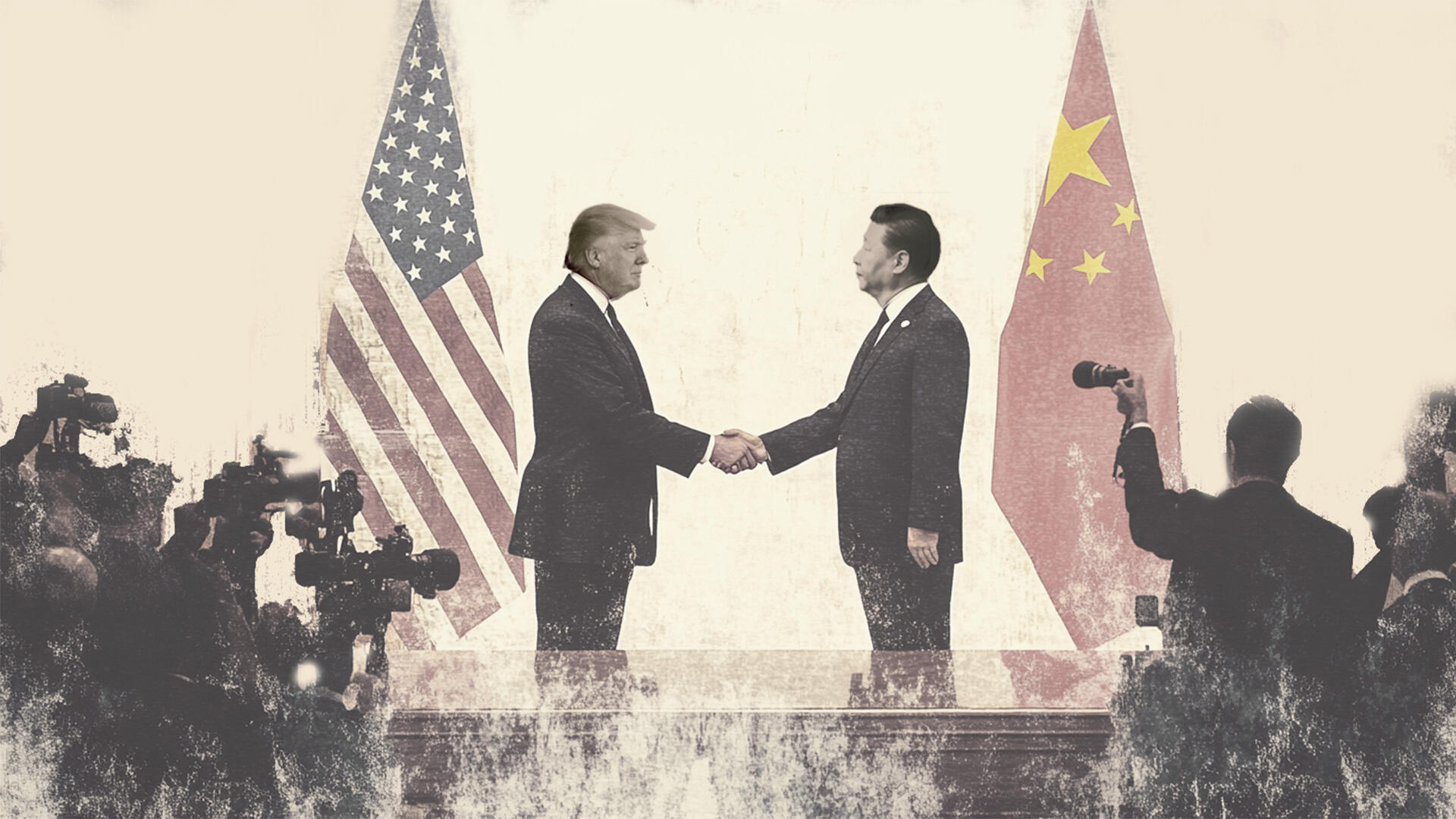
- The Trump-Xi summit produced 107 days of stability and almost no permanent architecture. The trade truce now runs to January 10, but tariffs, rare-earth restrictions, agricultural commitments and U.S. semiconductor controls remain available for the next negotiation; the two-month extension was considerably shorter than the longer rollover Beijing had sought. On AI, Xi publicly called for systems to remain under human control, while Trump again resisted new constraints on what he calls “super intelligence”; none of that altered the advanced-chip controls China most wants loosened. Taiwan was discussed privately, with Xi again pressing Washington to oppose independence while the $14B U.S. arms package remains under review. Chinese equities supplied a fairly unsentimental reading of the ceremony: the CSI300 fell 1.7%, its worst session in a month. The summit avoided another 2025-style tariff rupture, but it left nearly every instrument that could restart one sitting on the table for January.
- Musk’s newest Grok comments are unusually restrained by Musk standards—and probably more informative for the AI trade than another benchmark launch. After Grok 4.7 landed behind Anthropic and OpenAI on agentic coding measures, Musk said he is only “cautiously optimistic” SpaceXAI can reach Fable/GPT-6 level in 2–3 months, with leadership perhaps six months away. He had already told Cursor staff that Grok had fallen behind and that he was not used to losing; SpaceXAI has also suffered 50+ recent departures, while former employees say aggressive training deadlines sometimes encouraged shortcuts that damaged model quality. That combination is uncomfortable for the pure-compute thesis. SpaceXAI has extraordinary GPU access, absorbed Cursor for enterprise distribution and coding data, and still finds itself publishing a catch-up timetable rather than a lead. The marginal constraint may be moving away from racks and toward post-training, data quality, evaluation discipline and retaining the people who know how to turn compute into a reliable model.
- Anthropic has again found an unusually expensive way to turn its partner into both a supplier and an investment. It committed $11.6B over seven years to Akamai Cloud, expandable by another $9B, while Akamai granted Anthropic warrants that can vest into as much as 5% of the company as spending expands. The striking part is that the contract is predominantly for CPU workloads, not another headline order for GPUs: agents, retrieval, orchestration, preprocessing and inference are starting to create huge demand around the accelerators as well as inside them. Each additional $3B of qualifying spend can vest roughly another 1% of Akamai for Anthropic, so the customer acquires more of its supplier as it purchases more capacity from it. At the same time, Anthropic is asking shareholders to give its seven founders 50.1% combined voting control before the IPO. Public investors may therefore be offered a company whose founders retain effective control while enormous portions of future infrastructure spend have already been contracted years forward—the cash flows remain public-market property even when much of the operating discretion does not.
- The same AI boom that keeps equities resilient is now helping make its own discount rate worse. AI-linked earnings and capex optimism have allowed the Nasdaq to absorb a 10Y above 5% far better than traditional duration logic would suggest, yet Warsh explicitly cited data-centre investment as one contributor to high long-term yields. Texas alone has hundreds of gigawatts of proposed load; Alibaba wants 20GW of global cloud capacity; Anthropic is signing eleven-digit compute contracts; Oracle and OpenAI are financing campuses on the scale of industrial regions. That investment hits steel, turbines, construction labour, grid equipment, power and credit well before the resulting productivity appears in CPI or tax receipts. AI can support the numerator of equity valuation while simultaneously pushing up the denominator used to discount it. The market has tolerated that circularity remarkably well; 5.5% long bonds make it considerably less forgiving.
- Cross-asset: the global rates move has overtaken the equity tape. UST 10Y ~5.22%, 30Y ~5.50%, 2Y ~4.92%; the dollar is heading for consecutive weekly gains for the first time in more than three months, with EUR/USD touching ~$1.137 and GBP/USD ~$1.322. Brent settled Thursday at $106.60 after the Saudi missile scare and is softer this morning as the Hormuz negotiations circulate; Asian equities are roughly flat after yesterday’s pressure, while energy-importing Asian currencies remain under strain. The combination is unusually hostile for Europe: expensive dollar funding, expensive imported energy and Bund yields already close to multi-year highs.
- Asia closed with Hang Seng underperforming -1.0%. EU indices +0.7-1.1%. US futures +0.3-0.6%. Gold +0.5%, DXY -0.1%; Commodity: Brent -1.8%, WTI -2.5%; Crypto: BTC +1.7%, ETH +2.1%.
Asia
– Japanese yen strengthens as dollar/yen falls by -0.25% to 158.4700 following Katayama comments on Trump.
– China EV and battery makers 'tussle' over paying the resumed lithium-ion tax; cites sources - SCMP.
– Reminder: Shanghai Composite Index was closed for the first day of the "Mid-Autumn Festival" holidays.
– New Zealand Finance Minister Nicola Willis names Rebecca Williams to RBNZ MPC.
Europe
– Poland Central Bank (NBP): Ensuring price stability remains primary objective of monetary policy for 2027.
– UK Govt reportedly to give briefing to defence and infrastructure CEOs - press.
– Russia raises taxes to fund its war in Ukraine - FT.
– Czech Central Bank (CNB) Sept Minutes: Rates may rise `slightly further' if risks stay.
– EU defense agency report says EU must make decisive changes in scale and pace of defense efforts to be prepared to defend itself against Russia by 2030 - press.
Americas
– White House press operations director confirms media access has been restored [after court intervention].
– US govt has asked OpenAI and Anthropic to hold new models from the UK - Politico.
– Federal Reserve Board requests public comment on two proposals related to establishing a regulatory framework for Board-supervised payment stablecoin issuers under the GENIUS Act.
– Costco reports Q4 $6.60* ex-tariff refund v $6.48e, Rev $95.7B v $94.8Be.
– OpenAI preparing to preview its latest cybersecurity-focused model, GPT-6 cyber, in the coming days; To unveil a new product to help customers deploy GPT-6 Cyber in a more secure, automated manner - Fortune.
– SpaceX CEO Musk: Another 220k GB300 will be fully operational next week and another 220k in November. If we get lucky, yet another 220k GB300 by late December (update).
– Mexico central bank (Banxico) leaves overnight rate unchanged at 6.50%; as expected.
Conflict/tensions
– US and Iran said to discuss phased deal to reopen Strait and end blockade - press.
– US Senate rejects resolution that sought to curb Trump Admins war powers.
– Follow-up: Iran said to offer a 7-day ceasefire proposal - FT.
– Commodity vessels transiting via Strait of Hormuz fall to single-digits, remaining below yesterday's 10-day moving average of ~17 - Preliminary Shipping Data.
– Yemeni Houthis claims new attacks against Riyadh and Aramco facilities in Yanbu; No immediate confirmation from Saudis.
– Saudi Foreign Ministry: Saudi Arabia, Turkey, Pakistan to hold urgent chiefs-of-staff meeting to discuss support for Riyadh under joint defense pact.
– Russia Local Governor: Russia's Novoshakhtinsk oil refinery halts after drone attack.
– Russia said to have hit 5 cargo ships in Black Sea and Odesa Port - Russian press.
– Trump Admin reportedly pressing China about suspected nuclear tests during closed door meetings - WSJ.
– Qatar: Categorically rejects Netanyahu's accusation that it is conducting campaign to influence public opinion against Israel.
Trade/energy
– Airlines for America (industry group): Oppose allowing Chinese airlines to add more flights to the US.
– Follow up: US Senators delay effort to permanently ban Chinese cars - SCMP.
– EU urges UK to raise tariffs on Chinese cars to avoid "made in Europe" barriers - FT.
– Energy Sec Wright reportedly has contacted several major US refiners - press.
– Flexport Global Logistics Update: Russia Sanctions and Secondary Tariffs Bill Signed into Law.
Speakers/fixed income/FX/commodities/erratum
Equities
[FTSE +0.64% at 10,748.32, DAX +0.99% at 25,504.89, CAC-40 +0.40% at 8,113.59, IBEX-35 +1.17% at 19,802.87, FTSE MIB +1.07% at 52,092.50, SMI +0.88% at 14,027.70, S&P 500 Futures +0.29%].
Market focal points/key themes: European equities recovered firmly on Friday, with the Euro Stoxx 50 rising 0.94%, the DAX advancing 0.99%, the FTSE MIB jumping 1.07%, the IBEX 35 gaining 1.17%, the FTSE 100 up 0.64% and the CAC 40 climbing 0.40%, positioning the STOXX 600 for a 0.15% weekly gain that would end a three-week losing streak after a 1% decline in crude oil prices eased cost pressures on energy-intensive and rate-sensitive sectors. The rebound was underpinned by resilient corporate earnings that partially offset the month-long drag from multi-year peaks in sovereign yields, a 12-point European gas-storage deficit and unresolved Middle East supply risks. The most notable individual movers were Capricorn Energy, surging 12.0% after its board endorsed Genel Energy’s raised $5.74-a-share offer that displaced a rival bid, and Harworth Group, up 5.0% on Peel Holdings’ final 187p cash recommendation, against Raspberry Pi’s 10.5% reversal following heavy inventory investment that cut net cash and HelloFresh’s 10.0% drop after it slashed full-year revenue and operating-profit guidance. Investors kept cash buffers elevated while monitoring initial headlines from the Trump-Xi summit in Washington for any concrete progress on trade, rare-earths or technology exports, alongside any further signals on the Strait of Hormuz that could reverse the day’s oil relief.
Equities
- Consumer discretionary: HelloFresh [HFG.DE] -10.0% (cuts annual revenue and operating-profit forecasts after a weaker-than-expected third quarter), International Airlines Group [IAG.UK] +1.5%, TUI [TUI.DE] +1.5%, Lufthansa [LHA.DE] +1.5% (airline and travel shares gain as Brent retreats on reports of a possible phased reopening of the Strait of Hormuz).
- Healthcare: AstraZeneca [AZN.UK] +1.0% (US regulators grant priority review to its Imfinzi combination for certain muscle-invasive bladder-cancer patients).
- Technology: AT&S [ATS.AT] +3.5% (circuit-board maker rebounds alongside Asian chip-equipment shares after Thursday’s technology selloff), Raspberry Pi [RPI.UK] -10.5% (shares retreat following Thursday’s H1 results; revenue rose 90%, but inventory investment reduced net cash to $18.4m).
- Energy: Capricorn Energy [CNE.UK] +12.0% (board backs Genel Energy’s increased $5.74-a-share offer, 10% above rival DNO’s bid), Genel Energy [GENL.UK] +2.5% (increased $436m agreed bid for Capricorn displaces DNO’s rival offer), Ithaca Energy [ITH.UK] -3.0%, Harbour Energy [HBR.UK] -2.5% (oil producers fall as crude retreats on renewed US-Iran talks over the Strait of Hormuz), BP [BP.UK] -2.5% (falls with softer crude despite HSBC upgrading the shares to Buy with a 640p target).
- Industrials / Defence: Airbus [AIR.FR] -2.0% (finds a coating defect in a forward-fuselage component on hundreds of A321neo jets; says there is no immediate safety risk).
- Financials: UBS [UBSG.CH] +3.0% (Swiss bank leads SMI gains as European equities recover with oil and bond-market pressure easing), Commerzbank [CBK.DE] +2.5%, Deutsche Bank [DBK.DE] +2.0% (German banks advance in the broader market rebound as oil and yields ease).
- Real Estate: Harworth Group [HWG.UK] +5.0% (board recommends Peel Holdings’ final 187p cash offer, raised from 177.5p).
- Materials: Glencore [GLEN.UK] +2.0% (UBS upgrades to Buy with a 650p price target), Ferrexpo [FXPO.UK] +1.5% (H1 pretax loss narrows to $11m from $187m, despite revenue falling 57% amid Ukrainian power and liquidity constraints).
Speakers
– (CN) China Pres Xi hopes US will adhere to the 'correct' position on opposing Taiwan independence - Chinese press.
– (AR) Argentina President Milei: Not concerned about a recession this year.
– (NL) Netherlands PM Jetten: Former Dutch central bank chief Klaas Knot would be a perfect fit at the ECB for many nations.
– (FR) French President Macron: Maybe we could think about releasing strategic oil reserves in a coordinated way; CIA has not warned France about Russian threats - television interview.
– (IL) Israeli PM Netanyahu: Reject accusation of genocide in Gaza - speech comments from UN General Assembly.
– NATO Sec Gen Rutte: European allies are prepared for Russian hybrid attacks.
– (SK) South Korean President Lee: South Korea, Mexico will pursue credit plan for companies.
– (US) President Trump: State dinner for Chinese President Xi to be spectacular; Media will attend.
– (IR) Iran President Pezeshkian: Houthis are responsible for their own actions; No contact with Houthis directing them to engage - Fox News Interview.
– (UK) FM Miliband [warns Iranian counterpart]: UK will "not tolerate hostile activity on British soil" - Sky News.
– (US) President Trump: Delighted to welcome Xi to White House; Celebrating long history between US and China - The President and the President of the People's Republic of China deliver Remarks [White House Press Pool], East Room.
– (JP) Japan Chief Cabinet Sec Kihara: Not in position to comment on US-China meeting; Stable US-China ties important for global stability - Tokyo, Japan.
– (JP) Japan Econ Minister Kiuchi: Not in era to do monetary easing.
– (JP) Japan Fin Min Katayama: Trump expressed concerns about weak yen during summit; PM Takaichi expressed concern over yen weakness in general; Takaichi pointed out yen's undervaluation is issue [comments from sidelines of UN] - Tokyo, Japan.
– (UR) Ukraine Pres Zelenskiy: US proposed 'technical meeting' with Ukraine and Russia in UAE (trilateral talks); Waiting on the date.
Economic data
– (UR) Ukraine Aug M3 Money Supply M/M: 0.2% v 0.8% prior; Y/Y: 15.6% v 15.8% prior.
– (TH) Thailand May Foreign Reserves w/e Sept 18th: $280.1B v $281.0B prior.
– (ES) Spain July Home Sales Y/Y: -5.1% v +1.6% prior.
– (ES) Spain Q2 Final GDP Q/Q: 0.7% v 0.7% prelim; Y/Y: 2.6% v 2.7% prelim.
– (FR) France Q2 Final Wages Q/Q: 0.7% v 0.5%e.
– (HU) Hungary Q2 Current Account Balance: -€0.2B v -€0.1Be.
– (HU) Hungary Aug Unemployment Rate: 4.7% v 4.6%e.
– (DE) GERMANY OCT GFK CONSUMER CONFIDENCE: -30.6 V -27.2E.
– (SE) Sweden Aug Household Lending Y/Y: 3.3% v 3.2% prior.
– (SE) Sweden Aug PPI M/M: 0.9% v 0.1% prior; Y/Y: 6.8% v 6.4% prior.
– (DK) Denmark Aug Retail Sales M/M: -0.6% v 1.0% prior; Y/Y: 3.7% v 6.7% prior.
– (JP) Japan Aug Nationwide Dept Sales Y/Y: 2.6% v 5.1% prior.
– (JP) BOJ Aug Core CPI (ex special factors) Y/Y: 2.6% v 2.3% prior; Core-Core CPI (ex special factors) Y/Y: 2.2% v 2.2% prior.
– (TH) Thailand Aug Customs Trade Balance: -$2.5B v -$3.6Be.
– (UK) Sept GfK Consumer Confidence: -13 v -16e (highest level since August, 2024).
Fixed income issuance
– (IT) Italy Debt Agency (Tesoro) sells €7.5B vs. €7.5B indicated in 6-month bills; Avg Yield: 2.873% v 2.607% prior; Bid-to-cover: 1.46x v 1.65x prior (Aug 27th 2026).
– (IN) India sells INR340B vs. INR340B indicated in 6.94% 2036 bonds; Avg Yield: 7.1450%.
– (NL) Netherlands Debt Agency (DSTA) to sell up to €6.0B in 3.75% Jan 2048 bonds on Sept 29th.
– (JP) Japan sells ¥3.5T vs. ¥3.5T indicated in 3-Month Bills; Avg Yield: 1.2555% v 1.2067% prior; bid-to-cover: 3.31x v 3.22x prior.
– (AU) Australia sells A$1.0B v A$1.0B in 2.50% May 2030 Bonds: Avg Yield: 5.0368% v 4.6947% prior ; bid-to-cover: 4.34x v 3.82x prior.
– (US) Treasury debt buyback targets coupons maturing 2037-2046; Receives $10.5B of offers for buyback, accepts $4.1B (v maximum of $6B for the operation; falls short of maximum for 2nd week in a row).
– (IT) Italy Debt Agency (Tesoro) to sell €3.5B in 5-year bonds, €3B in 10-year bonds, and €1.5B in floaters on Sep 29th.
Looking ahead
- 05:30 (IN) India to sell combined INR in bonds.
- 05:30 (ZA) South Africa to sell combined ZAR1.0B in I/L Bonds.
- 06:00 (UK) DMO to sell £4.5B in 1-month, 3-month and 6-month bills.
- 07:00 (BR) Brazil Sept FGV Construction Costs M/M: No est v 0.9% prior.
- 07:30 (IN) India Forex Reserve w/e Sept 18th: No est v $B prior.
- 08:00 (BR) Brazil Sept IBGE Inflation IPCA-15 M/M: No est v -0.4% prior; Y/Y: No est v 4.2% prior.
- 08:00 (MX) Mexico Aug Unemployment Rate (unadj): No est v 2.9% prior.
- 08:00 (UK) Daily Baltic Dry Bulk Index.
- 08:00 (ES) Spain Debt Agency (Tesoro) announcement on upcoming issuance.
- 08:30 (US) Aug Preliminary Durable Goods Orders: No est v 1.1% prior; Durables (Ex Transportation): No est v 0.4% prior; Capital Goods Orders (non-defense/ex-aircraft): No est v 0.0% prior; Capital Goods Shipments (non-defense/ex-aircraft): No est v 1.2% prior.
- 09:00 (IN) India announces upcoming bill issuance (held on Wed).
- 10:00 (US) Sept Final University of Michigan Confidence: No est v 47.8 prelim.
- 10:00 (US) Atlanta Fed GDP Now.
- 11:00 (US) Sept Kansas City Fed Services Activity: No est v -3 prior.
- 13:00 (US) Weekly Baker Hughes Rig Count data.
Author

TradeTheNews.com Staff
TradeTheNews.com
Trade The News is the active trader’s most trusted source for live, real-time breaking financial news and analysis.