Trump win gives a lift to US markets, along with yields
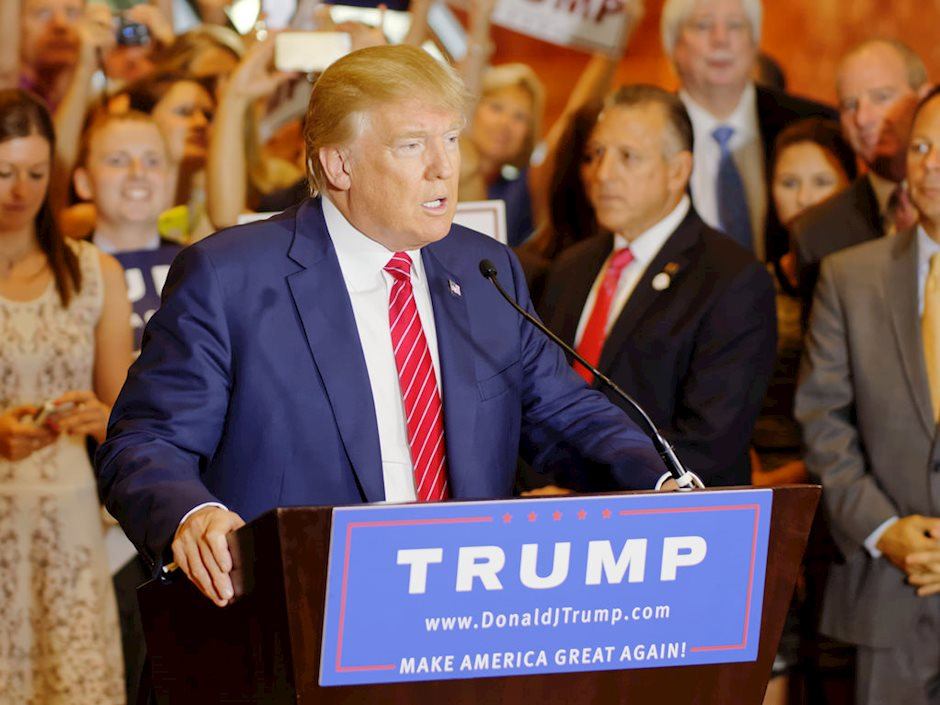

As we absorb the events of the last 24 hours there is a sense of déjà vu with respect to Donald Trump winning the US Presidential election, both politically as well as from a market point of view.
On the one hand we have some serious hand wringing going on as some parts of the political spectrum go into a collective pearl clutching meltdown at the prospect of 4 years of unfettered Trumpism, while as far as the markets are concerned the response has been more tempered to the one we observed 8 years ago, when the volatility was much more pronounced.
Bond markets have continued on a trend that they have been on since mid-September, yields pushing up from their lows of this year, while US stock markets also had another strong session pushing up to new record highs.
The US dollar also continued its recent surge, helped in no small part due to the continued move higher in US bond yields as the resiliency of the US economy, combined with concerns about economic growth elsewhere, prompts a reassessment in the pace of future rate cuts.
Yesterday’s election of Trump as the 47th President of the US also presents a problem for the Federal Reserve in so much that he could well embark on a much more expansionary fiscal policy if any of his announcements on the campaign trail are any guide, as well as a much more protectionist stance when it comes to trade and tariffs.
We’ve already seen markets react to the prospect of that with US markets rallying strongly while European markets gave up their initial gains to finish lower.
These concerns over a possible trade war and the prospect of the implementation of tariffs on European, as well as Chinese imports appears to have been the catalyst behind yesterday’s weakness in Europe. There is also the fact that as far as manufacturing is concerned Europe appears to be in a prolonged depression if recent PMI data is any guide.
We also saw sharp sell-offs in the renewables sector on concerns that Trump will prioritise new oil and gas exploration over funding for solar and wind power given his belief quite rightly that low energy costs help drive economic growth. More supply helps to lower prices and while no-one is suggesting that cutting emissions is not a laudable goal, impoverishing your population is a daft way to do it.
On taxes Trump is likely to continue in the vein of his previous tenure and look to extend the various tax cuts he enacted in 2017, and which are due to sunset in 2025.
It is on trade however that Trump intends to make the most waves with threats of import taxes of 60% on Chinese imports, and between 10% and 20% on the likes of Europe and the rest of the world.
While these are valid concerns, we’ve heard this song before and it didn’t trigger a big inflationary shock when he implemented this playbook in 2017. The devil is likely to be in the details of a quid pro quo, however for already fragile economies like the UK, as well as the rest of Europe, they have the potential to be hugely damaging.
We’ve already seen interest rates here in the UK bond market move higher in the past few weeks due to concern over the new government’s spending and growth plan while the recent move higher in rates has already cut any fiscal headroom the UK government might have had due to higher borrowing costs.
It will also mean that despite today’s rate cut from the Bank of England, and tonight’s expected rate cut from the Federal Reserve, that any future rate reductions could well be more difficult to achieve due to concerns that higher prices and stickier inflation force central banks to keep policy restrictive for longer than they would like.
Since the Bank of England cut its base rate to 5% in August, the UK 5-year yield has gone from 3.7% to 4.5%, hardly the signal you want to see when a central bank is in a rate cutting cycle, especially since today they cut rates again to 4.75%.
Similarly, the Federal Reserve has seen US 5-year yields go from 3.46% to 4.27% since they cut rates by 50bps to 5%, as markets look to reprice inflation risk.
Author
Michael Hewson MSTA CFTe
Independent Analyst
Award winning technical analyst, trader and market commentator. In my many years in the business I’ve been passionate about delivering education to retail traders, as well as other financial professionals. Visit my Substack here.