Treasury announces second oversized bond buyback as it tries to put a lid on yields

The Treasury Department will buy back another $6 billion in long-term Treasuries today (Thursday, Sept. 24) as it continues efforts to tamp down rising yields.
Treasury Secretary Scott Bessent announced this second expanded buyback on Wednesday.
And once again, the markets shrugged.
The 30-year Treasury hit a session high of 5.38 percent, close to the 5.4 percent peak earlier this month, the highest since 2007. Thursday morning before the buyback, the 30-year yield had nudged upward to 5.42 percent.
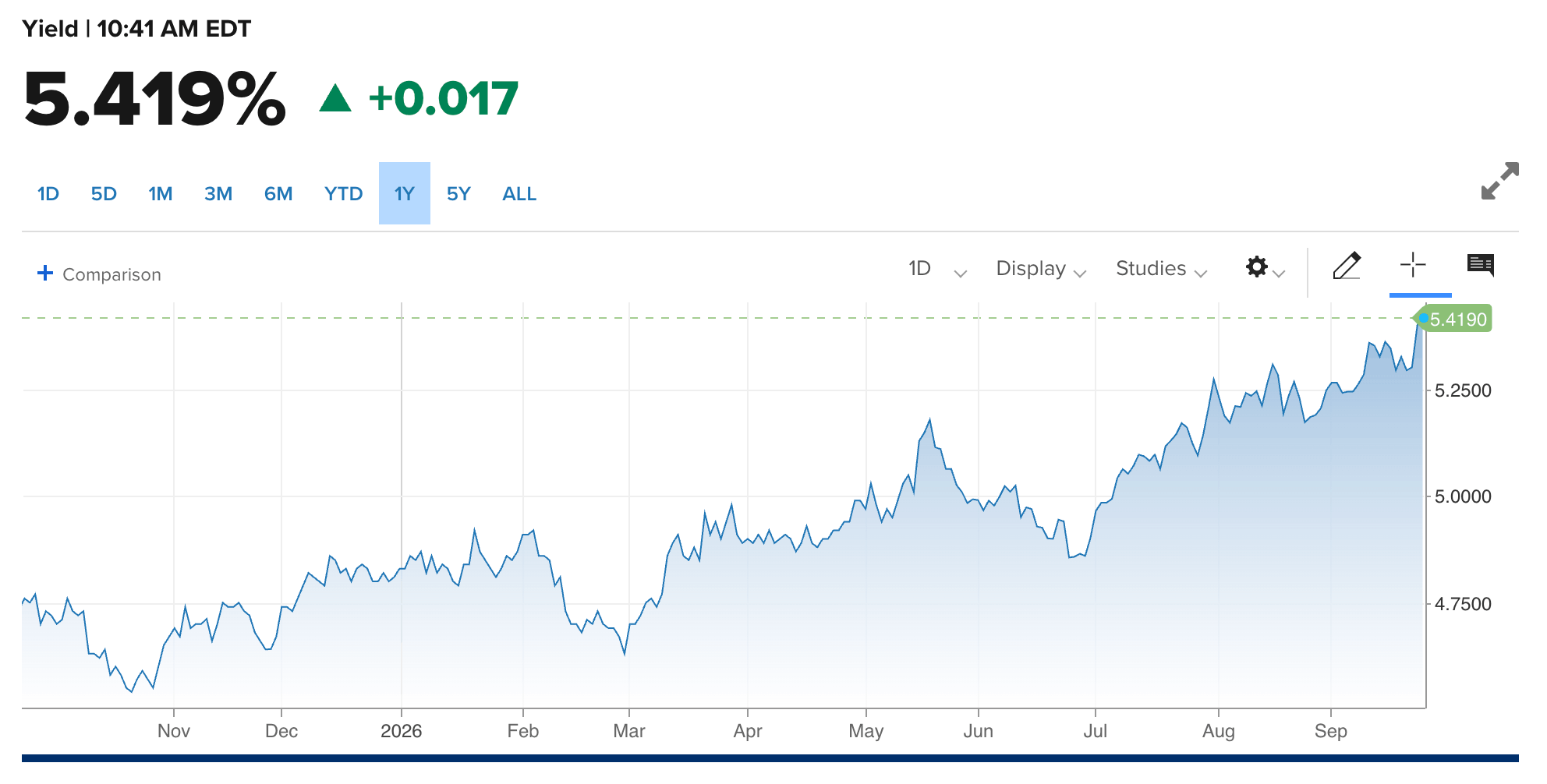
That's probably not the result Bessent was hoping for.
Thursday's operation will begin at 1:40 p.m.
Last month, Bessent signaled that the Treasury would increase its bond market intervention. Initially, he said the plan was to “at least” double operations from $2 billion to $4 billion beginning in September. Yields initially fell but quickly recovered.
Last week, the Treasury executed the first buyback, purchasing $6 billion in long-dated Treasuries.
Yields fell - and then started climbing again within the hour.
In these operations, the Treasury Department buys older long-term bonds on the open market and retires them. In theory, the increased demand will raise prices and lower yields. This benefits the federal government by lowering interest rates on newly issued debt on the long end of the curve.
The Treasury funds these buybacks by selling shorter-term notes and bonds. In practice, the Treasury borrows money to buy debt from people who already lent it money so it can borrow more money from other people at a slightly lower interest rate.
This is imperative given that the federal government already shells out over $1 trillion annually in interest expense.
However, so far, the efforts haven’t produced the desired effect. The bond market continues to sell off despite the Treasury’s intervention.
Perhaps Thursday’s buyback will move the needle on yields, but it seems unlikely given the market’s response to the announcement.
In the big scheme of things, this isn’t a big operation. Six billion dollars is a drop in the bucket in a $32 trillion bond market.
But while the operation's extent isn’t materially significant, Bessent’s message is.
And what is that message?
Desperation.
The Treasury Department is worried about the state of the bond market and its ability to continue funding the federal government's borrow-and-spend binge.
After Bessent announced the $6 billion buyback last week, Stanley Druckenmiller said the Treasury Secretary is setting his feet on a slippery slope. Now that he’s intervened, it may well require increasingly larger buybacks just to keep a lid on the market.
“Once markets believe Treasury is defending a price, every rise in yields becomes a test of official resolve, and the operations must grow to survive the tests. Governments defending prices against fundamentals always lose. The only variable is how much they spend before conceding.”
This messaging could backfire on Bessent. The markets might decide the Treasury Department’s desperate swing at yields is a signal to get out of an unraveling bond market.
Time will tell.
To receive free commentary and analysis on the gold and silver markets, click here to be added to the Money Metals news service.
Author

Mike Maharrey
Money Metals Exchange
Mike Maharrey is a journalist and market analyst for MoneyMetals.com with over a decade of experience in precious metals. He holds a BS in accounting from the University of Kentucky and a BA in journalism from the University of South Florida.