This is How Low USDJPY Can Go

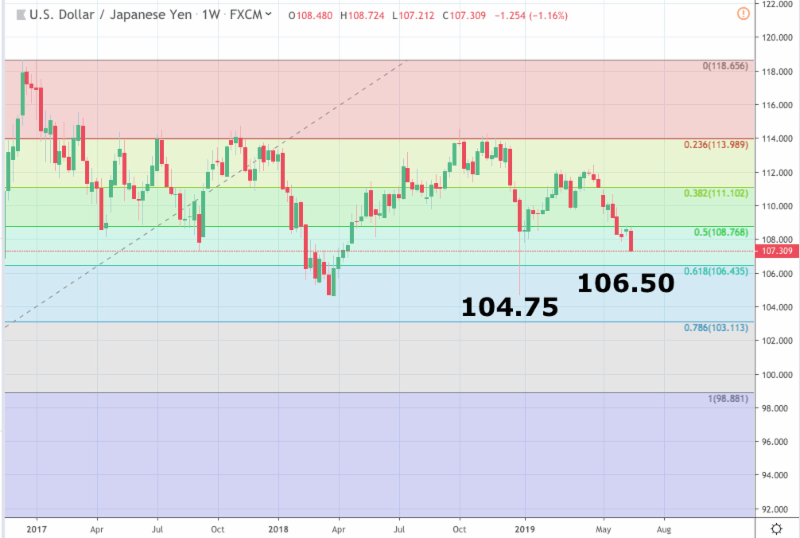
The last 24 hours has been brutal for the US dollar. The greenback dropped to its lowest level since the beginning of the year against currencies like the Japanese Yen and Swiss Franc. While it took the participation of European traders to break the dollar down, it was only a matter of time before that would have happened after the Federal Reserve revealed how close they are to easing. There's widespread support for not one but possibly two rate cuts this year. Considering that a large subset of traders were skeptical of even one quarter point cut, the Fed's dramatic shift in forward guidance should have led to a dramatic reaction in the US dollar. It took some time but the bears finally came out in force today. USD/JPY broke the bottom of its 2 week long range and should now fall to at least 106.50, the 61.8% Fibonacci retracement of the June 2016 to January 2017 rally but ultimately the flash crash low near 104.75 is the main support. The Bank of Japan also had a monetary policy meeting last night where they recognized growing external pressures but have no immediate plans to add accommodation.
Like their peers, the Bank of England felt more cautious about global growth and raised concerns about greater downside risks. Yet according to their monetary policy statement, they still believe that if their forecasts are correct, tighter monetary policy will be needed. This explains why after falling initially, sterling recovered quickly. Until Britain decides how they want to finalize Brexit, the Bank of England will refrain from raising interest rates. However if global trade tensions continue to sour and world growth slows further, they may need to flip the switch and start talking about easing. The economy isn't doing great according to the latest economic reports. Retail sales fell for the second month in a row by -0.5%, which took the year over year rate down to 2.3% from 5.1%. There was no post meeting press conference and during his annual mansion speech Governor Carney did not comment on monetary policy. While the Tory leadership contest holds the currency back, the BoE's less dovish outlook could drive the pair to 1.28.
The best performing currencies today were the New Zealand, Canadian and Australian dollars. While the Reserve Bank lowered interest rates last month, the economy did not lose any momentum in the first quarter. GDP growth expanded by 0.6%, the same pace as Q4 with the annualized rate of growth holding steady at 2.5%. Reports that President Trump and President Xi will meet at G20 is also good news for the commodity currencies as it suggest that trade tensions will start to ease. We still expect the Canadian dollar to outperform especially after a more than 5% rise in oil prices. However traders are waiting for an clear from retail sales on Friday before driving the loonie higher. Last but not least, the ECB may be talking about easing but the euro broke to the upside today on anti-dollar flows. If equities continue to rally, the EUR/USD could be driven higher by short-covering.
Author

Kathy Lien
BKTraders and Prop Traders Edge
Having graduated New York University’s Stern School of Business at the age of 18, Ms. Kathy Lien has more than 13 years of experience in the financial markets with a specific focus on currencies.