The US Dollar is not breaking, it is being bent

A quick caveat
Take this with a grain of salt. This is not a forecast. It is a risk frame. More what-if than call, but the kind markets punish you for ignoring.
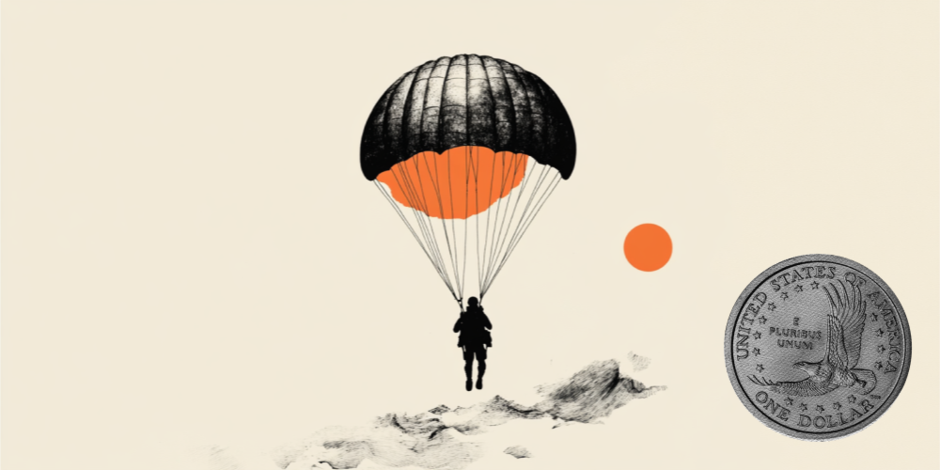
The Dollar is not breaking, it is being bent
It is almost comical to read another wave of crisis-of-confidence narratives in US assets at the exact moment the S&P 500 is testing 7,000 and GDP is running with a five-handle. If this is political chaos, it is the most profitable version markets have ever seen. The mistake is assuming the dollar is weakening because American politics is faltering. The reality is more uncomfortable. The dollar is softening because the U.S. is pressing too hard on the system that supports it, the debt markets.
This is not accidental slippage. It feels far closer to intent than incompetence. What we are watching is not a collapse but a controlled bend. A stealth rehearsal for something markets are not yet allowed to hear spoken out loud. A modern Mar-a-Largo Accord not declared negotiated or celebrated, but implied through tariffs, debt posture, and deliberate ambiguity.
Stephen Miran’s 2024 paper barely registered with mainstream economists, but inside the Trump policy ecosystem, it has quietly mattered. Not among the populist nationalists, where tariffs are blunt weapons, or the techno libertarians who dream of exiting institutions altogether, but inside the technocratic core, where balance sheets, currencies, and capital flows are treated as structural levers rather than political slogans. Bessent Miran Vance. This is where the thinking coheres.
The objective is simple to describe and brutal to execute. Reprice the dollar lower without surrendering reserve status. Rebalance trade without detonating capital markets. Shrink the real burden of debt without admitting that is what is happening. Financial repression disguised as a strategic realignment.
The historical reference is unavoidable. The Plaza Accord. In 1985, the US orchestrated a multilateral decline in the dollar of roughly 40% by persuading allies to raise their currencies in concert. It worked because the world was simpler, US debt was manageable, and Japan was a compliant surplus engine. Today, the board is crowded. China is central, the euro exists, and U.S. debt is above 120% of GDP. This is no longer a gentleman’s agreement. It is a high-wire act over live markets.
Which is why the real prize is not tariffs themselves but choreography. Tariffs are not the destination. They are the forcing mechanism. The aim is to funnel surplus nations toward negotiated currency adjustments, where their currencies appreciate and the dollar eases without panic or loss of confidence. Think controlled descent, not free fall. In that world, the dollar remains king in the SWIFT payments hierarchy, albeit with a slimmer share, and the euro quietly gains reserve share by default.
This is where Japan enters the frame and why it mattered when Tokyo quietly asked the Fed for a hand, coaxing the yen stronger. That was not about a USDJPY level or a bad trading week. It was a tell. Japan does not ask unless the plumbing is creaking. And the Fed does not engage unless it understands the broader choreography.
That exchange was not an intervention. It was a coordination theatre. A reminder that currency policy still lives in back rooms, not press conferences. The yen has become the pressure valve in a system straining under US fiscal heat and global yield asymmetry. Japan is importing inflation through a weak currency while exporting stability by suppressing its bond market. That trade is getting harder to defend politically and financially.
From Washington’s side, a slightly firmer yen is convenient for domestic manufacturing concerns. From Tokyo’s side, even symbolic Fed acknowledgement buys time and credibility. A warning flare, not a firewall.
Zoom out, and the pattern becomes clearer. This is what stealth coordination looks like before any formal accord ever sees daylight. No Plaza headlines. Dans les communiqués. Just central banks quietly aligning on which outcomes are tolerable and which paths are dangerous. The yen is no longer just a Japan story. It is the canary for how far the system can bend before someone has to admit the dollar regime is being managed not floated.
The constraint is credibility. In 1985, U.S. debt was near 40% of GDP. Today it is triple that. Foreign holdings are larger, more fragmented, and more sensitive to price action. Private capital does not wait for policy clarity. It front runs it. Any attempt to engineer a new currency equilibrium would require coordination on a scale not seen in decades, with precision timing and political restraint. A narrow path and one that narrows further with every tariff headline.
But this is where everything breaks down
There is little evidence yet of genuine multilateral preparation. No serious G7 currency dialogue, no visible G20 choreography, no clear Chinese signalling that would suggest buy-in. What we have instead is noise, ambiguity, and markets trying to reverse-engineer strategy from tariff schedules and offhand remarks by the President. That is not how currency regimes are reset. That is how volatility is invited.
Still the idea should not be dismissed. The global system is visibly out of joint. Floating exchange rates have not prevented persistent imbalances. The IMF tools Keynes imagined are politically unusable. At some point, the pendulum does swing back and coordinated intervention becomes thinkable again.
If this is the opening act, then the dollar’s recent weakness is not a verdict on American decline. It is a preview of policy gravity. Markets are not panicking. They are pricing optionality. A future where the dollar is guided lower rather than shoved off a cliff and where allies are nudged rather than bullied into adjustment.
Whether this administration can walk that narrow path remains the open question. The strategy demands patience, persuasion, and precision. Qualities that markets are not yet convinced will be supplied in equal measure. For now, the dollar is not collapsing. It is being bent. Quietly, deliberately, and with far more calculation than the crisis narratives would have you believe.
Author
Stephen Innes
SPI Asset Management
With more than 25 years of experience, Stephen has a deep-seated knowledge of G10 and Asian currency markets as well as precious metal and oil markets.