The market is smiling while the foundation shifts

This tape is doing something only markets can do when they are feeling confident and slightly reckless at the same time. Stocks are levitating, earnings are landing cleanly, and the S&P keeps flirting with 7000 like it knows the bouncer is watching but hasn’t decided to step in yet. Under the surface, though, the plumbing is getting rerouted. Bonds are uneasy. Currencies are shouting. Gold is no longer whispering. And the dollar just fell through a trap door that Trump opened for everyone to hear.
Let’s start with the scoreboard because that’s where most people stop. U.S. equities are printing fresh highs on the back of earnings that are not just beating but doing so with conviction. This is not meme-driven froth. This is balance sheet muscle and margin resilience. Nearly four out of five companies reporting so far have cleared expectations. That matters. It tells you the economy is still delivering cash flow even as confidence surveys collapse and politics gets louder. The market is voting with P&L, not vibes.
Tech is doing what tech does best in moments like this. It is leading without sprinting. The Magnificent Seven are no longer dragging the index higher by brute force. Their advantage is narrowing, not because they are failing, but because the rest of the market is finally showing up. That is a healthy evolution. This is a broadening rally, not a blow-off top. The internals argue for catch-up, not collapse. If this market rolls over, it won’t be because earnings lied. It will be because something external snapped.
Now look away from equities, and the arc changes immediately. The dollar is under sustained pressure, and this is not a technical wobble. This is a policy signal. When the US President publicly shrugs off a falling currency and says it should find its own level, markets take that as permission to sell. When the New York Fed runs rate checks on dollar-yen at Tokyo’s request, FX desks hear the choreography. When all three pillars of the dollar complex, yen, euro, and yuan, start leaning the same way, the message is clear. This is no longer a passive decline and is starting to look and feel more like a coordinated descent. Plaza Accord II, they ask?
The yen move did not require Tokyo to spend a single dollar. That alone should make traders nervous. If authorities can spark a four percent move with a phone call and a wink, imagine what they can do when they actually pull the trigger in this climate. Unilateral intervention is very much back on the table, joint action less so, but tacit support from Washington is all that really matters.
Gold saw all of this before FX finished its sentence. The metal broke through $5100 not as a panic hedge but as a credibility hedge.
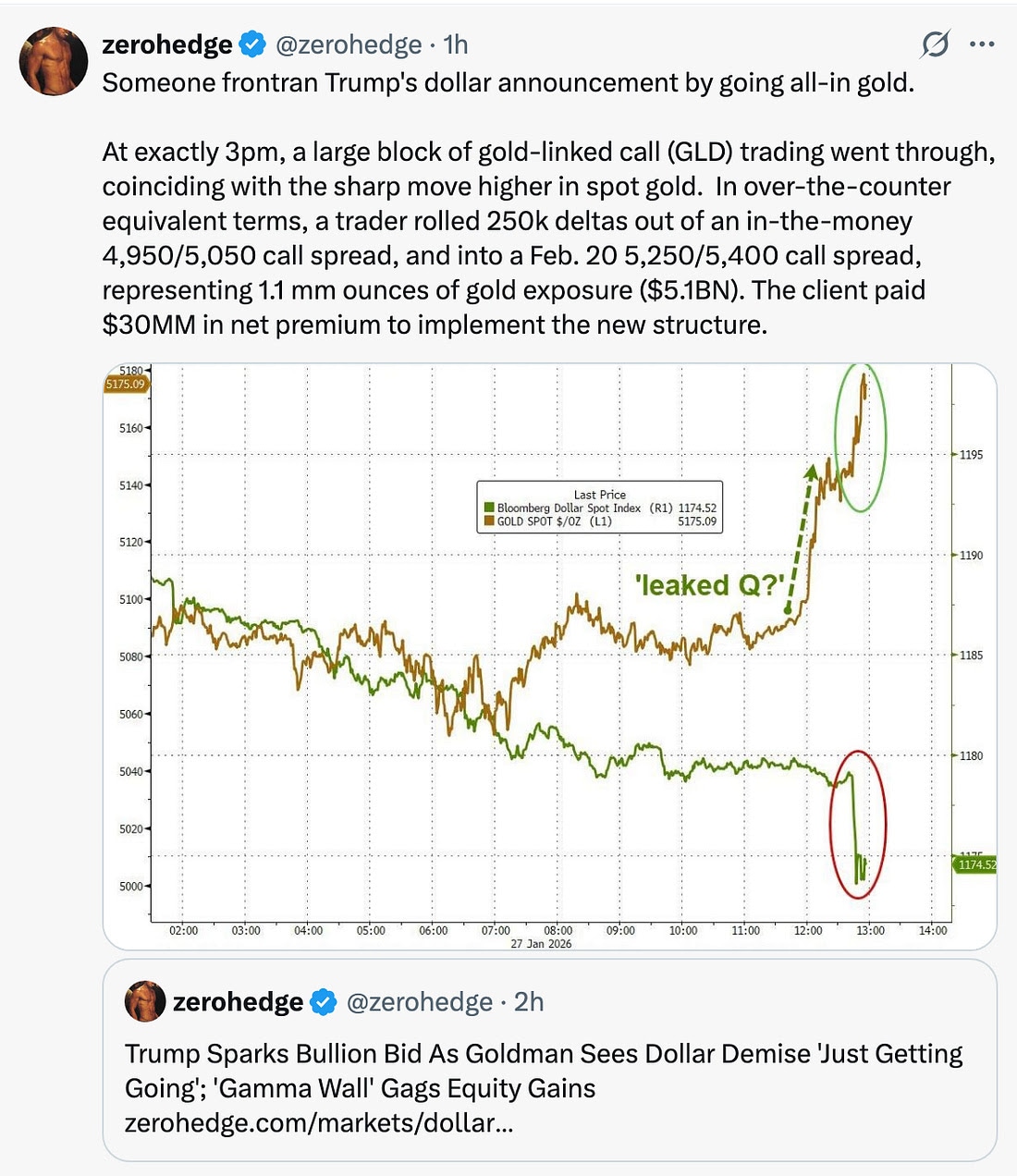
That distinction matters. This is not about fear of recession. Growth is fine. This is about trust. Trust in currencies. Trust in policy independence. Trust in the idea that deficits do not matter until they suddenly do. When gold volatility starts behaving more like crisis-era assets than commodities, you pay attention. Large structured flows rolling upside-down exposure are not retail tourists. That is real money repositioning for a regime shift.
Goldman's futures flow guru Robert Quinn notes: "Commitment of Traders covering January 6th - 13th exhibited +$5.7bn of Managed Money Gold buying, marking the largest 1 week amount since September 2nd. Recall this generally corroborated strong growth in open interest alongside price. Bullish flows persisted through January 20th: +$1.2bn. New gross longs were the sole driver."
What makes this moment particularly uncomfortable is that bonds are not screaming yet. The front end is calm, pricing patience. The long end is twitchy but not disorderly. This creates the illusion that everything is under control. It rarely is. A weaker dollar alongside steady yields is the kind of cross-asset relationship that eventually forces portfolio math to change. FX hedges get adjusted. Capital reallocates. The strength of the Swiss franc tells you exactly where that conservative money is hiding.
Consumer confidence collapsing to decade lows would normally spook markets. This time, it barely registers. That is because confidence surveys measure how people feel, not how companies are performing. Slower discretionary spending is not the same thing as an economic cliff. If inflation continues to ease and growth stays steady or cools without breaking, the Fed gets room to cut later without losing credibility. That is the soft-landing fantasy the market is still willing to price in. The coming Fed meeting should be boring by design, but the subtext matters. Neutral is the destination, not the stimulus.
Oil, meanwhile, is trading headlines again. Military posture near Iran, winter storms, and a softer dollar are enough to keep crude supported, but this is not yet a supply shock story. Think noise, not signal. The real geopolitical hedge is not oil right now. It is gold and optionality.
There is one final tension worth watching. Equities are floating above a gamma ceiling. Market makers are leaning against the upside and mechanically selling rallies. That is why 7000 feels sticky. Breaks at these levels do not come from grinding. They come from catalysts. If megacap earnings deliver cleanly and capex starts translating into visible returns, that wall will not hold.
So here we are. Stocks smiling. Earnings delivering. The dollar is wobbling. Gold roaring. Bonds are watching quietly from the corner. This is not chaos. It is a transition. The market is telling you that growth still works, but the old anchors are shifting. When the foundation moves, you do not argue with the tape. You adjust your footing.
The rally is real. The warning signs are real. And the most expensive trade right now is pretending those two things cannot coexist.
Author
Stephen Innes
SPI Asset Management
With more than 25 years of experience, Stephen has a deep-seated knowledge of G10 and Asian currency markets as well as precious metal and oil markets.