The Fed is Wrong About the Economy
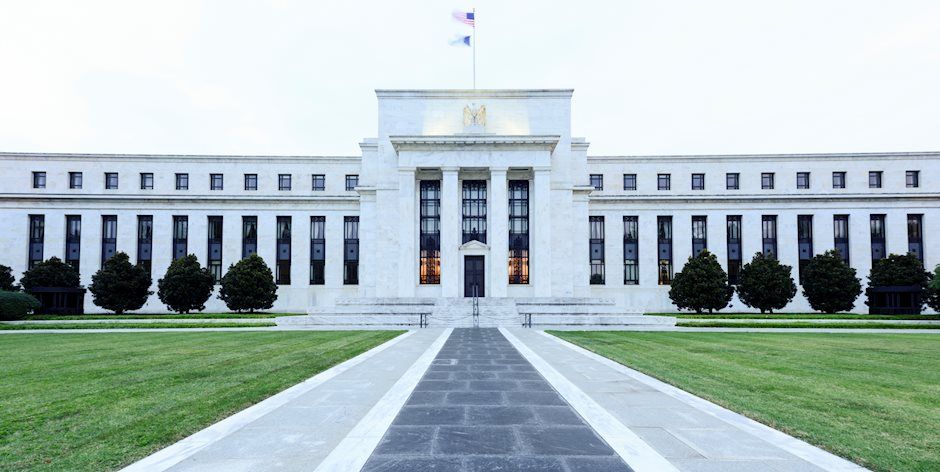

As you know, the Federal Open Market Committee (FOMC) meets every six weeks to decide whether they need to change policy to coax our economy in the right direction. You also know that the Fed has a Congressional mandate to provide maximum employment and stable prices, which it works to achieve by manipulating interest rates.
Well, Fed Chair Jerome Powell delivered his policy statement and their latest rates decision this afternoon. Drum roll please…: the overnight rate remains unchanged at 2.25% to 2.50%.
Yet Treasury bonds clearly show that the Fed is way off on its assessment of the economy and monetary policy. Long-term Treasury bonds are telling us that short-term rates need to be lower for the economy to grow further, especially since inflation is and has been muted.
But since December, when it moved rates higher, the Fed has been bungling from one meeting to the next. The markets reacted swiftly to its end-of-year mistake. The yield curve flattened and stocks fell sharply into the holidays.
At the time, the Fed was considering two more hikes in 2019 and Powell stated that the balance sheet would continue to shrink for the foreseeable future.
As the carnage unfolded, he and the other voting members of the FOMC backed off previous statements and eventually calmed the stock markets, which have recovered nicely since then.
Then, in May, the Fed decreased the balance sheet reduction to $15 billion per month, with the goal to end the “normalization” process in September, with a little over $3.5 trillion in Treasury securities.
Ahem…
I’m not sure why the Fed thinks the balance sheet is “normalized” at $3.5 trillion, when it was less than a $1 trillion before the 2008 financial crisis. It’s just more evidence that the Fed gang isn’t seeing the world the rest of us see.
Take a look at how the yield curve has developed since just before the December rate hike in the chart below…

As of yesterday, all of the Treasury yield curve (the blue line), except for the 30-year bond that ended the day just above 2.55%, was trading lower than the federal funds rate (the green dotted line). The red line is the yield curve just before the Fed hiked in December.
Clearly, the Treasury bond market is telling the Fed that it is very wrong in its assessment of inflation and economic prospects.
Yet here we are…
Understanding the Fed’s Decision
So, what is the Fed thinking?
Well, the Committee sees “sustained expansion of economic activity, strong labor market conditions, and inflation near its symmetric 2% objective as the most likely outcomes, but uncertainties about this outlook have increased.”
The Fed statement goes on to say that, in light of these uncertainties and muted inflation pressures, they will be closely monitoring incoming information and act as appropriate to sustain the expansion.
The big change from the last meeting was the Fed’s intent to be “patient” with past policy. Everything appeared to be moving along as expected, now… not so much.
The lone voice of reason was James Bullard, the St. Louis Federal Reserve Bank President. He objected to the decision and voted to cut rates by 0.25%.
Even though the Treasury bond market didn’t react much to the Fed decision today, its pricing in three rate cuts for this year, based on futures trading. That means it expects the economy to take a turn for the worse.
Happy Days Are Not Ahead
There weren’t significant changes to March projections but, the Fed is looking for inflation to drop further this year. Headline inflation is expected to drop to 1.5% while core inflation (excluding food and energy) is expected to drop to 1.8%, well below the target 2% rate.
The Fed is projecting no further rate change this year, a rate cut in 2020, and a rate hike in 2021. So, if the economy plugs away at around a 2% growth rate, the jobs market doesn’t collapse, and inflation remains near the Feds target 2% rate, don’t expect any change in policy.
The global outlook hasn’t changed much either. The trade war outcome is uncertain, as is Brexit. Global growth is slowing. And Powell himself notes that, while there has been some growth in consumer spending, inflation is muted, business capital spending is soft, and debt levels are increasing.
So, what does it all mean for you?
It means you should sit up and pay attention. The Feds projections for the next few years seems to be steady as she goes, but my advice is to be on your toes!
The Treasury bond market is giving the Fed a failing grade on policy.
The Fed has notoriously and historically been behind the curve when it comes to projections and policy change. The Committee seems to prefer reacting rather than being proactive about adjusting policy.
Don’t let the Fed’s apparent complacency fool you. The economy, the markets, inflation and just about everything is in flux and most move in cycles. We’re moving into a period of higher volatility and that means greater opportunities, so be ready!
Author
Dent Research Team of Analysts
Dent Research

















