Spain votes on Sunday: New elections, same problems
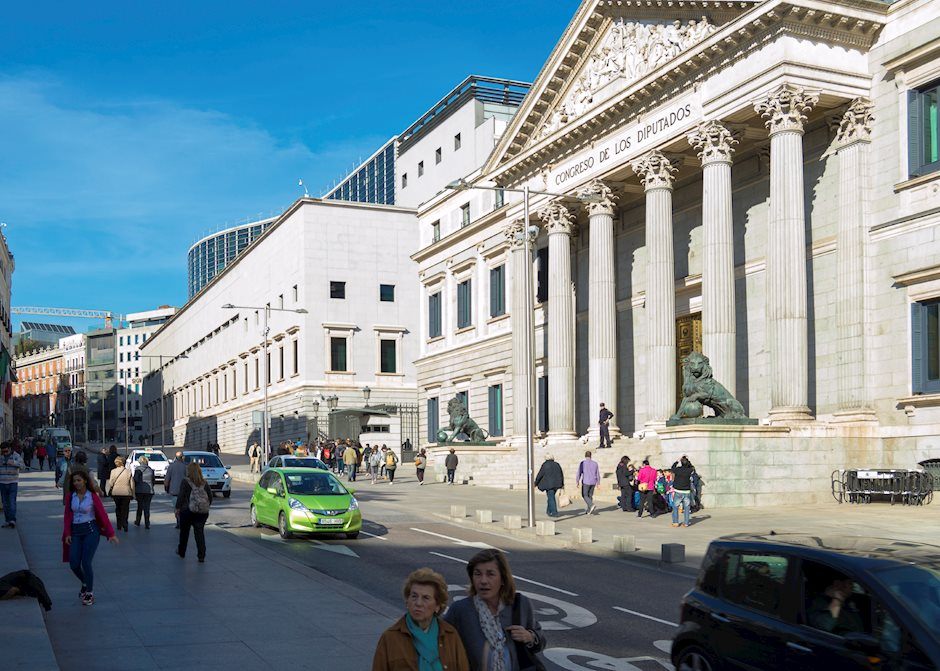

Spaniards will vote on Sunday for the second time in six months and it might not be the last one. Following the December elections, no party reached a majority at Congress and the formation of a new government failed, leading to new elections.
The lack of agreement between the four major parties in Spain made it impossible to form a government. Vote composition could change on Sunday but no essential change in results compared to December is expected.
Two new parties created a new political order. The usual dispute between the ruling conservative Partido Popular (PP) and the Partido Socialista (PSOE) has now become a dispute between four parties. Podemos and Ciudadanos, are relatively new parties that emerged during the last elections.
On Sunday, the PP is likely to win again (according to polls could gain 129 seats, an improvement from 123 of the December election) but not enough seats to reach majority. The second place in December was for the PSOE but now Podemos, that reached an alliance with other left parties, could end at the second place. The other relevant party, Cuidadanos (centrist), lead by Albert Rivera would keep its votes and take approximately 40 seats.
If the results turn out to be alike the previous elections, a government could only be formed with the agreement of major parties, which seems pretty unlikely today. A coalition between PP and PSOE is like one between Republicans and Democrats in the US, the PSOE and Podemos have strategic differences and also different positions regarding Catalonia, so it does not seem that a new government will emerge unless voters or politicians make radical changes. The main difference from December's elections could be Podemos reaching the second place.
Mariano Rajoy (PP) could win again, but once more, he is not expected to get a majority; neither is Pablo Iglesias (Podemos), Pedro Sánchez (PSOE) or Albert Rivera (Cuidadanos). The electorate disappointment on politicians cold be reflected on Sunday, if as polls forecast, there is a record level of abstention.
Brexit impact?
Markets plummeted on Friday on the back of the results of the referendum in the United Kingdom, any outcome in Spain is unlikely to offset the impact of Brexit. ¿Could the Brexit vote in the UK have an impact on how Spaniards vote on Sunday?
The results, whatever they are, will not resolve the political problem in the short-term. The next Prime Minister will emerge from a coalition that will be hard to keep intact in time amid many voters' demands, and the situation could get even worse if the economy stops growing.
IBEX 35 posts biggest one-day drop in its history after Brexit
The Spain’s IBEX 35 plunged amid political and economic uncertainty after the Brexit vote. The index lost 12.35% to 7,787 points on Friday, marking the steepest fall in 24 years of history, with banking sector leading the way.
Friday’s fall trumped the previous record for the greatest one-day plunge on Oct. 10, 2008, when the IBEX 35 fell 9.14% at the beginning of the financial crisis that followed Lehman Brothers breakdown.
Author
Matías Salord
FXStreet
Matías started in financial markets in 2008, after graduating in Economics. He was trained in chart analysis and then became an educator. He also studied Journalism. He started writing analyses for specialized websites before joining FXStreet.

















